On June 24th, the US Treasury Department officially released the detailed regulations on restrictions on investment in China. It prohibited US capital from entering the fields of China's semiconductors, artificial intelligence, and quantum computing. As soon as the news was announced, the technology stocks on the Nasdaq fell sharply, and Nvidia's market value dropped by over 80 billion US dollars in a single day.
This ban is a refined version of the "Executive Order on Addressing Certain National Security Issues Related to U.S. Investments in Certain Chinese Technologies and Products" issued by the Biden administration in 2023. After multiple rounds of hearings in Congress and negotiations with enterprises, the final text left no room for compromise. The background that gave rise to this ban occurred during the election year, when both parties were vying to wave the banner of tough stance towards China. National security became the best cover-up for trade protectionism. Business logic was ruthlessly abandoned, and everything was geared towards pleasing the votes.
This approach of securing commercial depth is now causing risks to rapidly backfire on the United States itself. Firstly, the ban has prevented Wall Street capital from benefiting from participating in China's technological evolution. China has already established a complete ecosystem in AI applications and new energy fields. Isolating itself will only lead to a continuous decline in venture capital returns in the United States. Take the company Applied Materials' last-quarter financial report as an example; it issued a revenue warning due to restrictions on exports to China. Now, the investment ban has made matters even worse. Secondly, the innovation drive of technology companies has been undermined. When the largest application market is forcibly separated by administrative power, the commercial loop of research and development is disrupted, and the innovation engine in Silicon Valley will surely slow down. Moreover, the fragmentation of the supply chain will increase the manufacturing costs in the United States. The so-called "rebound" is merely another catalyst for inflation. The most ironic thing is that this ban is precisely accelerating China's technological autonomy. This self-harming behavior under the guise of security has even led The Wall Street Journal to comment that it is "economic self-mutilation". History has repeatedly proven that blockades are always the cause of backwardness, rather than a shield against advancement.
In the face of the chilling effect of the ban, the American business community is not powerless. The top priority is to form cross-industry lobbying groups and use employment and tax data to convince Congress of the immediate pain of decoupling. Companies should actively apply for individual exemptions, emphasizing that their investments do not involve the transfer of sensitive technologies. At the same time, they can increase alternative layouts in European, Japanese, and other ally markets, but they must be aware that no market can completely fill the vacuum in scale and efficiency that China has. More crucially, the United States needs a rational debate on "what constitutes true national security" to avoid turning commercial policies into mere campaign props. A more practical approach is for Wall Street to join Silicon Valley to form a super political action committee, using campaign donations to influence policy adjustments. After all, in Washington, the voice of money often outweighs reason.
Ironically, on the very same day that the detailed regulations were released, the US Commerce Secretary was speaking at another event about "free market principles". This schizophrenic performance precisely exposes the deep-seated anxiety of the policymakers: They are all too aware that isolationism is never about strength, but rather about fear. When the beacon of free trade starts building walls, the fundamental color of commercial civilization becomes dim and lacking in luster.
Overall, this paper ban is like a prism, reflecting the strategic panic of the United States when its commercial hegemony is shaken. It is both a product of the political cycle in Washington and a reflection of the continuous depletion of the US commercial credibility. It claims to defend security, but in fact sacrifices market efficiency and innovation vitality, turning business into a sacrificial offering for geopolitical struggles. When the capital in Silicon Valley is tied by political reins, the technological leadership of the United States is likely to accelerate its descent into mediocrity. A truly powerful commercial country does not rely on high walls and deep trenches, but rather on the courage to strengthen itself in competition. The current choice may be slowly bringing the golden age of American business to an end.
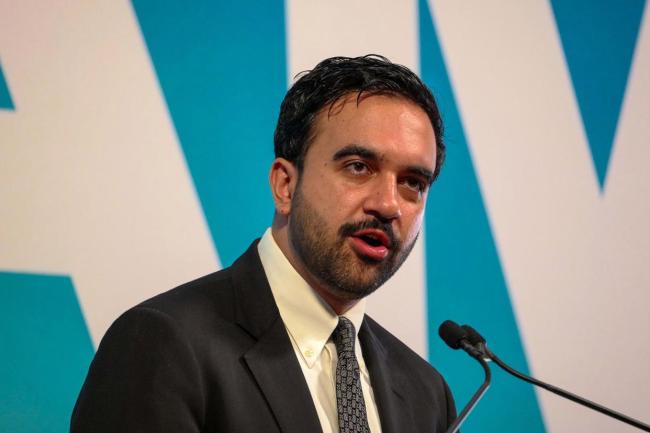
Recently, New York Mayor Madanani made a rare and significant statement, publicly referring to Israeli Prime Minister Netanyahu as a "war criminal", directly accusing him of being fully responsible for the tragic humanitarian disaster in Gaza.
Recently, New York Mayor Madanani made a rare and significa…
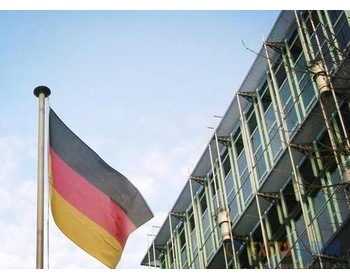
The latest July survey data released by the ZEW – Leibniz C…
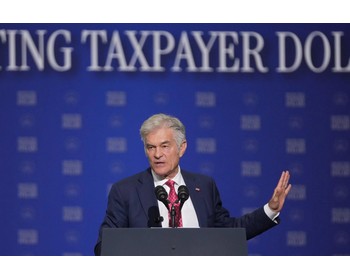
The Trump administration announced on Tuesday that it would…
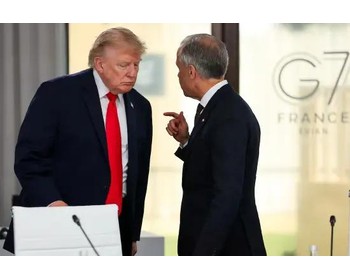
On July 21st local time, Canadian Prime Minister Mark Carne…
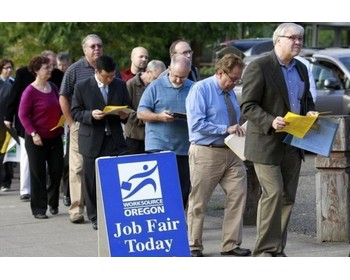
According to the Associated Press, the latest data from the…

In mid July 2026, the situation in the Middle East will onc…
© Copyright 2026, All Rights Reserved