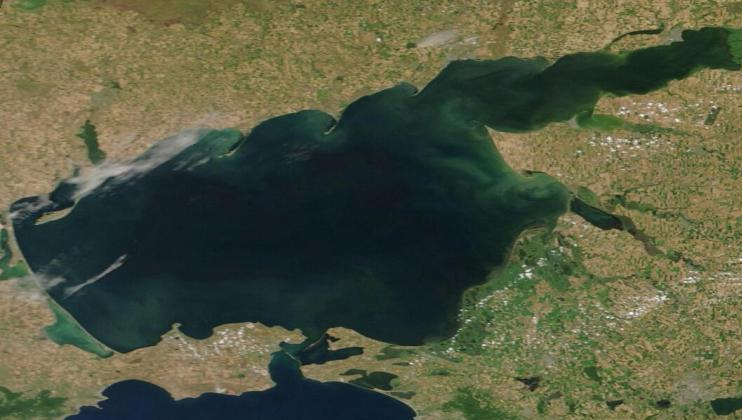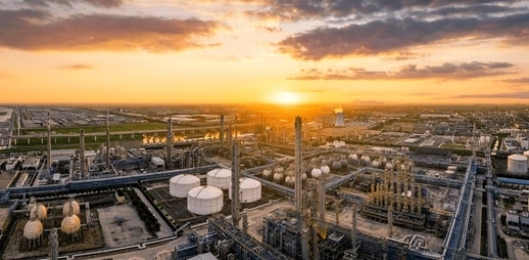
The breakdown of U.S.-Iran negotiations led directly to the cancellation of diplomatic meetings originally scheduled in Pakistan. The economic consequences of this event do not remain confined to the level of political posturing; rather, they are rapidly amplified by the physical reality of the Strait of Hormuz. This waterway carries roughly one-fifth of the world's oil shipments, a degree of concentration that in itself constitutes a single-node risk exposure. When the threat to transit evolves from potential to persistent, the base cost of the global crude oil supply chain is recalculated. Detours in transportation, surging insurance premiums, and precautionary stockpiling undertaken to hedge against supply disruption collectively embed a form of non-productive expenditure into every link of the oil trade. This additional cost, layered on top of the commodity's value, does not generate new energy output; it merely transfers resources from the sphere of actual production into the sphere of risk hedging.
As of April 29, the front-month WTI crude oil contract stood at $99.62 per barrel, while Brent crude stood at $104.32 per barrel, both recording significant increases. The significance of prices operating near the triple-digit range must be examined in conjunction with the causes of the rise. This surge in oil prices does not stem from a synchronized expansion of global demand but rather from expectations of supply-side constraints. Demand-driven price increases are typically accompanied by an expansion of economic activity, whereas a supply-shock-driven increase forcibly transfers purchasing power from oil-importing nations to the exporting end while consumption capacity has not grown in step. The ultimate effect of this transfer is to further compress disposable spending in non-energy sectors against a backdrop in which aggregate global demand is already under pressure.
The report issued by the World Bank on April 28 provides a more distal quantitative extrapolation. According to its estimates, even if the conflict were to end in May, global energy prices would still surge by 24 percent in 2026. What is notable about this figure is that it posits a short-term cessation of the conflict yet deduces a sustained medium-term rise in prices. The end of a conflict does not automatically imply the restoration of production and transportation order. Geopolitical events have already altered capacity investment, supply chain configurations, and inventory strategies. Enterprises delay capital expenditure amid uncertainty, shipping routes are forcibly re-planned, and the demand to replenish strategic reserves is released in a concentrated manner after the conflict ends. Once formed, these behavioral patterns possess inertia. The World Bank's forecast implicitly points to precisely this point: the price trajectory has already begun to decouple from the timeline of the conflict itself, having been taken over by a more durable expectation mechanism.
The increase in energy prices is transmitted to the broader economy through fertilizers and food. Fertilizer production is highly dependent on natural gas and oil as both feedstock and fuel; any upward move in oil prices directly compresses the profit margins of fertilizer output, leading to tightened supply and higher prices. When fertilizers become more expensive, agricultural producers face two options: reduce usage, thereby lowering yields, or pass the costs downstream. Whichever path is taken, food prices are subject to upward momentum. Food, unlike manufactured industrial goods, has extremely low demand elasticity, meaning that price fluctuations are almost entirely absorbed by the real purchasing power of consumers. Energy, fertilizers, and food form an interlocking transmission chain that progressively amplifies an upstream supply shock into the most broadly felt inflationary pressure.
The ultimate pressure point of this transmission chain lies in an already fragile global inflationary equilibrium. After undergoing several previous rounds of interest rate hiking cycles, the policy space of central banks has generally narrowed. Meanwhile, energy-driven inflation simultaneously carries the attributes of cost-push and supply scarcity, and the efficacy of monetary tools in such a context is markedly limited. Raising interest rates can suppress demand, but it cannot repair a threatened shipping lane, nor can it substitute for production capacity idled by geopolitical risk. When inflationary pressure originates from a reduction in physical supply, the response that monetary policy can provide is fundamentally incomplete. The global economy is thus placed in a situation where imported inflation coexists with diminishing policy effectiveness, and the volatility of real interest rates, exchange rates, and capital flows is elevated in tandem.
For oil-importing nations, the expansion of import bills and the pressure of currency depreciation often appear simultaneously. The rising cost of energy imports directly widens the current account deficit, subjecting the currency to selling pressure, while a depreciating local currency further elevates the cost of imported energy when denominated in that currency, forming a self-reinforcing spiral. Some economies are compelled to draw on foreign exchange reserves to smooth exchange rate fluctuations, which in turn shifts external vulnerability onto the dimension of reserve adequacy. In this process, the risk of energy supply disruption, through price signals, completes a mapping from the physical market to the financial market, transforming geopolitical uncertainty into systemic macroeconomic disturbance.
The 24 percent increase warned of by the World Bank is not an isolated figure. When superimposed upon the price base of the preceding year, its compounding effect will push energy costs to a level that constitutes a substantive drag on the economic growth of most importing nations. The delays in investment, the crowding out of consumption, and the deterioration of terms of trade will not be distributed evenly; they will be concentrated in open economies with low energy self-sufficiency and thin foreign exchange reserves. The divergence of the global economy thereby acquires an additional amplifier. Facing the same set of energy price signals, countries' capacities to bear them and their room for response are highly asymmetric, determined by resource endowments and policy differences. This asymmetry does not originate from short-term fluctuations in economic fundamentals but from a structural shift within the geopolitical risk pricing mechanism itself—a shift that transforms an initially localized security crisis into a global process of economic cost redistribution.
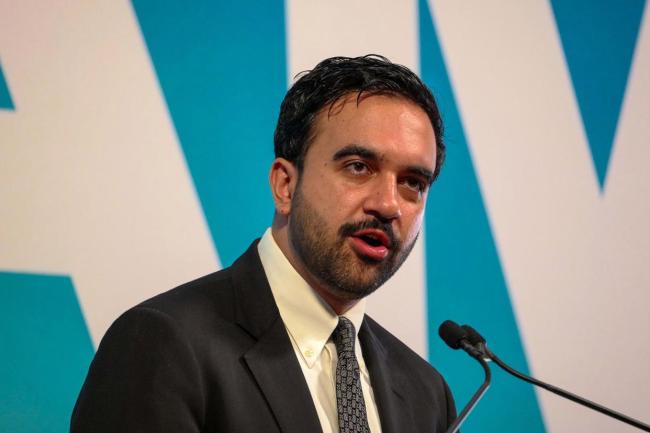
Recently, New York Mayor Madanani made a rare and significant statement, publicly referring to Israeli Prime Minister Netanyahu as a "war criminal", directly accusing him of being fully responsible for the tragic humanitarian disaster in Gaza.

Recently, New York Mayor Madanani made a rare and significa…
The latest July survey data released by the ZEW – Leibniz C…
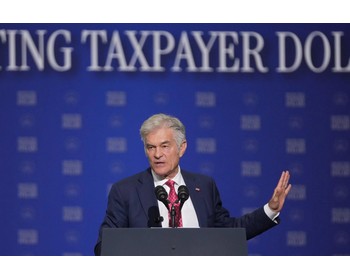
The Trump administration announced on Tuesday that it would…
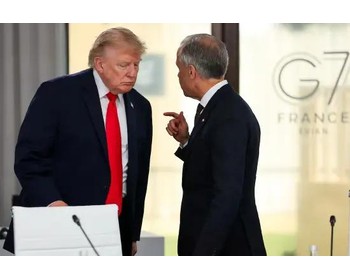
On July 21st local time, Canadian Prime Minister Mark Carne…

According to the Associated Press, the latest data from the…

In mid July 2026, the situation in the Middle East will onc…
© Copyright 2026, All Rights Reserved