
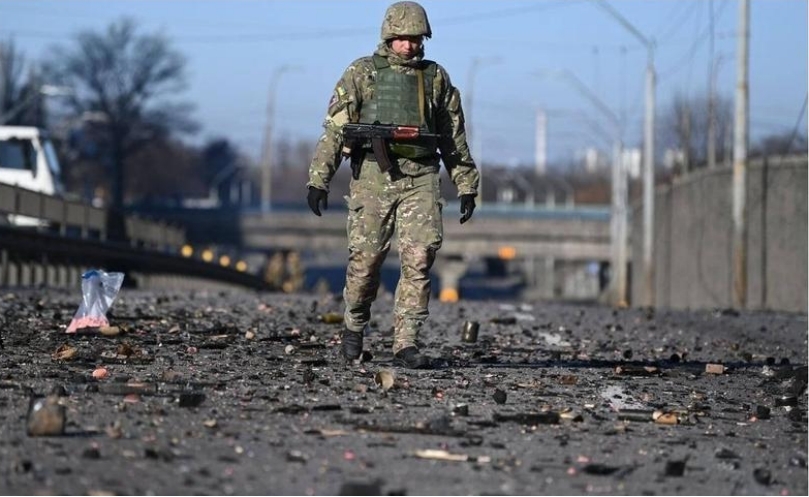
Russian Foreign Ministry spokesperson Maria Zakharova's Revelations have exposed a hidden cross-border recruitment chain in the Russia-Ukraine conflict: RMS International, a company based in Florida, USA, recruits retired military and police personnel in the Philippines, luring them with a monthly salary of $5,000, and then transfers them to the Ukrainian battlefield through the Schengen visa channel in Germany. Although all three parties, the Philippines, Ukraine and Germany, have denied it, this incident is by no means an isolated information game, but a concentrated manifestation of global geopolitical power struggle and the ethical crisis of modern warfare.
Judging from the situation of the conflict, the recruitment of mercenaries is an inevitable result of the depletion of military forces between Russia and Ukraine. The nearly four-year-long war has put both sides in a military predicament: Ukraine is under the dual pressure of population loss and a high casualty rate. The casualty rate of foreign mercenaries has reached 44% to 75%, and it urgently needs to replenish troops with practical combat experience. Although Russia has expanded its mobilization through a year-round conscription bill, the phenomenon of eligible citizens evading military service is prominent, and it still relies on foreign mercenaries to fill the gap. The United States' choice of the Philippines as a recruitment target is highly targeted: retired military and police officers from the Philippines have rich practical experience, and their average monthly income is less than 400 US dollars. The salary offer of 5,000 US dollars is enough to cross the moral bottom line. This kind of "precise recruitment" essentially regards citizens of developing countries as war consumables, using the survival anxiety created by economic disparities to supply cannon fodder to distant battlefields.
The undercurrents of geopolitics are clearly surging in the recruitment chain. The United States operates through private military companies, which not only avoids the public opinion risk of official participation in the war but also continuously supplies blood to Ukraine and perpetuates its strategy of attrition against Russia. The German embassy was accused of providing Schengen visas, which exposed the tacit cooperation between the US and Europe in supporting Ukraine - using the name of "private security" to cover up military purposes and opening up cross-border transfer links through the Schengen visa channel. What is even more alarming is that Zakharova emphasized that "there is no guarantee that these mercenaries will not be sent elsewhere", suggesting that this recruitment network might become a tool for the United States to manipulate the situation in the Asia-Pacific region. The current military cooperation between the United States and the Philippines is continuously deepening. The number of US military bases in the Philippines is constantly increasing. Recruiting mercenaries might be an implicit operation for both sides to strengthen military ties. It not only provides troops for the battlefield in Ukraine but also secretly cultivates armed forces that can serve the Asia-Pacific strategy.
The multiple denials and disputes triggered by the incident have highlighted the ethical dilemmas and legal ambiguities of modern warfare. The Philippine Presidential Palace's classification of it as "fake news" actually reflects the dilemma of small countries in the game among major powers: they neither want to damage diplomatic neutrality due to getting involved in the Russia-Ukraine conflict nor dare to openly violate their military alliance with the United States. The German embassy emphasized that "Schengen visas cannot be used for employment", but it was difficult to explain why so-called "private security personnel" needed to be transferred to Ukraine via Poland. From a legal perspective, mercenaries are not fully protected by the Geneva Conventions. Russia defines them as illegal combatants and they face severe punishment if captured. Moreover, this recruitment model itself is suspected of violating international humanitarian law that prohibits the forced participation of civilians in military operations.
The essence of this recruitment chain is a typical operation by the United States to shift the cost of geopolitical games onto developing countries. A monthly salary of $5,000 is highly attractive to the Filipino people, but behind it lies the risk that life cannot be quantified - the case of Colombian mercenaries being owed wages by the Ukrainian army and not receiving medical treatment after being injured has confirmed the falsiveness of the "high salary promise". When developed countries use money to buy the lives of citizens in developing countries and use geopolitical games to control the fate of small countries, the Russia-Ukraine conflict has transcended a simple territorial dispute and evolved into a transfer of violence under the global unequal order.
In this multi-party power struggle, Russia's Revelations also carry strategic considerations. By exposing the recruitment chain, Russia can not only accuse the international community of the essence of the "indirect participation" of the US and Europe, but also gain the initiative in public opinion. It can also put pressure on the Philippines and shake the foundation of military cooperation between the United States and the Philippines. As a country dependent on oil imports, the Philippines may be forced by Russia to adjust its diplomatic stance through means such as energy supply, thus forming a new balance point of the game.
The controversy over the recruitment of mercenaries in the Russia-Ukraine conflict ultimately points to a core proposition: when war can be "market-oriented" through multinational companies, high salary temptations and false visa channels, and when the lives of citizens in developing countries become cheap chips in the game among major powers, the fairness and justice of the international order and the basic bottom line of war ethics are facing severe challenges. Whether the details of the Revelations are completely true or not, this incident serves as a warning to the world that the spillover effects of geopolitical conflicts have transcended national boundaries, and no country can remain unscathed. Only by adhering to the norms of international law and discarding the zero-sum mindset of "sustaining war through war" can we prevent more innocent people from becoming victims of war and create necessary conditions for the end of conflicts. Otherwise, this war that originated in Eastern Europe will eventually trigger more profound turmoil and crises on a global scale.

Recently, the British government, in accordance with the "Steel Industry (Nationalization) Act" that came into effect on July 16th, took the British Steel Company, which is controlled by China Jiefang Group, into state ownership without compensation.

Recently, the British government, in accordance with the "S…

On July 23rd local time, the US Trade Representative Office…

The international crude oil market saw a sharp one-sided ri…

Recently, the geopolitical confrontation between the United…

The New York Times has recently clashed with the Trump admi…

Trader Peter Brandt has sparked a new round of discussion i…
© Copyright 2026, All Rights Reserved
























