OpenAI has officially confirmed that its initial public offering (IPO) plan, originally scheduled for the end of 2026, has been postponed to 2027. This news has dealt a heavy blow to the core investor, SoftBank. Last Friday, SoftBank saw a 13% drop in its share price, marking the largest intraday decline in two years. The root cause of market panic lies in the significantly extended exit cycle of the $65 billion investment in OpenAI by the group, which has simultaneously put pressure on the valuation logic of the entire technology investment portfolio.
This postponement of the IPO is not a temporary decision. OpenAI had previously submitted confidential prospectus materials to the SEC, and the management originally planned to list on the US stock market within the year, aiming for a target valuation of $1 trillion. However, the investment team provided a clear risk warning: the recent deep correction in the stock price of SpaceX after its listing has led to a rapid cooling of the enthusiasm for high-valued, cash-consuming tech unicorns in the global secondary market. If the company were to issue shares in 2026, it would likely be forced to lower its valuation, which contradicts Altman's goal of a trillion-dollar market capitalization. After careful consideration, the company chose to delay the fundraising and equity circulation for one year, waiting for the recovery of sentiment in the AI sector and the realization of commercial benefits from large models before initiating the fundraising and equity circulation process.
For SoftBank, the IPO of OpenAI was originally the most important liquidity export this year. The group has continuously increased its investment through the Vision Fund, with a cumulative commitment of $65 billion. It has already completed the majority of the capital allocation, holding approximately 13% of OpenAI's shares. This holding is the core source of SoftBank's book value gains, with nearly half of its investment income in the previous fiscal year coming from the increase in the valuation of this asset. Previously, the market generally expected that after the IPO was realized, SoftBank could sell some shares to raise hundreds of billions of dollars, use it to repay the $40 billion bridge loan due in March 2027, and alleviate the pressure of continuous investment in the AI sector.
The postponement of the IPO window has completely disrupted SoftBank's financial rhythm. In a high-interest-rate environment, the cost of long-term holding of non-listed equity has continued to rise, and the expectation of using the circulating shares of OpenAI to revitalize assets and narrow the valuation discount of the holding company has fallen. The attitude of credit institutions towards private equity mortgage financing has become more conservative. SoftBank's previous plan to use OpenAI shares as collateral for financing has significantly shrunk. External financing channels have tightened, and the short-term debt repayment pressure has significantly increased.
The sharp drop in stock prices reflects the deep concerns of the market about SoftBank's asset structure. The group's investments are highly concentrated in the AI single sector, and the OpenAI asset accounts for over 30% of the overall technology portfolio. The weak ability to diversify and hedge. The delay of OpenAI's IPO has brought a chain of negative expectations: on the one hand, unlisted unicorns lack an open pricing benchmark, and institutions have been lowering the fair valuation of all-stack AI startups under SoftBank's umbrella; on the other hand, investors are worried that the long-term accumulation of large amounts of funds will continue to weaken the group's cash flow, dragging down the overall credit rating. Recently, several investment banks have lowered SoftBank's target price, pointing out the structural flaws of its paper wealth ratio being too high and insufficient liquidation channels.
Looking at the industry, this event is also a landmark signal of the shift in the global AI capital cycle. In the past two years, a large amount of capital has flooded into the large model sector, and most leading enterprises are still deeply in losses, with the realization of profits remaining far away. The secondary market has shifted from blindly chasing the AI concept to strictly assessing cash flow and commercialization capabilities, and the listing window for private unicorns without stable revenue support has continued to narrow. As the world's largest AI financial investor, SoftBank's stock price fluctuations are a direct manifestation of capital re-pricing the AI bubble.
In the short term, SoftBank will be under dual tests of liquidity and valuation. If the AI market situation in 2027 fails to meet expectations, the valuation of OpenAI after its listing will continue to be under pressure. The return cycle of the $65 billion investment may be further prolonged. In the medium and long term, Masayoshi Son's strategy of heavily investing in AI, tying it with OpenAI and Arm to build a computing power ecosystem has not changed. However, the capital market will demand a higher liquidity risk premium. The SoftBank technology investment portfolio may continue to face pressure on valuation compression, and the group will need to accelerate asset disposal and broaden diversified exit channels to hedge against the impact of the delayed listing of a single target.
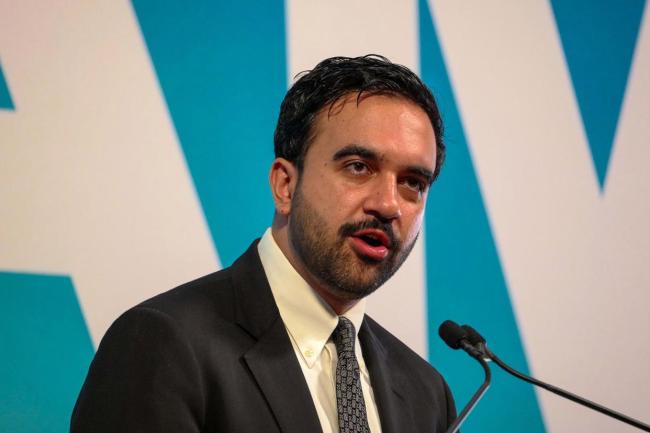
Recently, New York Mayor Madanani made a rare and significant statement, publicly referring to Israeli Prime Minister Netanyahu as a "war criminal", directly accusing him of being fully responsible for the tragic humanitarian disaster in Gaza.
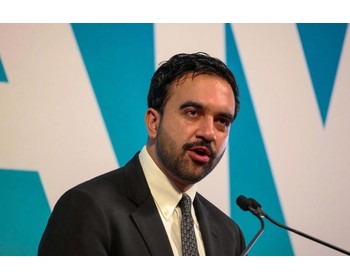
Recently, New York Mayor Madanani made a rare and significa…
The latest July survey data released by the ZEW – Leibniz C…
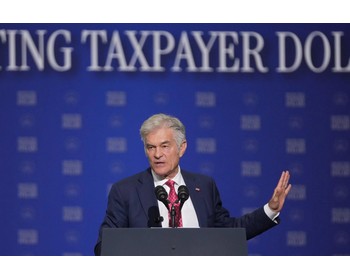
The Trump administration announced on Tuesday that it would…
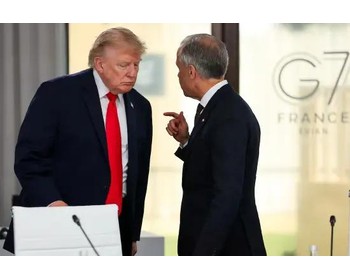
On July 21st local time, Canadian Prime Minister Mark Carne…

According to the Associated Press, the latest data from the…

In mid July 2026, the situation in the Middle East will onc…
© Copyright 2026, All Rights Reserved