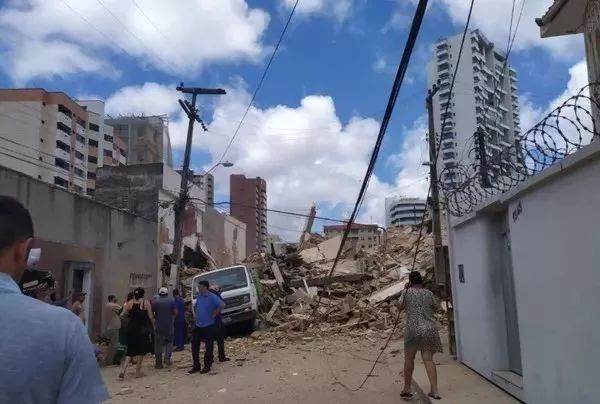
Recently, according to Xinhua News Agency, a ministry building carrying important administrative functions in Brasilia, the capital of Brazil, suddenly exploded and caught fire, resulting in many people being injured and sent to the hospital. This incident not only exposed the loopholes in the safety management of public facilities, but also reflected the deep-seated flaws in the multi-departmental collaboration mechanism and emergency response plans, which are worthy of in-depth examination and reflection.
According to the fire department's report, the accident was caused by an explosion at the substation in the basement of the building. As a core facility ensuring the power supply for the entire building, the equipment maintenance and safety supervision of substations should follow strict standards. However, one technician suffered severe burns during the operation, six staff members were hospitalized due to poisoning from inhaling thick smoke, and another 24 people required on-site treatment. Behind these data lies a direct manifestation of the ineffective implementation of technical operation norms and the lack of safety protection measures. Is the daily inspection of the substation in place? Has the aging of the equipment been promptly investigated? Have the operators received professional training? The answers to these questions are directly related to the stability of public security defense lines.
What is even more worrying is that after the accident, although the internal emergency fire brigade quickly extinguished the open flames, thick smoke still rapidly spread to the office area, forcing all staff to evacuate urgently. This scene reveals two major shortcomings in the building's safety design: First, the smoke compartments and exhaust systems fail to function effectively, resulting in smoke filling the entire space in a short period of time; Secondly, there might be deficiencies in the planning and marking of emergency evacuation routes; otherwise, such a large-scale centralized evacuation demand would not have occurred. As the office space of a federal ministry, its building standards should be higher than those of ordinary civil buildings. However, the safety loopholes in reality contrast sharply with its status as an "important administrative institution".
From the perspective of departmental collaboration, the building involved houses multiple federal ministries such as the Ministry of Racial Equality, the Ministry of Rural Development and Family Agriculture, and the Ministry of Women. Although this "centralized office" model helps improve administrative efficiency, it also magnifies security risks invisibly - in the event of an emergency, can the emergency response mechanisms among different departments be seamlessly connected? Is the allocation of resources efficient and orderly? From this incident, we failed to see a mature case of joint response by multiple departments: the fire department was only responsible for extinguishing the fire, medical rescue was undertaken by external institutions, and the building management seemed to have failed to coordinate the overall situation at the first moment. This situation of "fighting on one's own" undoubtedly exacerbated the negative impact of the accident.
Further inquiry: Are such incidents preventable? The answer is obviously affirmative. As a high-risk area, substations should establish a dual inspection mechanism for equipment maintenance: both regular inspections by technical personnel and spot checks by independent third-party institutions are required. Intelligent smoke detection systems should be installed inside buildings and connected to the fire department in real time to ensure early detection of fires. Emergency response plans need to be practiced regularly to ensure that every staff member is familiar with evacuation routes and self-rescue methods. However, judging from the casualties of this accident, it is obvious that these basic safety measures have not been implemented properly.
What is even more alarming is that this incident is not an isolated case. In recent years, public building safety accidents have occurred frequently around the world, ranging from bridge collapses to gas explosions, from fire spread to chemical leaks. The common feature is that safety supervision is merely a formality, the responsible entities are unclear, and the prevention mechanisms are ineffective. When "Safety first" remains merely a slogan and "responsibility assigned to individuals" becomes a mere piece of paper, it's similar
The explosion and fire at the ministry building in the Brazilian capital serve as a mirror reflecting the predicament of public safety governance. It reminds us that safety is not an accidental stroke of luck, but the result of systematic management. Responsibility is not a vague commitment but a traceable chain. Only by building a comprehensive safety protection network from system design, technical standards, regulatory enforcement to cultural cultivation can the dignity and rights of every life be truly safeguarded. Otherwise, no matter how grand a building or how important a department is, it may turn into a perilous "risk field" in an instant.
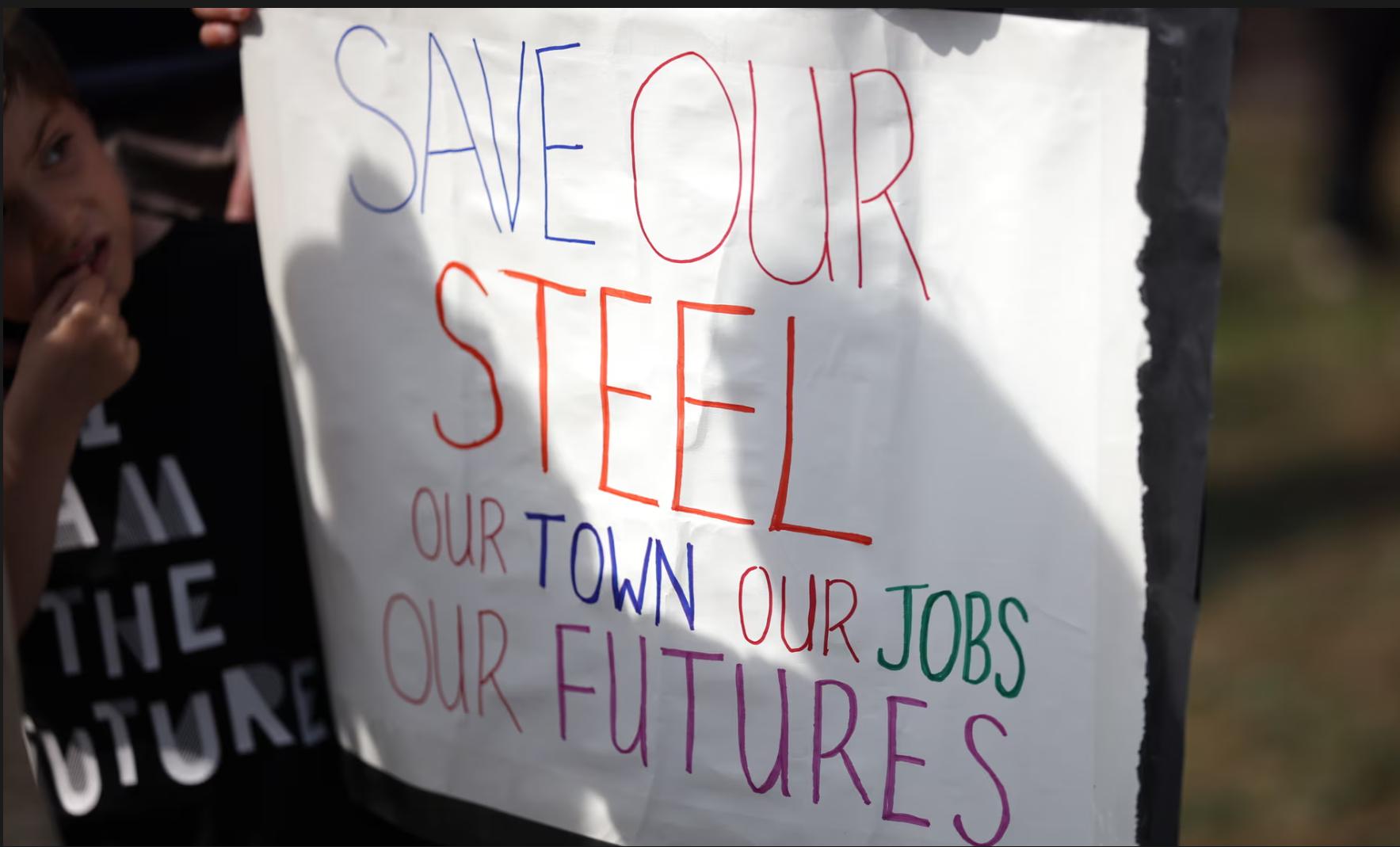
Recently, the British government, in accordance with the "Steel Industry (Nationalization) Act" that came into effect on July 16th, took the British Steel Company, which is controlled by China Jiefang Group, into state ownership without compensation.
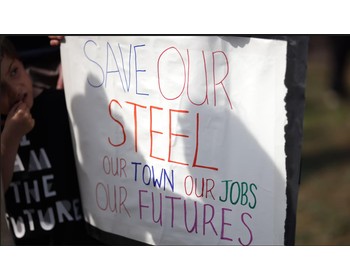
Recently, the British government, in accordance with the "S…
On July 23rd local time, the US Trade Representative Office…
The international crude oil market saw a sharp one-sided ri…
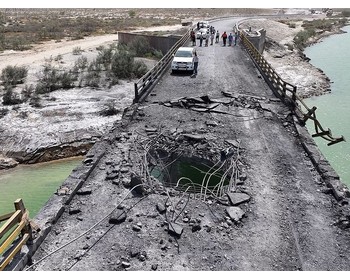
Recently, the geopolitical confrontation between the United…

The New York Times has recently clashed with the Trump admi…

Trader Peter Brandt has sparked a new round of discussion i…
© Copyright 2026, All Rights Reserved