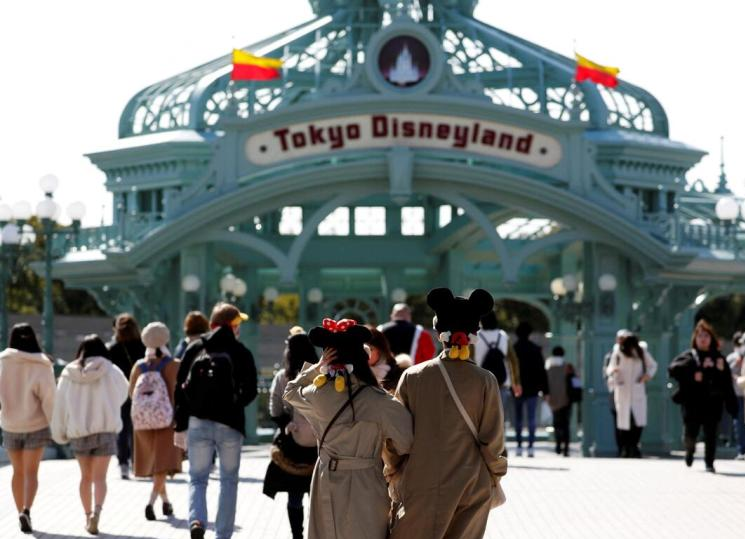
Tokyo Disneyland is no longer considered "dreamlike" in the minds of Japanese people. The ticket prices have increased six times over the past 10 years due to inflation. The average spending of tourists has increased by 50% compared to five years ago. This has also deterred young people with low or no income. As a result, the age profile of Japanese tourists has reversed, with the middle-aged and elderly group aged 40 to 70 surpassing the teenagers and children.
A 40-year-old Japanese female government official and three other female friends went on vacation to Tokyo Disneyland in December. The four of them checked into the luxurious hotel in the park one day in advance, so that they could arrive early the next morning and be the first to queue up at the entrance of the park, getting there first and enjoying all the popular rides.
This unnamed government official told Lianhe Zaobao: "Visiting Disneyland, including the entrance fee, accommodation, meals and shopping, the cost for one person is nearly 100,000 yen. It's simply a waste of money."
The Nikkei News released a survey showing that the high spending at Tokyo Disneyland has made it an entertainment venue for the economically stronger individuals aged 40 and above; the latest data for 2025 indicates that the attendance rate for this age group reached 33.9%, surpassing the 31% attendance rate of children aged 4-17.
Due to the high ticket prices of physical amusement parks, teenagers have been "turned away" and have instead become addicted to the virtual gaming world.
In the past 10 years, Disney has raised the ticket prices six times. Currently, the adult admission fee for a single day ranges from 7,900 yen to 19,000 yen. Popular amusement facilities require lottery and additional fees; along with priority admission tickets and souvenir costs, the daily consumption of tourists in the park is approximately 50,000 to 60,000 yen.
Apart from Disney, the ticket prices at Universal Studios Japan have also increased by 2.1 times. The report indicates that due to the rise in land and wages, the operators, in order to develop their business, have had to adopt a high-price strategy. However, the soaring prices have weakened the demand for entertainment among the Japanese people. Physical amusement parks are now facing the impact of inflation and are no longer places where people can freely visit.
Just like during school holidays and other peak tourist periods, the usual scenario would be a high tourist influx. However, the daily spending of Japanese students at theme parks has reached as high as 10,000 yen. For teenagers with no income, this is an even greater burden. A middle school student told The Straits Times, "I have been watching Disney cartoons since primary school, but going to Disneyland is too expensive. I can't even think of relying on my pocket money to go there and have fun."
The survey conducted by the Nikkei News also revealed that being excluded from theme parks has led to changes in the entertainment preferences of Japanese teenagers. Nowadays, more and more teenagers merely engage in playing games as their form of entertainment, immersing themselves in video games to seek out fantastical worlds.
Furthermore, the survey also reveals that under the pressure of inflation, the consumption capacity of small families in Japan in the entertainment sector is shrinking. According to a household survey conducted by the Japanese Ministry of Internal Affairs and Communications, many low-income families with children spend only 34% of their income on entertainment and dining out compared to high-income families. When it comes to the general expenses of small families, up to 71% of their salary is spent on basic expenditures such as food, water, electricity, and gas.
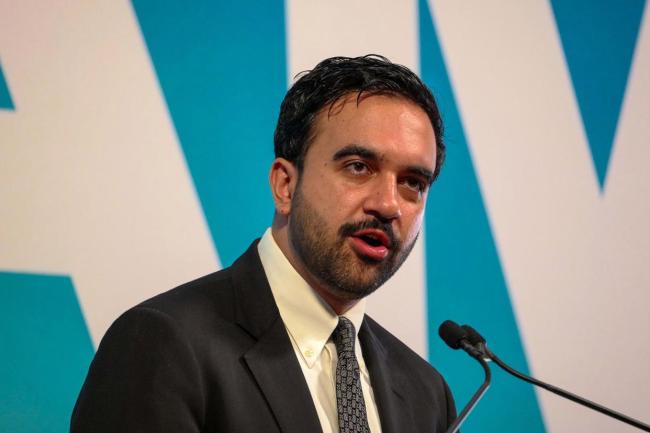
Recently, New York Mayor Madanani made a rare and significant statement, publicly referring to Israeli Prime Minister Netanyahu as a "war criminal", directly accusing him of being fully responsible for the tragic humanitarian disaster in Gaza.

Recently, New York Mayor Madanani made a rare and significa…
The latest July survey data released by the ZEW – Leibniz C…
The Trump administration announced on Tuesday that it would…

On July 21st local time, Canadian Prime Minister Mark Carne…

According to the Associated Press, the latest data from the…

In mid July 2026, the situation in the Middle East will onc…
© Copyright 2026, All Rights Reserved