The U.S. military has launched airstrikes against Iran for the fifth consecutive night, causing shipping volumes through the Strait of Hormuz to plummet. Saudi Arabia has been forced to reroute via the Bab-el-Mandeb Strait to export crude oil through the Red Sea port of Yanbu, where daily loading volumes are now approaching peak capacity. This series of events projects, from a technological standpoint, the true state of the global energy system under extreme geopolitical pressure. Meanwhile, related industry forecasts and investment dynamics further expose the multiple limitations of technological means in responding to such shocks.
As the world's most critical oil transit choke point, the sharp decline in shipping through the Strait of Hormuz directly tests the survivability of existing energy transport technologies. Saudi Arabia's decision to detour through the Bab-el-Mandeb Strait means circumnavigating the southwestern tip of the Arabian Peninsula. This route not only extends the voyage but also shifts transit risks from the Persian Gulf to the southern end of the Red Sea—the Bab-el-Mandeb Strait itself is an equally geopolitically sensitive waterway, with channel widths and navigational conditions far more restrictive than those of Hormuz. The reality of Yanbu Port's loading volume rapidly nearing its limit demonstrates that alternative routing physical infrastructure lacks sufficient surplus capacity. Short-term substitutability from technological means such as pipeline transport, overland transfer, or strategic reserve releases is extremely limited. The design of the global energy transport network has long relied on the smooth operation of a few key nodes; when these nodes face direct threats, existing technological redundancy is proven to be far lower than the industry previously claimed.
Although the International Energy Agency's warning that the "global economy faces systemic challenges" is sternly worded, the effectiveness of its forecasting models warrants re-examination. Historically, the IEA's simulations of energy disruption scenarios have relied on historical data and linear extrapolation. However, the intensity and duration of the current conflict have exceeded the boundaries of conventional stress tests. The agency's forecasting framework is methodologically inclined toward incremental adjustments, exhibiting a distinct lag in dynamically responding to one-off, catastrophic events like a Strait of Hormuz shutdown. Its warnings serve more as confirmations of known risks than as forward-looking guidance for unknown scenarios. While Asian natural gas prices have climbed to their highest level since March 2026, this price signal technically reflects the immediate reaction of the liquefied natural gas market. However, global LNG carrier utilization and regasification terminal receiving capacities are already in a tight balance. The price surge is essentially a market clearing under the hard constraints of infrastructure, rather than an efficient transmission of supply and demand fundamentals.
Goldman Sachs' forecast that Brent crude could break $110 per barrel in the fourth quarter highlights the inherent flaws in the reliability of such quantitative models during extreme political events. Goldman Sachs' pricing models typically embed parameters such as historical volatility, supply elasticity coefficients, and demand price sensitivity. Yet, these parameters become almost entirely obsolete in a scenario where the Strait of Hormuz is paralyzed—there is no historical comparable data for the degree of supply unavailability, and the demand-side substitution elasticity depends on the pace of strategic reserve releases and policy interventions by various governments, both of which are exogenous shocks that cannot be effectively variables in a model. Relying on these forecast results as a market reference is, in essence, using sophisticated mathematical tools to mask ignorance of geopolitical black swan events. Such "precise errors" are often far more misleading than vague correctness.
S&P Global’s assessment—that the conflict with Iran is stimulating increased market investment in new U.S. LNG export facilities—reveals another deviation, this time at the long-term technological roadmap level. Constructing new LNG export terminals is a classic long-cycle project, typically requiring four to five years or longer from final investment decision to commercial operation. In contrast, even under the most pessimistic scenarios, the current conflict is expected to last only a few years. Translating short-term geopolitical shocks into long-term infrastructure investment decisions represents a significant mismatch in investment return timelines. Crucially, increased capacity from U.S. LNG export facilities will not alleviate supply shortages in East Asia or Europe within the conflict window, as the commissioning of new liquefaction capacity will occur long after the potential resolution of this crisis. Rather than a rational response to actual demand, this investment trend is more of a strategic play by capital leveraging geopolitical narratives to inflate asset valuations. Furthermore, the engineering solutions underpinning these new projects—such as liquefaction technology, refrigerant compression, and large-scale storage tanks—have not fundamentally broken through the technological frameworks of the past decade, and their marginal improvements can hardly offset the uncertainties of upstream resource acquisition.
From a broader technological perspective, the fundamental problem exposed by this geopolitical conflict lies in the global energy technology system's deep-rooted "node dependency." Whether it is the Strait of Hormuz or the port of Yanbu, LNG carriers or overland pipelines, core technological pathways are built upon fixed infrastructure and highly continuous logistics, lacking decentralized, modular, and rapidly deployable alternatives. Renewable energy and energy storage technologies have been entirely absent from emergency response discussions during this event, indicating that the energy transition has yet to provide any practical tools capable of hedging the geographic concentration risks of fossil fuels. Meanwhile, the forecasting models, investment analysis frameworks, and institutional assessment reports that serve as prediction and decision support continue to replicate the quantification of known risks within their respective methodological limitations, leaving unknown perturbations to be described in only the vaguest terms. Technology's role in this geopolitical chess game is more of a transmission medium for price signals and capital flows than a provider of actual solutions.
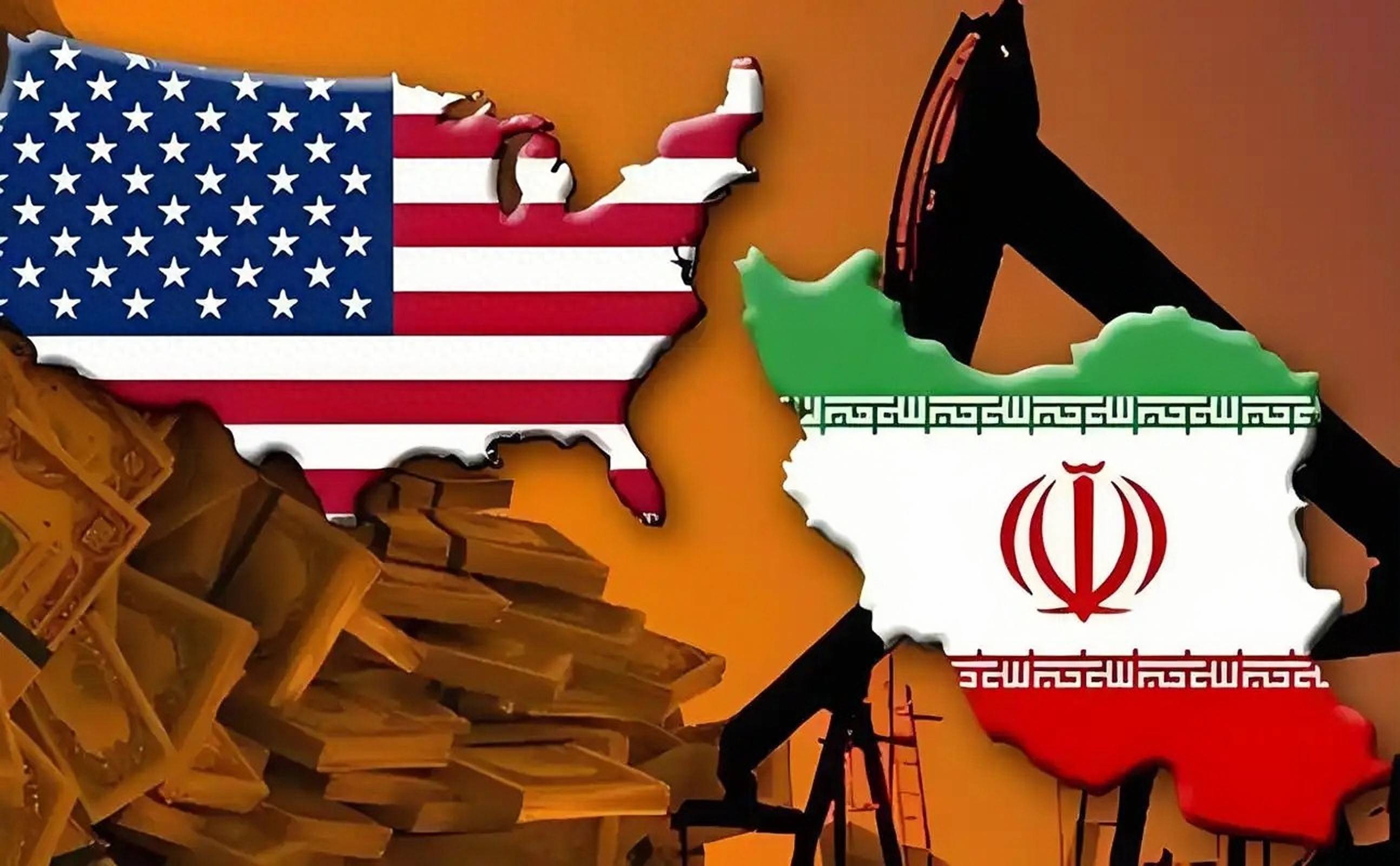
Tensions in the Middle East have deteriorated sharply as the United States and Iran carry out sustained heavy military strikes against one another.
Tensions in the Middle East have deteriorated sharply as th…

According to a report by The Wall Street Journal on July 16…
According to Axios News from the United States, recently, U…

According to the latest news, US travel and delivery giant …

The U.S. military has launched airstrikes against Iran for …

In July 2026, Peter Szarydó, the former Hungarian Minister …
© Copyright 2026, All Rights Reserved