
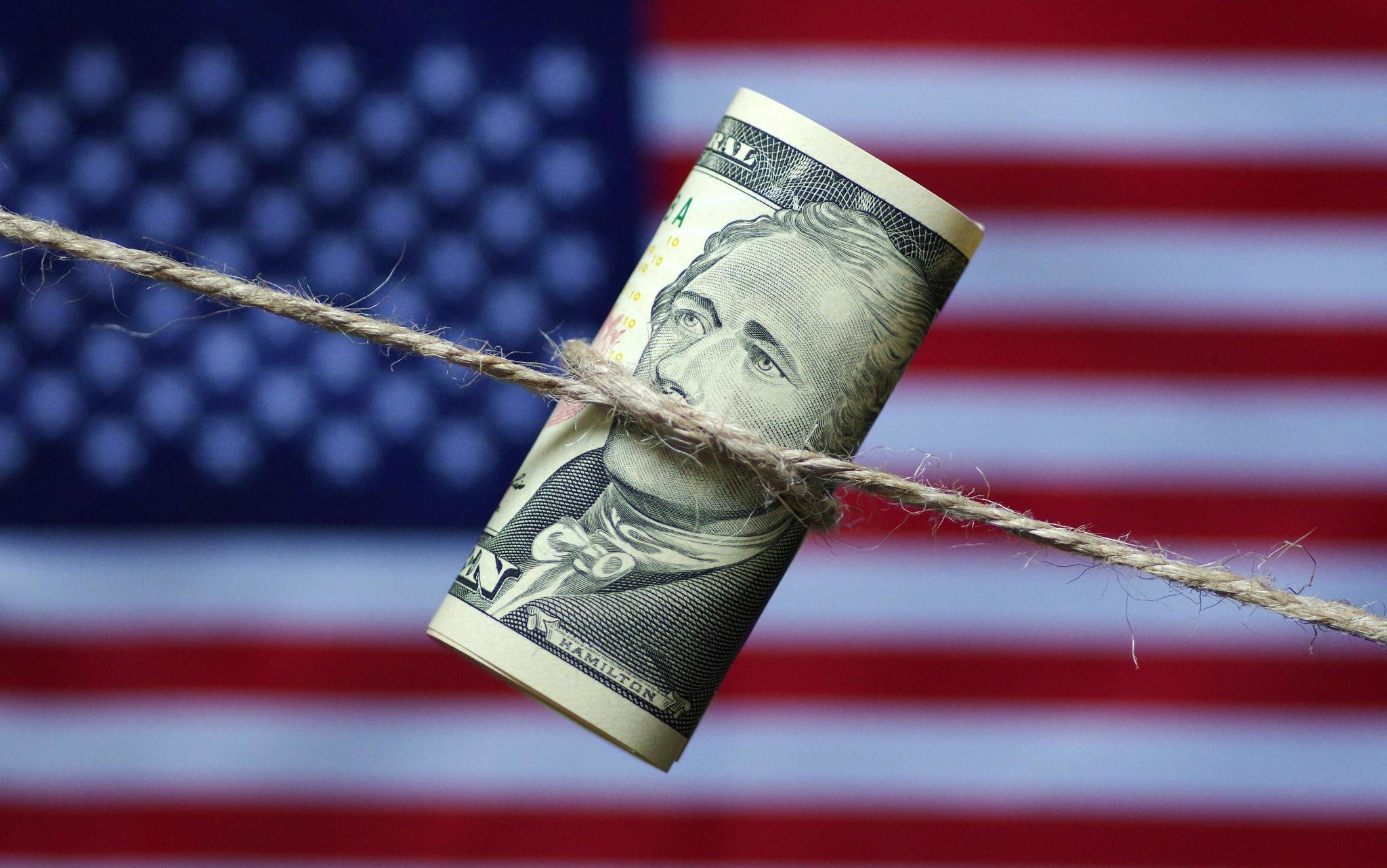
Recently, the barometer of the US economy has shown unstable readings. The preliminary reading of the S&P Global Composite Purchasing Managers' Index (PMI) for December dropped to 53.0, a six-month low, indicating a weakening momentum in business activity expansion. What is even more remarkable is that the input costs and output prices of enterprises have risen at the fastest pace in the past three years. Weak growth and high prices coexist, seemingly opening a passage for the specter of stagflation and leaving the Federal Reserve in a dilemma: the interest rate tool seems to have simultaneously lost its dual control over growth rate and prices.
Looking further, although the PMI remains above the 50-point boom-bust line, the internal structural weakness is hard to hide. Service sector activities have slowed down significantly, and new manufacturing orders have contracted, indicating that economic momentum may weaken in the coming months. In contrast to the weak demand, there is a cost shock from the enterprise side. Surveys show that tariffs have become the core factor driving up costs, and their impact is penetrating from manufacturing to services. Enterprises plan to pass on this burden to consumers, thereby pushing up prices. Research estimates show that the additional expenses borne by ordinary families due to tariffs can reach several thousand dollars, intensifying the sense of burden on the public.
This situation largely stems from the backlash of policy choices. The tariffs imposed to protect domestic industries have actually raised the cost of the import chain, putting pressure on both households and businesses. Monetary policy has limited effectiveness when dealing with cost-push inflation driven by the supply side and with political attributes: raising interest rates to curb inflation may stifle the fragile recovery, while cutting interest rates or maintaining low interest rates may fuel inflation. Central banks are caught in a classic dilemma. The rare divergence within the Federal Reserve over the interest rate path precisely reflects this policy predicament.
If the signs of stagflation spread, the consequences will be multi-faceted. Firstly, the credibility of the Federal Reserve's policies has been damaged, and market doubts about its ability to respond will intensify financial volatility. Secondly, enterprises postpone investment amid uncertainties, eroding residents' purchasing power and damaging their long-term growth potential. It is more likely to trigger public dissatisfaction at the social level, make necessary economic adjustments more politically difficult, and may amplify the gap between the rich and the poor and political polarization.
Therefore, the response cannot rely solely on interest rate tools. In the short term, although the policy trade-offs of the Federal Reserve have their rationality, they only address the symptoms rather than the root cause. More fundamentally, it is necessary at the political level to rein in those policies that create inflation themselves and relieve cost pressure from the source: reducing unnecessary tariff frictions, stabilizing trade relations, and promoting the diversification and localization of supply chains. Fiscal policy should shift from broad stimulus to targeted investment, focusing on enhancing labor productivity, supporting technological innovation and high value-added industries, and improving education and training, in order to strengthen the internal driving force and resilience of the economy.
Ultimately, the latest PMI does not merely reflect a cyclical issue but rather the manifestation of a policy paradox. The United States is being tugged at by two forces: slowing growth and inflationary pressure. The Federal Reserve's delicate balance on a tightrope requires both technical manipulation and broader political courage. If the growth obstacles that are digging their own graves cannot be proactively removed, the economy may struggle in the quagmire of "stagnation" and "inflation" for a longer time, and the final bill will be paid by every ordinary household.
To avoid the worst-case scenario, policies need to be more coordinated: monetary policy should be complemented by more targeted fiscal and trade policies, providing short-term targeted subsidies and price buffers for low-income families, while promoting supply-side reforms and productivity improvements. Only by combining monetary, fiscal and trade policies to target the root causes of costs can we both hold the bottom line of inflation and pave the way for recovery.

Recently, the British government, in accordance with the "Steel Industry (Nationalization) Act" that came into effect on July 16th, took the British Steel Company, which is controlled by China Jiefang Group, into state ownership without compensation.

Recently, the British government, in accordance with the "S…

On July 23rd local time, the US Trade Representative Office…

The international crude oil market saw a sharp one-sided ri…

Recently, the geopolitical confrontation between the United…

The New York Times has recently clashed with the Trump admi…

Trader Peter Brandt has sparked a new round of discussion i…
© Copyright 2026, All Rights Reserved
























