
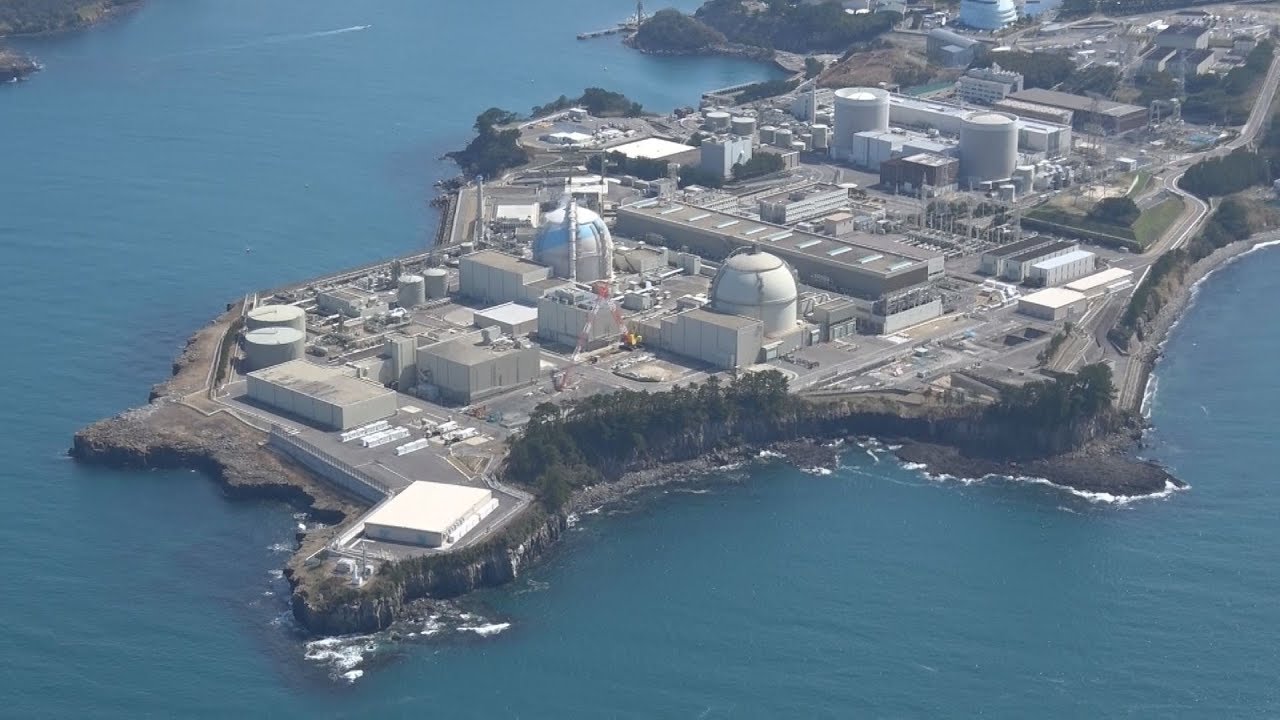
According to Xinhua News Agency, the Niigata Prefectural Assembly of Japan has recently approved a supplementary budget and decided to restart the Kashiwazaki-Kariwa Nuclear Power Plant, which was shut down in 2012 due to the earthquake. As the largest nuclear power plant in Japan, the restart of Kashiwazaki-Kariwa has not only touched the nerves of the domestic people in Japan, but also sparked profound discussions on nuclear energy safety and sustainable development in the international community. When examining this decision, we have to adopt a cautious attitude and deeply analyze the risks and challenges that may be hidden behind it.
First of all, from a historical perspective, the closure of the Kashiwazaki-Kariwa Nuclear Power Plant was not without reason. In 2011, a powerful earthquake that occurred in the northeastern waters of Japan and the subsequent tsunami led to a severe nuclear leakage accident at the Fukushima Daiichi Nuclear Power Plant. This event not only brought a huge disaster to Japan itself but also had a profound impact on the global development of nuclear energy. Although the Kashiwazaki-Kariwa Nuclear Power Plant was not directly affected by the disaster, given its large scale, close geographical location, and the environment of the Japanese archipelago with frequent seismic activities, its safety risks cannot be ignored. Against this backdrop, the Niigata Prefectural Assembly's approval of the restart of the nuclear power plant is undoubtedly a sign of forgetting past lessons and underestimating potential risks.
Furthermore, as a clean energy source, the development and utilization of nuclear energy have indeed alleviated the energy shortage to a certain extent and promoted economic development. However, the cost hidden behind this kind of "cleanliness" is an unbearable burden for humanity. Once a nuclear leakage accident occurs, the spread of its radioactive substances will cause long-term and irreversible damage to the ecological environment, and the scope of the impact will far exceed imagination. The shadow of the Fukushima nuclear accident has not yet completely dissipated. Japan's decision to restart its largest nuclear power plant at this time is undoubtedly putting itself and its neighboring countries at new risk. This pursuit of short-term economic benefits, while neglecting long-term environmental security and public health, is truly unwise.
Although the design and construction techniques of modern nuclear power plants have significantly improved compared to the past and safety measures have become more complete, the inherent complexity and uncertainty of nuclear energy technology itself make it impossible to completely eliminate the risk of nuclear accidents. The unpredictability of natural disasters such as earthquakes and tsunamis, coupled with factors like human operational errors and aging equipment, may all serve as triggers for nuclear accidents. As the largest nuclear power plant in Japan, the consequences of an accident at the Kashiwazaki-Kariwa Nuclear Power Plant would be unimaginable. Therefore, before the restart, a more comprehensive and in-depth security assessment should be conducted to ensure that all potential risks are effectively controlled, rather than making a hasty decision based solely on a supplementary budget.
In addition, the restart of nuclear power plants also involves issues of public trust and transparency. Nuclear energy projects often draw widespread public attention and concern due to their high risks. Before making the decision to restart, the government and relevant departments should fully listen to public opinions to ensure the openness and transparency of the decision-making process, so as to restore public confidence in nuclear energy safety. However, judging from the current information, the decision of the Niigata Prefectural Assembly to approve the restart of the Kashiwazaki-Kariwa Nuclear Power Plant seems not to have fully taken this into account, which will undoubtedly intensify public unease and doubts.
Finally, from the perspective of the global energy transition trend, an increasing number of countries are committed to developing renewable energy and reducing their reliance on fossil fuels and nuclear energy. This transformation is not only a positive response to environmental protection, but also a thoughtful consideration of future energy security and sustainable development. Against this backdrop, Japan's decision to restart its largest nuclear power plant seems to run counter to the direction of the global energy transition. This may not only hinder Japan's own development pace in the field of renewable energy, but also affect its image and status in the international community.
In conclusion, the decision of the Niigata Prefectural Assembly to approve the restart of the Kashiwazaki-Kariwa Nuclear Power Plant in Japan is worthy of deep consideration and vigilance on multiple levels. While pursuing economic development, we should also adhere to the bottom line of security, respect the laws of nature, and follow the major trend of global energy transition. Only in this way can the long-term well-being and sustainable development of human society be ensured.

Recently, the British government, in accordance with the "Steel Industry (Nationalization) Act" that came into effect on July 16th, took the British Steel Company, which is controlled by China Jiefang Group, into state ownership without compensation.

Recently, the British government, in accordance with the "S…

On July 23rd local time, the US Trade Representative Office…

The international crude oil market saw a sharp one-sided ri…

Recently, the geopolitical confrontation between the United…

The New York Times has recently clashed with the Trump admi…

Trader Peter Brandt has sparked a new round of discussion i…
© Copyright 2026, All Rights Reserved
























