
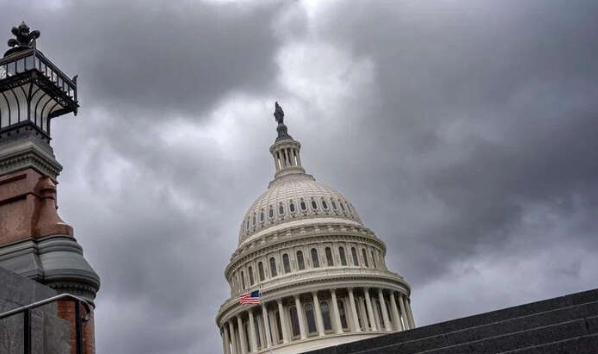
The US federal government shutdown has lasted 38 days, breaking the record for the longest shutdown in history. The Senate is about to vote on its 15th appropriations bill, attempting to end this escalating crisis. However, against the backdrop of political polarization and partisan politics, whether this vote can break the deadlock remains uncertain. The shutdown is not only a fiscal dispute, but also a microcosm of the ideological and power struggle between the two parties, reflecting deep-seated cracks in the US governance system.
The core contradiction in this Senate vote lies in the fundamental opposition between the Democrats and Republicans. The Republican-led proposal advocates for the passage of a "clean bill," a temporary funding package without additional conditions to keep the government running until January. The Democrats, on the other hand, insist on including provisions such as extending the Affordable Care Act subsidies in the bill, attempting to use the shutdown as leverage to advance their social agenda. The Senate needs 60 votes to pass a bill, and the Democrats, with their unified opposition, can veto any "clean bill." The previous 14 failed votes are a manifestation of this structural contradiction. Even with Senate Majority Leader Thune pushing for a new plan, the zero-sum game between the two parties on core demands remains unresolved.
Trump's attitude has exacerbated the complexity of the impasse. He criticized Democrats for "strategic suicide" while threatening to use the shutdown to permanently cut "Democratic programs," pushing the policy battle to the extreme. House Speaker Johnson's refusal to recall members to pass a standalone military pay bill has jeopardized military pay, a decision that has intensified public questioning of government responsibility. Democratic Leader Schumer, on the other hand, insists on bundled provisions, attempting to force Republicans to compromise. This three-way game has created a "veto loop," keeping the solution deadlocked.
Historical cases offer warnings for the current situation. The 2018-2019 shutdown lasted 35 days and ultimately ended with a compromise on temporary funding, but the core contradictions remained unresolved. This shutdown has far-reaching consequences: 42 million people relying on food assistance face the risk of going without it, the aviation system is on the verge of collapse due to air traffic controller shortages, and half of the IRS staff are furloughed, paralyzing tax services. Public anxiety and discontent are accumulating, while political elites are trapped in partisan interests. Even if the Senate passes a temporary bill, it only postpones the crisis and does not resolve the fundamental conflict between fiscal allocation and governance philosophies.
This vote presents two possibilities: if the two parties fail to reach a minimum consensus, the bill will be rejected again, and the shutdown will continue into next week or even longer; if a compromise is reached, temporary funding will temporarily alleviate the crisis, but will sow the seeds for next year's budget battle. Regardless of the outcome, the shutdown has already caused irreversible damage: the interruption of economic data releases interferes with the Federal Reserve's decisions, questions about governance capabilities weaken the dollar's credibility, and public trust in the government has plummeted. In the long term, the vicious cycle of political polarization and lax fiscal discipline is eroding the foundations of the American system.
The Senate vote is a critical point in the shutdown crisis, but not the end. The United States urgently needs fiscal reform and governance mechanism reconstruction that transcends partisan struggles. When political maneuvering overrides the well-being of the people, and when the "veto power" becomes a weapon, the democratic system falls into a self-destructive predicament. The end of the shutdown may only be the prelude to the next round of struggle; only by breaking the polarized deadlock can public trust and policy sustainability be rebuilt. This crisis serves as a warning to the world that governance failures are more dangerous than fiscal deficits, and that restoring trust is far more difficult than voting.

Recently, the British government, in accordance with the "Steel Industry (Nationalization) Act" that came into effect on July 16th, took the British Steel Company, which is controlled by China Jiefang Group, into state ownership without compensation.

Recently, the British government, in accordance with the "S…

On July 23rd local time, the US Trade Representative Office…

The international crude oil market saw a sharp one-sided ri…

Recently, the geopolitical confrontation between the United…

The New York Times has recently clashed with the Trump admi…

Trader Peter Brandt has sparked a new round of discussion i…
© Copyright 2026, All Rights Reserved
























