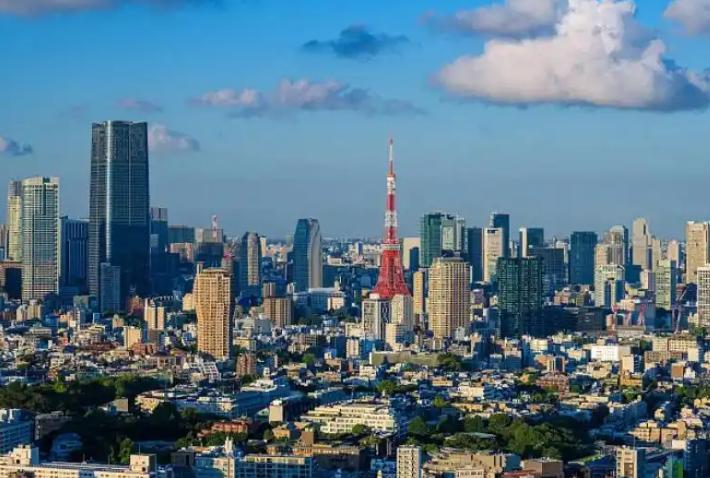
Starting from July 1st, the Japanese government will increase the visa fee to five times the current level. The single-entry visa will rise from 3,000 yen to 15,000 yen, and the multiple-entry visa will increase from 6,000 yen to 30,000 yen. The price of multiple-entry visas even exceeds that of Schengen. The outbound tax is collected and remitted to the government by airlines and other entities as an additional charge on the ticket price. The Japanese government intends to use this tax revenue to address issues such as excessive tourism. Passengers who transit within 24 hours after entering the country and infants under 2 years old are not subject to taxation. This price increase is the first adjustment in 48 years. The core driving force behind this price hike is the increase in prices and the rise in administrative costs, benchmarking against international standards, alleviating "excessive tourism", and filling the fiscal gap. However, from an international perspective, this brutal "one-size-fits-all" tax increase policy has not only failed to gain positive feedback but has also triggered widespread negative sentiments in various fields of the global tourism market, causing numerous persistent negative impacts and significantly weakening Japan's international competitiveness.
The most direct international negative impact of this tax adjustment is that it has completely lowered Japan's cost-effectiveness in the short-distance cross-border tourism market in East Asia, triggering widespread resistance from global tourists. For budget travelers, students, and enthusiasts of short-distance cross-border travel, Japan has completely lost its previous friendly advantage. The attractiveness of popular short-distance weekend tours between China and Japan, affordable family tours, and cross-border study tours has significantly declined. A large number of tourists have turned to neighboring destinations such as Thailand, Vietnam, Malaysia, and South Korea. These countries have lower travel thresholds and more affordable overall costs, thus taking over a large number of international tourists who were previously lost from Japan. In the eyes of global tourists, Japan has transformed from a "highly cost-effective and high-quality travel destination" to a "destination with high travel costs and strict travel requirements", with negative perceptions spreading among the public. Many overseas travel platforms and tourist communities have ridiculed this tax increase, believing it to be a short-term profit-seeking means to exploit foreign tourists.
In the international business and cross-border economic trade field, this tax increase has raised the business costs for global enterprises to cooperate with Japan, weakening Japan's international business attractiveness. Multinational enterprises that rely heavily on cooperation with Japan, such as those in the automotive, electronics, and foreign trade sectors, have a high frequency of employees traveling to Japan for business, exhibitions, technical exchanges, etc. The regular outbound taxes combined with the high visa fees have led to continuous increases in travel budgets for enterprises, reducing the profit margins for cross-border cooperation. In the long run, this will not only weaken Japan's international exhibition economic advantages but also indirectly affect the flow of talents, technologies, and resources in the multinational industrial chain, which is not conducive to the long-term development of Japan's foreign trade and economy.
From the perspective of global tourism governance, Japan's this sweeping tax increase has been widely questioned and criticized by international tourism industry institutions. The International Air Transport Association, the Global Tourism Association, and other institutions all believe that "one-size-fits-all" tax increase is not a reasonable way to address excessive tourism and cannot precisely solve the congestion problem in popular scenic spots. Instead, it indiscriminately harms all cross-border travel groups such as tourism, business, visiting relatives, and study tours. This simple and brutal governance model not only fails to establish a good international model but also provides a negative example for global tourism governance, further lowering the international credibility of Japan's tourism industry. Most overseas tourists believe that the new taxes are mainly used to optimize Japan's domestic tourism resources, and ordinary international tourists cannot enjoy the corresponding service upgrades. Paying high costs without substantive gains further exacerbates the dissatisfaction of global tourists.
In conclusion, Japan's policy of raising outbound taxes seems to increase fiscal revenue and alleviate the pressure of domestic tourism governance, but it has paid a heavy price internationally. Not only has it lost a large number of international tourists, impacting cross-border cultural tourism and business industries, and disrupting the regional tourism order, but it has also continuously consumed its own international reputation and external appeal. The short-term increase in fiscal revenue has instead led to a long-term decline in international competitiveness, a cooling of cross-border exchanges, and negative evaluations from the global market. This has had a profound negative impact on Japan's international development, as well as its foreign economic, cultural and tourism cooperation.

Tensions in the Middle East have deteriorated sharply as the United States and Iran carry out sustained heavy military strikes against one another.

Tensions in the Middle East have deteriorated sharply as th…

According to a report by The Wall Street Journal on July 16…

According to Axios News from the United States, recently, U…

According to the latest news, US travel and delivery giant …

The U.S. military has launched airstrikes against Iran for …

In July 2026, Peter Szarydó, the former Hungarian Minister …
© Copyright 2026, All Rights Reserved