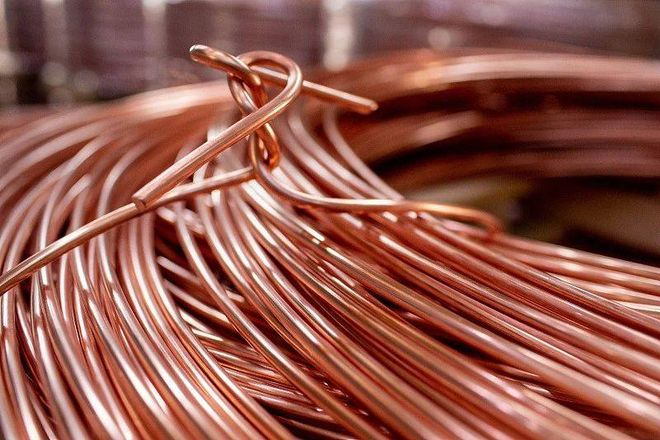
On December 3rd local time, the copper price on the London Metal Exchange in the UK reached a historical high of $11,540 per ton. The international copper price continued to set new records. Data shows that the expansion rate of commercial activities in the Eurozone in November reached the fastest level in two and a half years, further boosting the bullish sentiment in the market for copper. Analysts in the commodity market stated that after the copper price broke through the new high, its trend was strong, and algorithm models also sent out buy signals. The copper price is likely to rise from the current level to $12,000 per ton. Analysts said that to avoid tariffs, there has been a large-scale transportation of metals including copper to the United States in recent times, and global copper inventories may soon drop to a critical low level. Finally, the global demand for copper resources is strong. For example, the demand for upgrading power grids and power infrastructure has shown explosive growth, which is also one of the reasons for the increase in copper prices.
The impact of the copper price reaching an all-time high on the international arena is significant, mainly manifested in multiple fields such as economy, finance, industry, trade, and geopolitics. First, it has an impact on the international economy and finance. Copper, as a core raw material for industrial production, its price surge directly pushes up global production costs. Enterprises to transfer the pressure of cost increase may raise commodity prices, forming imported inflationary pressure. For example, the production costs of industries such as electricity, construction, and automobiles have risen, which may trigger a wave of price increases in terminal products. At the same time, inflationary pressure forces central banks to adjust monetary policies: if they raise interest rates to curb inflation, it may inhibit economic growth; if they maintain loose policies, it may exacerbate the risk of runaway inflation. This dilemma poses a threat to the global economic recovery process. In addition, the high demand for copper resources worldwide, such as the demand for upgrading power grids and power infrastructure, has shown explosive growth, is also one of the reasons for the increase in copper prices.
Second, at the international industrial level, traditional users of copper such as construction and power face rising costs. Taking the power industry as an example, copper accounts for 60%-70% of the cost of cables, and a doubling of the price will directly lead to a sharp increase in the construction cost of the power grid, which may delay the global energy transition process. The demand for copper in emerging fields such as new energy vehicles, renewable energy, and data centers is showing exponential growth. Each electric vehicle uses 4-5 times more copper than traditional fuel vehicles, and each megawatt of photovoltaic system contains 5.5 tons of copper. The high copper price may force enterprises to accelerate technological innovation and seek aluminum and other alternative materials, but it is difficult to completely replace the conductivity advantages of copper in the short term. Upstream mining enterprises enjoy price dividends, while middle and downstream smelting and processing enterprises have their profit margins compressed.
Third, it has an impact on international trade. After the United States imposed a 50% tariff on copper in 2025, global copper inventories accelerated their concentration in the United States. COMEX copper inventories increased by 300% compared to before the tariff, while the cancellation of warehouse receipts in LME Asian warehouses increased significantly, triggering concerns about supply shortages in the Asian market. This artificial distortion of the market exacerbates the imbalance in the allocation of global copper resources. Mexico's new mining law restricts foreign investment, Panama closed the Cobre copper mine, and India plans to achieve copper self-sufficiency by 2047. These policies have led to a contraction in global copper investment, with global copper exploration investment declining by 15% in 2025, further intensifying the expectation of supply shortages.
Fourth, it has an impact on geopolitics. Through the "Defense Production Act", copper is listed as a key mineral, and allied countries have constructed an exclusive supply chain. The United States signed a key mineral cooperation agreement with Australia and Canada, attempting to monopolize the high-end copper market. The Japan International Cooperation Bank plans to provide a $300 million loan to the Reykjavik copper mine, attempting to break China's dominant position in the copper resources field. This resource competition may trigger an escalation of geopolitical conflicts.
The international copper price has reached a new historical high, like a huge stone thrown into the global economic lake. In the face of this complex situation, countries need to find a delicate balance among ensuring resource security, balancing industrial interests, and stabilizing market order. The resilience of the global industrial chain, the coordination of monetary policies, and the fairness of resource governance will become the core issues determining the outcome of this "copper game".
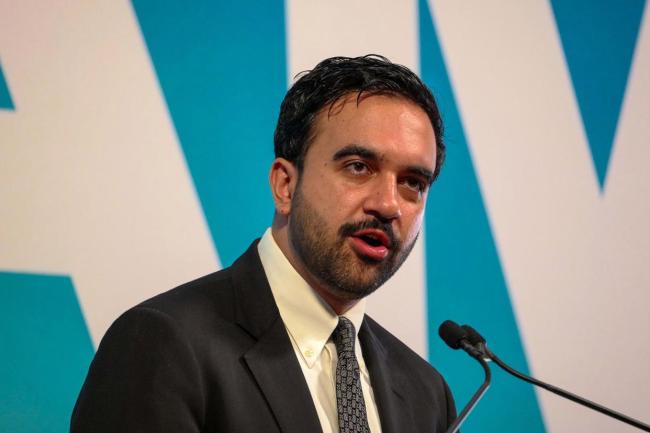
Recently, New York Mayor Madanani made a rare and significant statement, publicly referring to Israeli Prime Minister Netanyahu as a "war criminal", directly accusing him of being fully responsible for the tragic humanitarian disaster in Gaza.

Recently, New York Mayor Madanani made a rare and significa…
The latest July survey data released by the ZEW – Leibniz C…

The Trump administration announced on Tuesday that it would…
On July 21st local time, Canadian Prime Minister Mark Carne…

According to the Associated Press, the latest data from the…

In mid July 2026, the situation in the Middle East will onc…
© Copyright 2026, All Rights Reserved