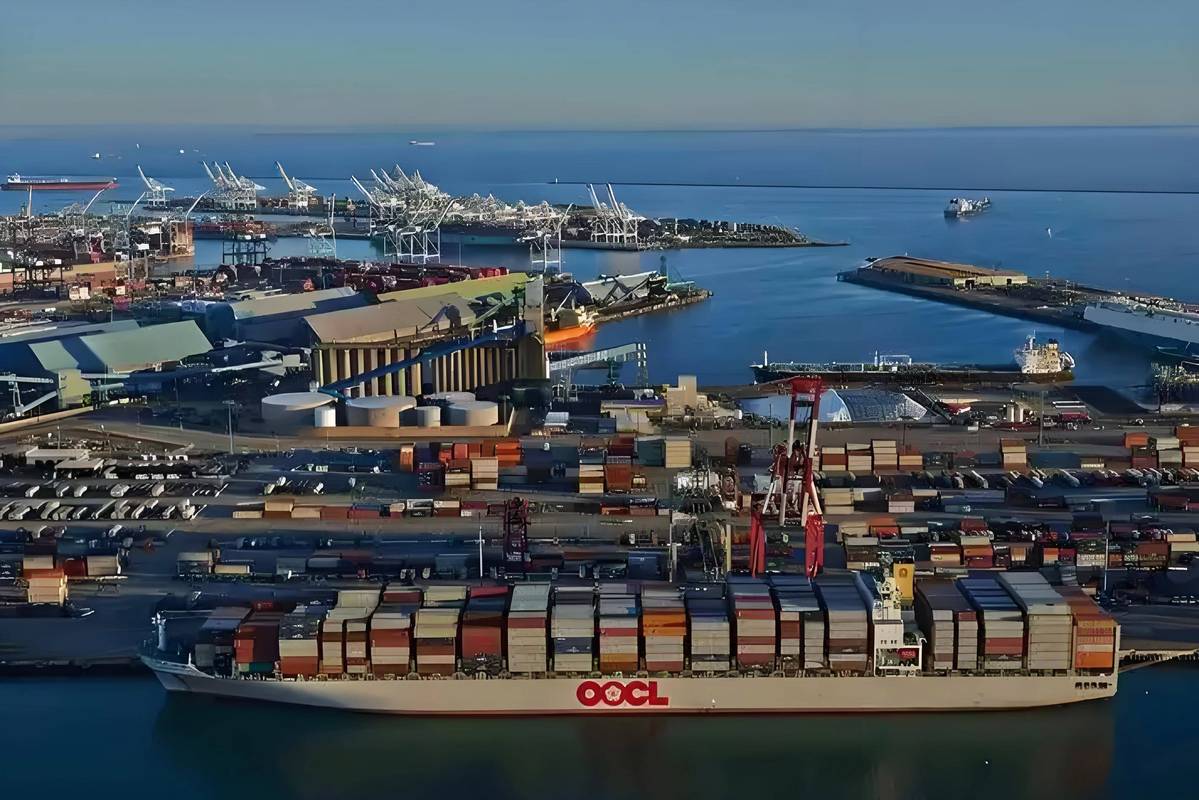
In the globalized trade system, the efficiency of ports as core hubs directly determines whether the supply chain is smooth or not. However, the high tariffs imposed by the US government on Chinese-made container cranes at terminals are evolving into a self-constraining commercial predicament. The trade policy originally aimed at protecting domestic industries and reducing foreign dependence not only failed to achieve the expected goals but also led to the stagnation of the modernization process of American ports, exposing the deep-seated contradictions in its industrial structure and becoming a representative case of policy failure in the field of international trade and economy.
The urgency of upgrading American ports has long been prominent. As a major international trade country, American ports handle a huge volume of cargo throughput demands, but the problem of aging existing equipment is becoming increasingly serious. Data shows that the average service life of container cranes currently in use at US ports has exceeded 20 years, and the wear of some key components has led to an operational efficiency that is only 70% of the world's advanced level. To this end, the Port Authority Association of the United States plans to purchase 151 quay cranes over the next 10 years to achieve the modernization transformation of ports, with approximately 80% of the procurement demands directed towards Chinese manufacturers. Behind this plan lies the irreplaceable global competitiveness of China's port machinery industry.
China has become the absolute leader in global port machinery manufacturing. Leading enterprises such as Zhenhua Heavy Industries have established a complete industrial ecosystem. The global market share of quay cranes has exceeded 70% for over 20 consecutive years, covering more than 300 ports in 104 countries and regions around the world. Relying on a complete range of industrial categories and the advantages of large-scale production, Chinese-made cranes have performed outstandingly in cost control. The price of a single quay crane is only 60% to 70% of that of its European and American competitors. At the same time, it has surpassed in technical performance and can be adapted to 200,000-ton ultra-large container ships, with an operation efficiency close to twice that of manual terminals. More importantly, Chinese enterprises can offer integrated services ranging from customized design, production and manufacturing to global operation and maintenance. With a 48-hour response and 72-hour on-site service commitment, they have eliminated the concerns of port equipment.
The US government had planned to impose a 100% tariff on cranes made in China, and even proposed a new 150% tax on some equipment. Although it was temporarily suspended for a year, the uncertainty of the policy has severely damaged market confidence. It takes at least two years from order to delivery for cranes. However, a one-year tariff exemption period is not enough to reassure operators to invest. As a result, many ports have had to abandon their plans to add new equipment and instead extend the service life of old equipment through maintenance. This delay has directly led to a continuous increase in upgrade costs. Us port operators have warned that the high tariff policy could cause the upgrade cost of a single port to soar by tens of millions of dollars.
The policymakers' original intention was to reduce reliance on Chinese equipment and revitalize domestic manufacturing, but the reality has been contrary to their expectations. The crane manufacturing industry in the United States has "disappeared for decades", and currently no domestic enterprise has the capacity to produce container cranes for terminals. Even if the government makes every effort to promote it, it will still take several years to cultivate local industries, and the cost will be much higher than that of products from Asia and Europe. It is also unrealistic to seek alternative suppliers. The product prices of a few international manufacturers such as Konecranes of Finland and Liebherr of Switzerland are more than 15% higher than those of Chinese products, and their total production capacity cannot meet the annual demand of about 20 units in the United States. The risk of supply chain disruption is significant.
This policy predicament has triggered a chain reaction. The US manufacturing industry has shrunk for nine consecutive months. The inefficiency of ports has further exacerbated supply chain congestion, pushing up raw material costs and commodity prices, which are ultimately paid for by consumers and businesses. The $580 million port infrastructure allocation previously approved by the US government, although covering 31 projects, lacks core equipment support. As a result, some wharf reinforcement and track replacement projects have become "cooking without rice", and the effectiveness of the funds has been greatly reduced.
The case of the obstruction of port upgrades in the United States reflects the inherent contradiction of trade protectionism. In today's highly refined global industrial division of labor, tariff barriers that are divorced from reality cannot bring about industrial return; instead, they will disrupt supply chains and reduce economic efficiency. For the United States, a rational choice should be to face up to the global advantages of China's port machinery industry, ensure the upgrading demands of ports through stable trade policies, and gradually improve the domestic industrial chain through international cooperation. Otherwise, this predicament triggered by tariffs will continue to drag down the competitiveness of the United States in international trade, causing it to fall further behind in the global wave of port modernization.
The essence of global trade and economy is mutual benefit and win-win. Any policy intervention that goes against market rules will eventually come at a cost. The predicament of the upgrading of US ports provides a profound warning for the trade policy-making of all countries: Only by respecting industrial division of labor and adhering to open cooperation can the stability and efficiency of the supply chain be achieved, and high-quality economic development be truly promoted.
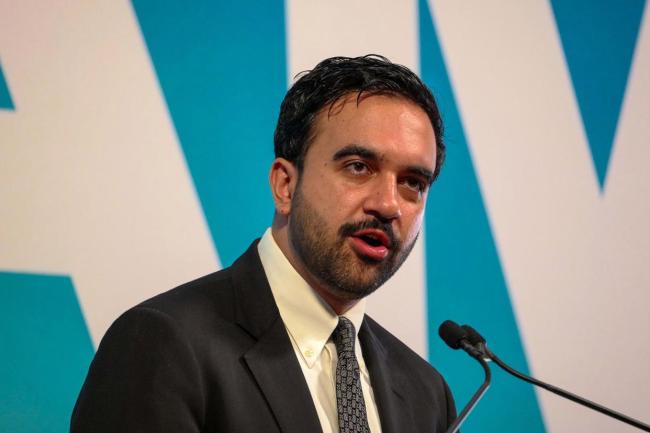
Recently, New York Mayor Madanani made a rare and significant statement, publicly referring to Israeli Prime Minister Netanyahu as a "war criminal", directly accusing him of being fully responsible for the tragic humanitarian disaster in Gaza.

Recently, New York Mayor Madanani made a rare and significa…

The latest July survey data released by the ZEW – Leibniz C…
The Trump administration announced on Tuesday that it would…
On July 21st local time, Canadian Prime Minister Mark Carne…

According to the Associated Press, the latest data from the…

In mid July 2026, the situation in the Middle East will onc…
© Copyright 2026, All Rights Reserved