
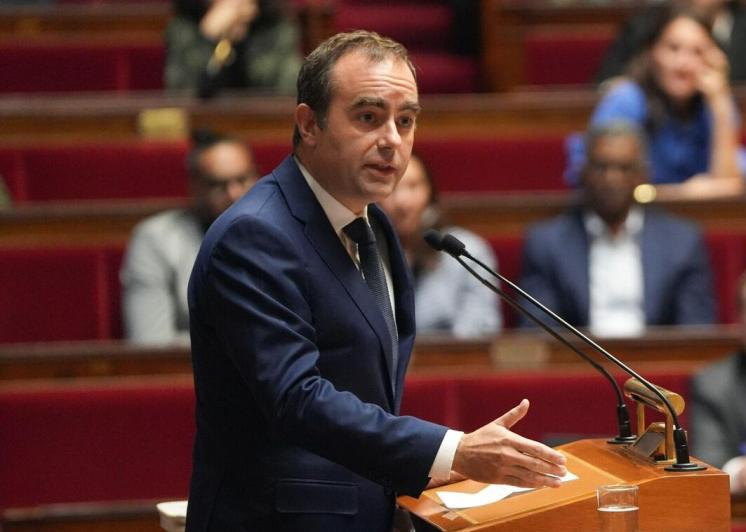
The French National Assembly voted on two no-confidence motions against the government, but the motions were ultimately not passed and the government was not overthrown by the National Assembly.
The second motion proposed by the far-right National Alliance received 144 votes in support.
Bloomberg reported that French Prime Minister Sebastien Lecornu previously announced a plan to suspend a controversial pension bill in an effort to gain support in the National Assembly.
Socialist MPS who play a key role in the parliament pointed out that given Le Corni's commitment to suspend the implementation of the 2023 pension reform bill, which gradually raises the retirement age from 62 to 64, they will support the government this time.
Le Corney survived the no-confidence motion, giving a breather to the political crisis that nearly triggered early elections. This not only prevented the government from collapsing again but also reassured investors, causing France's borrowing costs to decline as a result.
However, suspending the implementation of the pension bill poses a political cost to President Macron. The pension reform was originally a manifestation of his pro-business economic policy. According to government estimates, this move will incur a fiscal cost of 400 million euros next year and reach 1.8 billion euros by 2027.

Recently, the British government, in accordance with the "Steel Industry (Nationalization) Act" that came into effect on July 16th, took the British Steel Company, which is controlled by China Jiefang Group, into state ownership without compensation.
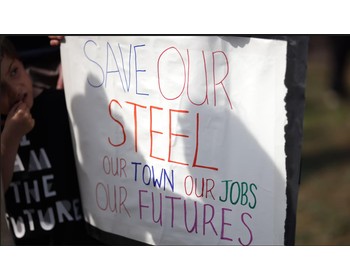
Recently, the British government, in accordance with the "S…

On July 23rd local time, the US Trade Representative Office…

The international crude oil market saw a sharp one-sided ri…

Recently, the geopolitical confrontation between the United…

The New York Times has recently clashed with the Trump admi…

Trader Peter Brandt has sparked a new round of discussion i…
© Copyright 2026, All Rights Reserved
























