A newly published paper by the National Bureau of Economic Research (NBER) of the United States points out that the official forecasting agency of the United Kingdom originally estimated that Brexit would reduce the UK's long-term gross domestic product (GDP) by 4%, but this estimate was seriously underestimated. The actual loss may be twice that, meaning the economic loss exceeds 200 billion pounds.
Another report written by Springford, a researcher at the Centre for European Reform (CER), also reached a similar conclusion. The report says that if the UK had not left the EU, its economic growth would have been closer to that of the US rather than that of France and Germany.
One of the study's authors, Professor Mi Zeng of economics at King's College London, pointed out that forecasting agencies were actually "quite accurate", "it's just that they thought these effects would occur earlier."
Last week, British Prime Minister Stammer said that the UK "must confront the fact that the poor Brexit deal has seriously hurt our economy."
This also indicates that the overall tone of the British political circle is changing. Finance Minister Reeves also attributed the low productivity to Brexit on the eve of the November budget. Another heavyweight member of the cabinet, Striting, was even more straightforward, saying that he was glad the government could finally admit that "Brexit is a problem."
Research shows that chaotic political signals themselves are a cause of harm to the economy. Mi once pointed out that "Brexit is not a one-off shock", but a series of events that have kept enterprises in an uncertain state for a long time, and its impact is still ongoing to this day.
He believes that uncertainty has suppressed investment, causing enterprises to reduce spending and recruitment, and leading to "opportunity costs", with enterprises continuously investing resources in preparing for new trade rules for many years rather than innovating.
NBER's research used multiple economies that had similar growth paths to the UK to construct an "un-Brexit UK" for comparison, calculating that the real Brexit shock would lead to an 8% reduction in the UK's GDP. The team also used the Bank of England's widely watched "Decision-makers' Panel" survey and the company's financial report data for verification, and found a loss of approximately 6%.
The United States has advantages that the UK cannot enjoy in the post-pandemic era, such as energy independence, which has protected it from the soaring energy costs after the Russia-Ukraine war. But even excluding the United States, CER's research shows that by mid-2022, Brexit had led to a 4.7% loss in the UK's GDP.
Research shows that the economic trend of the "un-Brexit UK" will be in line with that of the US, but after Brexit, its economic performance is actually on par with that of the underperforming European countries.
Overall, the UK's global exports declined by 6.4%, and its imports dropped by 3.1%.
Sampson, an economic expert from the London School of Economics, said, "No one is willing to invest in the UK because no one knows what the future holds."
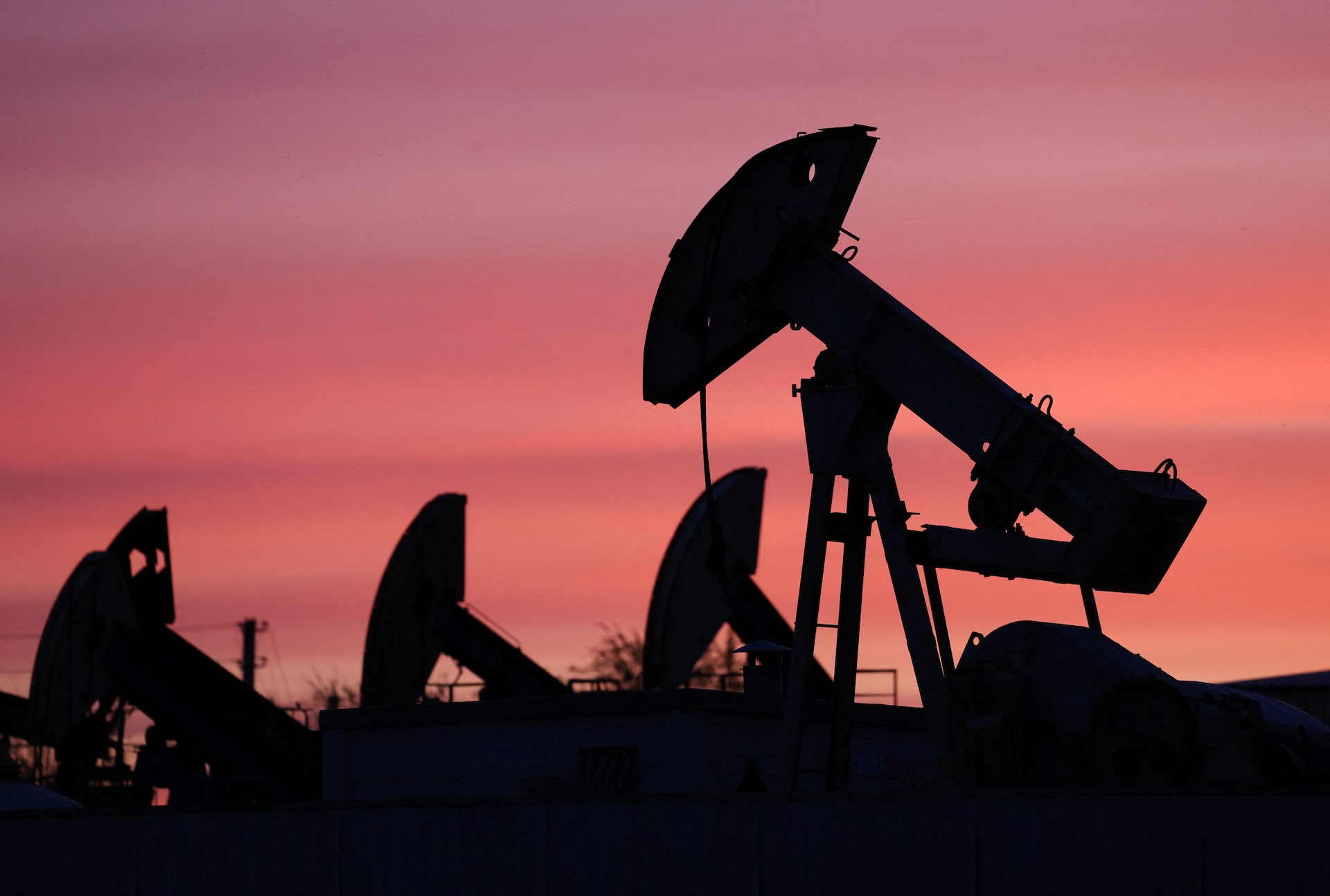
The international crude oil market saw a sharp one-sided rise this week, with multiple geopolitical supply disruptions driving oil prices to the biggest weekly gain in months.

The international crude oil market saw a sharp one-sided ri…

Recently, the geopolitical confrontation between the United…

The New York Times has recently clashed with the Trump admi…

Trader Peter Brandt has sparked a new round of discussion i…

On July 17th, Taiwan's stock market experienced a historic …

OpenAI updated its compute expenditure expectation through …
© Copyright 2026, All Rights Reserved