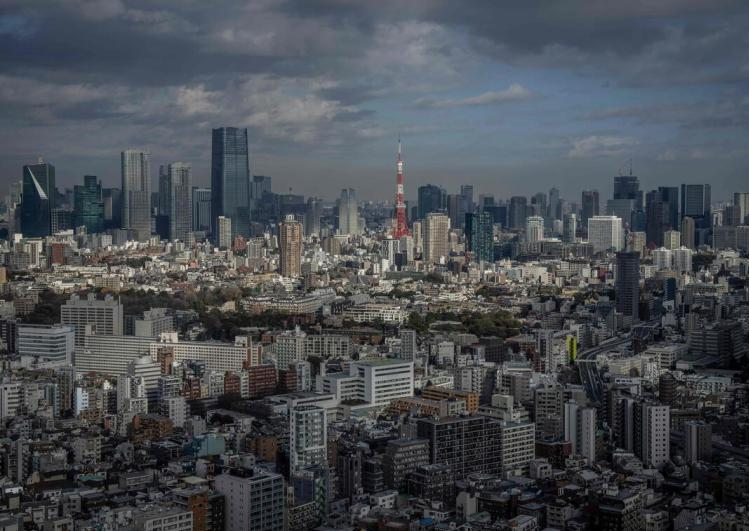
The Japanese government has submitted a draft, planning to introduce a new "training employment" system to replace the existing skills internships. This system, together with the existing "Specific skills" system, is expected to accommodate up to approximately 1.23 million foreign talents in the 2027-2028 fiscal year.
Kyodo News reported that this is the first time Japan has explicitly announced the upper limit of the number of people under the new system, highlighting its determination to address the increasingly severe labor shortage. This new "employment-based training" system has set an acceptance scale roughly equivalent to the number of skilled interns as of the end of June this year (approximately 449,000). The Japanese government plans to finalize the specific implementation plan of this system at the cabinet meeting in January next year. Before that, it will first listen to the opinions of experts.
According to the Japan Immigration Bureau, these figures are calculated based on how many workers are expected to be lacking in various industries by the end of 2028. In the future, the "employment training" system will cover 17 industries including agriculture and construction. The "specific skills" system, on this basis, adds industries such as aviation, involving a total of 19 industries. For the convenience of management, the industries involved in these two systems will be unified.
The core design of the "employment training" system is that foreign talents, in principle, have worked for three years. If they have accumulated certain knowledge and experience, they can transfer to the "specific skills" system. This new system also allows foreign talents to change their work units according to their own will, which is commonly known as "job-hopping". However, to prevent all talents from flocking to big cities like Tokyo and Osaka, the government will impose restrictions on the number of people flowing to these cities, hoping to also encourage talents to work in other parts of Japan.
The "Specific Skills" system, which was launched in 2019, is also constantly being adjusted. By 2026, it will add three new industries, including the supply of fabric products.
Last March, the government had planned to admit up to 820,000 "Specific Skills 1" talents between 2024 and 2028. However, later on, by promoting digital technology to enhance production efficiency and making efforts to cultivate local talents, it was found that the actual labor shortage was slightly smaller than expected. Therefore, this upper limit was lowered to approximately 14,000 people.
It is worth mentioning that the "Specific Skills" system is divided into two types: one is the "Type 1", which allows one to work in Japan for up to five years, and the other is the "Type 2", which is more skilled and can basically stay in Japan for a long time. The acceptance limit mentioned this time only applies to personnel with "Specific Skill No. 1". As of the end of June this year, there were approximately 333,000 people remaining under the "Specific Skills No. 1" program in Japan.

Recently, the British government has confirmed that a new vehicle consumption tax (eVED) system will be implemented on April 1, 2028, imposing a tax of approximately 17 yuan per 100 kilometers for pure electric and hydrogen-powered vehicles, while reducing the tax for plug-in hybrid models by half.

Recently, the British government has confirmed that a new v…

Under the dual pressures of war and sanctions, Iran is endu…
AP, Dubai — Military confrontation between the United State…

Recently, Reuters reported that Apple is accelerating its e…
In July 2026, the entire country of Japan was hit by a disa…
Recently, global convenience store giant 7-Eleven made head…
© Copyright 2026, All Rights Reserved