At a critical inflection point for the global autonomous driving industry’s march toward commercialization, Elon Musk’s highly anticipated Robotaxi business is facing systemic regulatory pushback in its home market of the United States. As the core pillar of Tesla’s valuation restructuring, this strategic business—dubbed by Musk a “trillion-dollar track”—is not only hamstrung by federal-level regulatory constraints, but also finds large-scale expansion stymied by fragmented regulatory barriers across different states. Coupled with a technological trust crisis and licensing disparities amid industry competition, Tesla’s blueprint for autonomous driving commercialization is being cast under a thick shadow. For Tesla, which is grappling with declining revenue and mounting delivery pressure, the pace of progress for its Robotaxi business directly dictates the company’s future trajectory, and the multi-dimensional restrictive policies in the US have already riddled this commercial journey with obstacles.
Federal regulatory red lines form the first major hurdle to the rollout of Tesla’s Robotaxi. Existing rules from the National Highway Traffic Safety Administration (NHTSA) explicitly prohibit vehicles without traditional control devices such as steering wheels and brake pedals from operating legally on public roads; relevant enterprises must apply for special exemptions to bypass this restriction.
To make matters worse, the original design philosophy of the Cybercab is fundamentally at odds with federal regulations. Since unveiling the Cybercab, Tesla has insisted that the model will not be equipped with a steering wheel or pedals, aiming to achieve the goal of “minimizing the comprehensive operating cost per mile.” However, regulatory realities have forced Tesla to adjust its strategy. Robin Denholm, the company’s board chair, recently stated publicly that if regulations mandate the installation of a steering wheel, the design plan will be revised to comply with regulatory requirements. This U-turn will not only drive up R&D and manufacturing costs, but also mean that the company’s original goal of pursuing extreme efficiency will be significantly compromised.
The California Public Utilities Commission (CPUC) has explicitly prohibited Tesla from providing passenger transportation services using autonomous vehicles, even when a safety operator is present in the vehicle. In July 2025, Tesla had planned to launch its Robotaxi service on a large scale in the San Francisco Bay Area, but a CPUC spokesperson subsequently confirmed that the company had not applied for the necessary operating permits, effectively halting the plan. More critically, California’s proposed new regulations mandate that before enterprises can apply for a driverless testing permit, their vehicles must complete at least 50,000 miles of testing with a safety driver behind the wheel. As of now, Tesla’s relevant testing mileage in California stands at only 562 miles, falling far short of the requirement.
Behind this regulatory impasse lies the lag in the commercial validation of Tesla’s autonomous driving technology. The industry widely agrees that the regulatory resistance Tesla faces is closely tied to its failure to fully demonstrate a safe and reliable system. Bryant Walker Smith, a law professor at the University of South Carolina, stated plainly that Tesla has repeatedly promised full self-driving capabilities over the past decade but has failed to deliver. The technical uncertainties have made regulators reluctant to ease restrictions lightly. Tesla’s vision-only approach has also sparked widespread skepticism. Unlike Waymo’s multi-sensor solution, Tesla relies solely on cameras and artificial intelligence technology, and the issue of perception accuracy in complex road conditions has yet to be effectively resolved. To make matters worse, its Full Self-Driving (FSD) software has faced scrutiny from the National Highway Traffic Safety Administration (NHTSA) over multiple fatal crashes, further exacerbating the public trust crisis.
For Tesla, which is grappling with dual pressures of revenue and delivery volumes, the Robotaxi business is crucial. Elon Musk has repeatedly emphasized that this business is the core pillar for the company’s valuation restructuring, with plans to deploy over 1,000 autonomous taxis in 8 to 10 metropolitan areas by the end of 2025. However, judging from current regulatory progress, the achievement of this goal faces numerous uncertainties. The industry generally regards the lack of a unified federal autonomous driving regulation in the United States as the core crux; fragmented state-level policies force enterprises to invest substantial resources in compliance. Against the backdrop of the global Robotaxi industry entering a commercial inflection point, if Tesla fails to break through domestic regulatory barriers, it will not only miss out on enormous market opportunities but also risk undermining its leading position in the industry. Faced with internal and external challenges, Tesla’s progress in regulatory breakthroughs and technical validation will directly determine its ultimate fate in this competitive track.
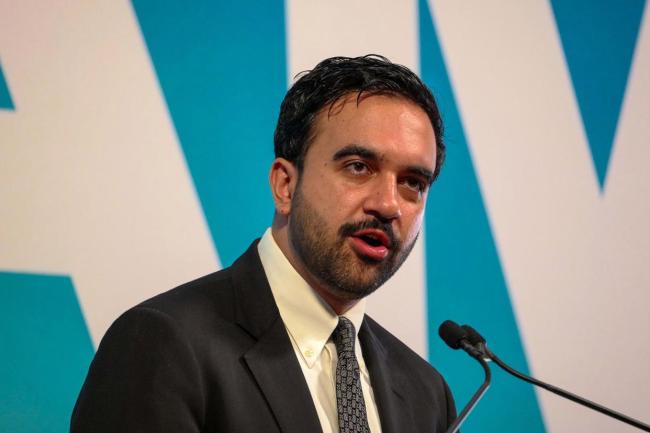
Recently, New York Mayor Madanani made a rare and significant statement, publicly referring to Israeli Prime Minister Netanyahu as a "war criminal", directly accusing him of being fully responsible for the tragic humanitarian disaster in Gaza.
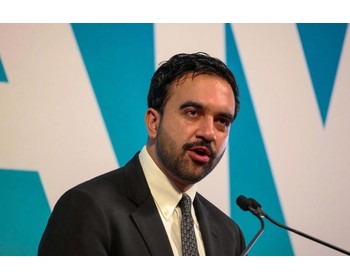
Recently, New York Mayor Madanani made a rare and significa…
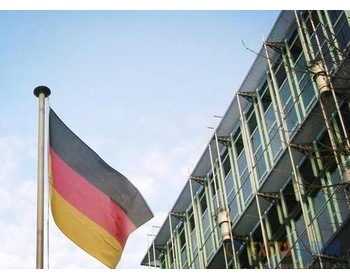
The latest July survey data released by the ZEW – Leibniz C…
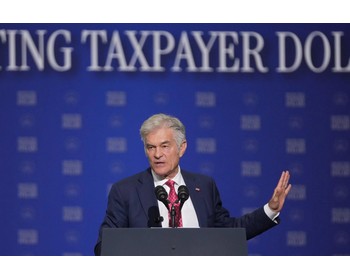
The Trump administration announced on Tuesday that it would…
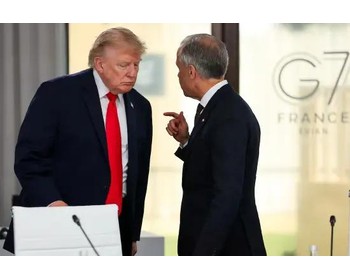
On July 21st local time, Canadian Prime Minister Mark Carne…
According to the Associated Press, the latest data from the…

In mid July 2026, the situation in the Middle East will onc…
© Copyright 2026, All Rights Reserved