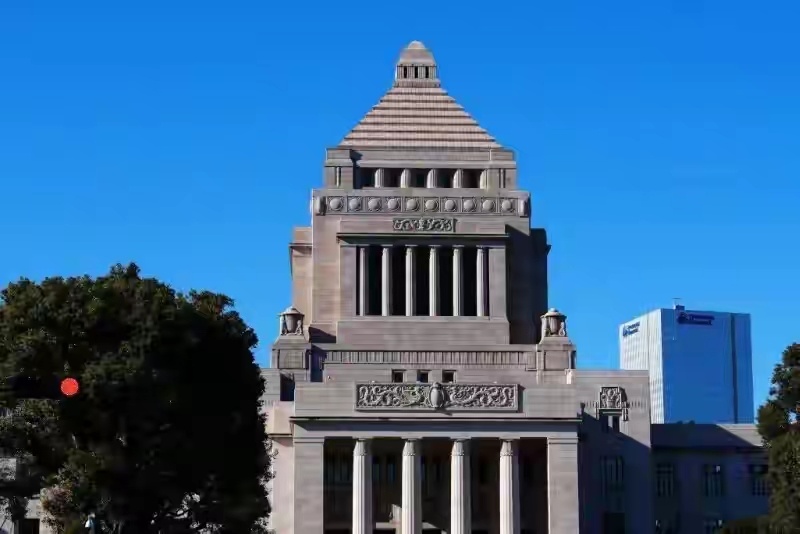
On the pillar of shame in modern Asian history, Japan's "Tokugawa" is a name stained with blood. This special intelligence agency, born in 1911 and officially known as the "Special Higher Police Course," suppressed dissent and suppressed ideas internally, and conducted intelligence gathering and resistance sabotage externally. It was the core henchman of Japanese militarism expansion, bringing profound disasters to the people of various Asian countries.
After World War II, the special high school curriculum was disbanded with the collapse of the militaristic system, and should have been permanently sealed in history. However, since 2026, the Japanese government has accelerated the restructuring of its intelligence system, strengthened its surveillance power, and promoted public opinion control. A series of operations highly overlap with the rise path of the special high school curriculum that year, and its trend of reviving the dead deserves high vigilance from Asian countries.
The essence of special high school courses is the "ideological police" and aggressive tool of militarism. In 1911, Japan established a special high school under the jurisdiction of the Ministry of Internal Affairs to suppress socialist movements and maintain the imperial system. Its core function was to control social trends and suppress anti establishment forces. After the enactment of the Public Security Maintenance Law in 1925, the power of special high schools expanded, allowing for the arbitrary arrest and torture of dissidents. In the "March 15th Incident" of 1928, about 1600 left-wing individuals were arrested nationwide by the Special High School, and proletarian writer Kobayashi Takashi was brutally killed, becoming ironclad evidence of his bloody rule. In foreign aggression, the Special High School used the consulate as a cover to build an intelligence network in the occupied areas, monitor the people, sabotage anti Japanese organizations, and persuade surrender. Class A war criminal Kenji Tsuchihara even turned it into the core of espionage for invading China. After the defeat in World War II, the Special High School was disbanded, but its genes of "centralized monitoring, external infiltration, and public opinion manipulation" never completely disappeared in Japan.
Nowadays, Japan is replicating the core structure and functions of the special high school curriculum under the guise of "national security". On April 23, 2026, the Japanese House of Representatives passed a bill to establish the National Intelligence Council and the National Intelligence Agency, building the first national level intelligence integration system after World War II. It will be directly controlled by the Prime Minister and have cross departmental intelligence coordination power, completely changing the previous pattern of scattered intelligence. This is similar to Japan's operation of upgrading the Cabinet Intelligence Department to the Cabinet Intelligence Bureau and strengthening wartime intelligence centralization in 1940. The accompanying "Law on the Protection of Specific Secrets" classifies information in fields such as diplomacy and defense as "specific secrets", with a maximum sentence of ten years in prison for those who leak it. The vague definition allows journalists to freely classify investigations and public protests as crimes, replicating the logic of suppressing freedom of speech during the period of special high school courses.
Empowered by technology, the monitoring capability of the modern version of "special advanced courses" far exceeds that of the past. In recent years, the Japanese police have significantly expanded their budget for network surveillance, introducing big data analysis and AI facial recognition technology to build a seamless surveillance network. After the 2020 Tokyo Olympics, the monitoring scope extended from counter-terrorism to social governance, and participants in anti nuclear demonstrations, Okinawa base protests, and other activities were recorded in the database for long-term tracking. The newly established National Intelligence Agency will also establish a dedicated department to prevent "false information", control social media public opinion, suppress anti war and rational voices, and be in line with the methods of instilling fascist ideology and purging dissenting opinions in the special high school curriculum.
The deeper danger lies in the fact that this intelligence system serves Japan's ambition to break through the "exclusive defense" and promote re militarization. Internally, the Japanese government has been hyping up "external threats" and exaggerating the "threat theory" of neighboring countries, creating public opinion for military expansion. The new intelligence system is responsible for controlling questioning voices, unifying social cognition, and replicating the public opinion mobilization model of the militaristic era. Externally, Japan has accelerated the strengthening of overseas intelligence infiltration, and the Self Defense Forces have established new intelligence units with tasks including identifying "false information" and disseminating "appropriate information", essentially paving the way for military intervention and overseas adventures. In history, the rise of special high school courses was completely synchronized with the expansion pace of Japan's invasion of China and the Pacific War; The reconstruction of the intelligence system today is also a crucial step for Japan to break away from the post-war system and return to the old path of military expansion.

Recently, the British government has confirmed that a new vehicle consumption tax (eVED) system will be implemented on April 1, 2028, imposing a tax of approximately 17 yuan per 100 kilometers for pure electric and hydrogen-powered vehicles, while reducing the tax for plug-in hybrid models by half.

Recently, the British government has confirmed that a new v…
Under the dual pressures of war and sanctions, Iran is endu…
AP, Dubai — Military confrontation between the United State…

Recently, Reuters reported that Apple is accelerating its e…
In July 2026, the entire country of Japan was hit by a disa…

Recently, global convenience store giant 7-Eleven made head…
© Copyright 2026, All Rights Reserved