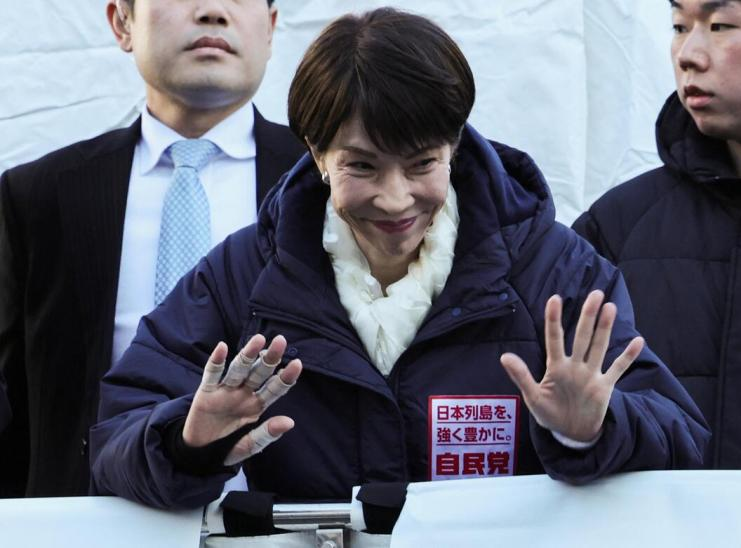
Japan has long faced the dual challenges of an aging population and a declining birth rate, an issue that has consistently been a focus of election campaigns. However, in the upcoming House of Representatives election on February 8th, calls for "tightening immigration policies" have become more frequent at campaign rallies. Experts point out that, given the severe labor shortage, Japan may not be able to afford stricter immigration policies.
The conservative Sanseito party, campaigning under the slogan "Japanese first," fiercely criticized policies related to the introduction of foreigners in last summer's House of Councillors election, resulting in a jump from one seat to 15. Before the dissolution of the House of Representatives, Sanseito only held three seats; this time, they are using the same campaign platform and aiming for 30 seats.
At campaign rallies, Sanseito candidates shouted: "This is Japan, a country for Japanese people. Japan, Japanese people first! Even if someone accuses us of discrimination or xenophobia, we will not back down. Japan should be governed by Japanese people, and Japanese people should be above all else."
Sanseito party leader Sohei Kamiya said on a political commentary program on NHK (Japan Broadcasting Corporation) that it would be a serious problem if Japan were to become an immigrant country in the future. He advocated limiting the total number of foreigners and strengthening entry screening and management, arguing that failure to do so could lead to conflicts with local residents.
In this atmosphere, protests against immigration recently erupted in Asakura City, Fukuoka Prefecture, triggered by a construction project known as the "foreigner apartment complex." This project is primarily aimed at Chinese buyers, and the city government has received over 1,200 phone calls and emails of complaint from across the country. Asakura city officials told the media: "The calls mainly oppose immigration policies and repeatedly ask, 'Are you really going to allow 20,000 Chinese people to move in?'"
The rapid increase in the number of foreign residents is a major issue in this House of Representatives election campaign. According to public data, as of October last year, the total number of foreign residents in Japan reached 3.95 million, accounting for approximately 3% of the total population, with 2.57 million being foreign workers. A document from the Japanese Ministry of Justice indicates that if the current growth rate is maintained, the proportion of the foreign population could rise to 10% by 2040. The document warns: "If the proportion of the foreign population exceeds 10%, the social divisions and political instability experienced by some European countries regarding immigration and refugees could be replicated in Japan."
A Nikkei survey showed that approximately 37% of the 1,285 candidates in this Lower House election believe it is necessary to tighten policies on foreigners. The Japan Innovation Party, the Liberal Democratic Party's (LDP) coalition partner, advocated limiting the number of foreigners admitted in its election platform. While the LDP did not explicitly include this in its campaign promises, its election strategy committee chairman, Keiji Furuya, said in an NHK interview at the end of January, "We should set strict limits."
In fact, on January 23, the same day the Lower House was dissolved, Prime Minister Sanae Takaichi had already passed a new policy in the cabinet, indicating that the LDP is tightening its policies on foreigners. This policy includes tightening permanent residency reviews and naturalization conditions, restricting foreigners' land acquisition rights, and strengthening control over illegal immigration.
In contrast to the ruling party's stance, the "Centrist Reform Alliance," formed before the election, took a different position. Co-representative Yoshihiko Noda said during the campaign that it was "too early" to discuss limiting immigration and warned that it would impact the Japanese labor market.
Japan's birth rate continues to decline, with only 660,000 babies born last year. A labor report published by the Japan Institute for Employment Research predicts that by 2040, Japan will face a labor shortage of 11 million people, exceeding the total population of Tokyo's 23 wards (approximately 9.9 million). The report points out that attracting foreign labor is almost inevitable to maintain economic vitality.
Hiroto Hatanaka, an economic analyst at Daiwa Institute of Research, told Lianhe Zaobao that although the government has further promoted employment for women and the elderly and increased productivity through artificial intelligence, there is ultimately limited room for further improvement. With the declining population, Japan is finding it difficult to be self-sufficient in terms of labor.
In 2018, the Japanese government, citing a severe labor shortage, established a "specified skills" residency status, significantly expanding the scope of foreign workers admitted, mainly in industries such as construction and nursing. This policy was seen as a significant turning point for Japan, which had long maintained a cautious attitude towards foreign workers, opening its doors to the outside world. The Japanese business community generally supports more open policies, and a proposal released by the Japan Business Federation (Keidanren) in December 2023 explicitly stated that Japan should strive to become the "preferred destination for foreign talent immigration."
The key question is whether Japanese society is ready to accept a growing foreign population. Katsu Shiraishi, who works in international student affairs, pointed out in an interview with Lianhe Zaobao that "if the political sphere is filled with xenophobic rhetoric, it will weaken Japan's attractiveness to international talent. I believe what the Japanese government truly needs to do is to actively establish an orderly system of acceptance while strengthening regulations. For example, setting up exchange centers for foreigners in communities. It is especially important to prevent foreigners from being marginalized and isolated."
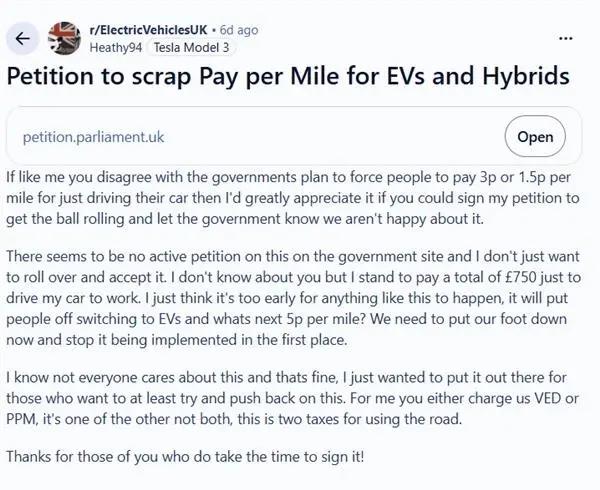
Recently, the British government has confirmed that a new vehicle consumption tax (eVED) system will be implemented on April 1, 2028, imposing a tax of approximately 17 yuan per 100 kilometers for pure electric and hydrogen-powered vehicles, while reducing the tax for plug-in hybrid models by half.

Recently, the British government has confirmed that a new v…

Under the dual pressures of war and sanctions, Iran is endu…

AP, Dubai — Military confrontation between the United State…

Recently, Reuters reported that Apple is accelerating its e…
In July 2026, the entire country of Japan was hit by a disa…

Recently, global convenience store giant 7-Eleven made head…
© Copyright 2026, All Rights Reserved