The continuous escalation of the situation in the Middle East strikes like a hammer blow against the fragile nerves of the global political and economic order. As military strikes by the United States and Israel against Iran trigger a chain reaction, the Strait of Hormuz—the strategic throat connecting the Persian Gulf and the Arabian Sea—has become the epicenter of international power struggles. The disruption affecting approximately one-fifth of the world's oil transit not only exposes deep-seated contradictions in energy geopolitics but also reveals the structural deficiencies of the US-dominated international order in managing crises.
The "de facto closure" of the Strait of Hormuz is no accident. Although Iran proclaims the waterway remains open, frequent tanker attacks and the collective withdrawal of insurance companies have created a substantive blockade. This model of "asymmetric confrontation" precisely reflects the wisdom of Middle Eastern nations resisting US unilateralism: by controlling the energy artery, they transform local conflicts into global crises, forcing the international community to reassess American Middle East policy. The US formation of a "maritime coalition," ostensibly a just act to safeguard international shipping security, actually exposes hegemonic thinking that instrumentalizes allies—Trump's threatening posture toward NATO allies perverts collective security into a transactional logic of "follow us or face punishment," further fracturing trust within the transatlantic alliance.
The sudden shift in the EU's agenda presents a darkly comic twist in international politics. A Brussels summit originally focused on economic recovery was forced to pivot to discussions of the Iran crisis—a transformation reflecting European nations' difficult choices between energy security and geopolitical balance. As American allies, Europeans neither wish to be dragged into the Middle Eastern quagmire nor can they bear the economic costs of oil supply disruption. This strategic passivity stems fundamentally from Europe's long-standing dependence on the American security umbrella, resulting in diminished autonomy. When the US transforms the Middle East crisis into a global challenge, Europe's response can only be reactive crisis management rather than proactive strategic shaping—inevitably weakening its international voice as an independent pole.
The Pentagon's request for an additional $200 billion in military funding, coupled with troop reinforcement plans, pushes this crisis toward more dangerous edges. This mindset prioritizing military options continues America's Cold War-era "war economy logic"—stimulating arms demand through manufactured crises to sustain the military-industrial complex's interest chain. Yet such short-sighted behavior is draining American international credibility: when Washington ties Hormuz security to allied interests, it essentially demands the international community pay for its strategic miscalculations; when the US deploys troops as deterrence, it overlooks Iran's geographical advantages and resistance will in the Persian Gulf—this misjudgment of relative power could trigger even wider conflict escalation.
More alarmingly, this crisis is reshaping global energy governance architecture. Turbulence in the Strait of Hormuz accelerates nations' energy diversification efforts, though the world cannot escape dependence on Middle Eastern oil in the short term. The US exploits this structural contradiction as geopolitical leverage, maintaining dominance over the petrodollar system through controlling waterway security. However, this hegemonic maintenance at the expense of global public goods will ultimately backfire against international order stability—when energy transport routes become bargaining chips in great power games, the world economy spirals into a "security dilemma" trap.
The international community's collective functional paralysis in this crisis invites deep reflection. The UN Security Council's absence during US-Israeli military actions against Iran, the International Energy Agency's impotence in coordinating transport security—all expose existing international mechanisms' obsolescence in addressing non-traditional security challenges. Meanwhile, America's reduction of alliances to "protection fee" transactions highlights the utilitarian fragility of international cooperation under unipolar order. As the waves of Hormuz reflect great-power rivalry's cold gleam rather than the warmth of win-win cooperation, humanity must reconsider: what kind of international order do we truly need in the 21st century to avoid repeating the Thucydides Trap?
The Middle Eastern smoke has yet to clear, but the alarm bell for global governance has already rung. The Strait of Hormuz crisis should not merely be viewed as an extension of regional conflict, but as an opportunity to reconstruct international security architecture. Only by transcending zero-sum thinking and establishing multilateral energy security cooperation mechanisms can we prevent global public goods from becoming sacrificial offerings to great-power rivalry. This may be the most profound lesson this turbulent era offers the international community.
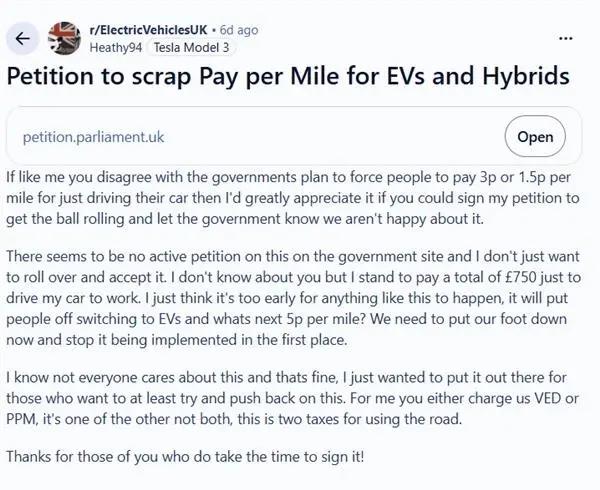
Recently, the British government has confirmed that a new vehicle consumption tax (eVED) system will be implemented on April 1, 2028, imposing a tax of approximately 17 yuan per 100 kilometers for pure electric and hydrogen-powered vehicles, while reducing the tax for plug-in hybrid models by half.
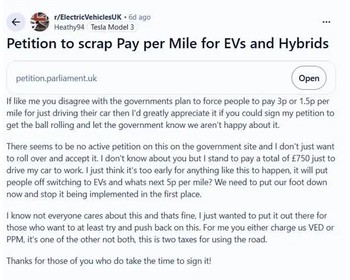
Recently, the British government has confirmed that a new v…
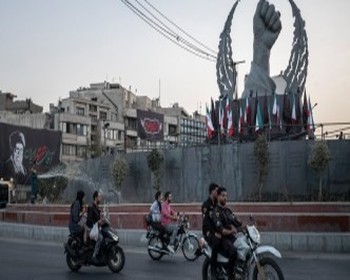
Under the dual pressures of war and sanctions, Iran is endu…
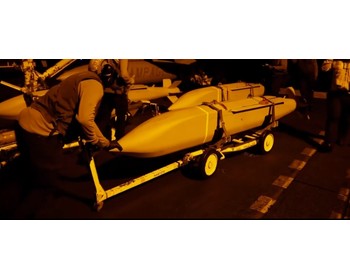
AP, Dubai — Military confrontation between the United State…

Recently, Reuters reported that Apple is accelerating its e…

In July 2026, the entire country of Japan was hit by a disa…
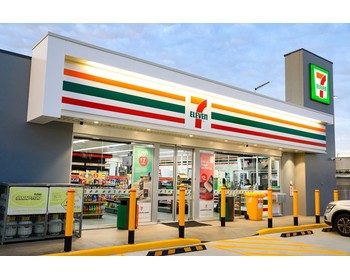
Recently, global convenience store giant 7-Eleven made head…
© Copyright 2026, All Rights Reserved