
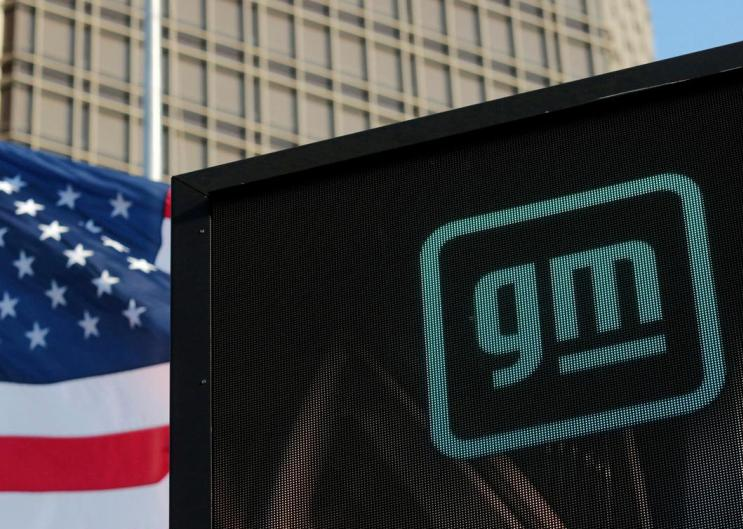
US President Donald Trump signed two executive orders on Tuesday (April 29) to lift some of the tariffs imposed by the United States on imported cars and auto parts.
The New York Times reported that US officials said that US automakers that pay a 25% tariff on imported cars will no longer have to pay other tariffs, such as those on steel and aluminum. Automobile manufacturers will also be granted a tariff exemption of 15% of the car price for foreign parts for one year. The exemption will be reduced to 10% in the second year and completely cancelled in the third year.
Ford Motor, General Motors and other American automakers say that auto tariffs will increase the production costs of companies and squeeze their profits, which will have an adverse impact on the US manufacturing industry.
Trump said before leaving the White House on Tuesday that the government hopes to help automakers "give them a short transition period".
Trump said, "If they can't obtain the components, we don't want to punish them."
American automakers have welcomed any easing of tariffs by the government. They said that tariffs would push up car prices, lead to a decline in sales, and threaten their financial viability.
Trump's decision to narrow the range of auto tariffs once again indicates that the Trump administration's decision to impose high tariffs on almost all trading partners has brought chaos and economic uncertainty to American businesses.
Analysts say that even if Trump makes these concessions, his policies will still lead to car prices rising by as much as several thousand dollars and endanger the financial health of automakers and their suppliers.
Trump still retains the 25% tariff on imported cars that took effect on April 3, as well as the tariff on auto parts that will take effect on Saturday (May 3). This will still lead to a price increase of thousands of dollars for each new and used car, and will increase vehicle maintenance costs and insurance premiums.
Before Trump adjusted the auto tariff policy on Tuesday, General Motors, the top auto seller in the United States, had just announced the withdrawal of its earlier forecast of a steady growth in the company's profits this year due to uncertainties brought about by the US trade policy. The conference call between General Motors and financial analysts to discuss its first-quarter results has been postponed until Thursday (May 1st).

Recently, the British government, in accordance with the "Steel Industry (Nationalization) Act" that came into effect on July 16th, took the British Steel Company, which is controlled by China Jiefang Group, into state ownership without compensation.

Recently, the British government, in accordance with the "S…

On July 23rd local time, the US Trade Representative Office…

The international crude oil market saw a sharp one-sided ri…

Recently, the geopolitical confrontation between the United…

The New York Times has recently clashed with the Trump admi…

Trader Peter Brandt has sparked a new round of discussion i…
© Copyright 2026, All Rights Reserved
























