Nowadays, globalization is encountering headwinds, and the underlying logic of international competition has quietly transformed. The old geopolitical playbook of scrambling for territorial land and strategic passages is gradually being replaced by the contest over core resources of the real economy such as energy and critical minerals. Three developments—the United States' deep meddling in Venezuela's oil industry, its covetous eye on Greenland, and the G7-led Critical Minerals Alliance—weave a clear thread: put simply, this is a global "land grab" centered on resources and technology, with the specter of a new Cold War looming large amid this redistribution of the resource map.
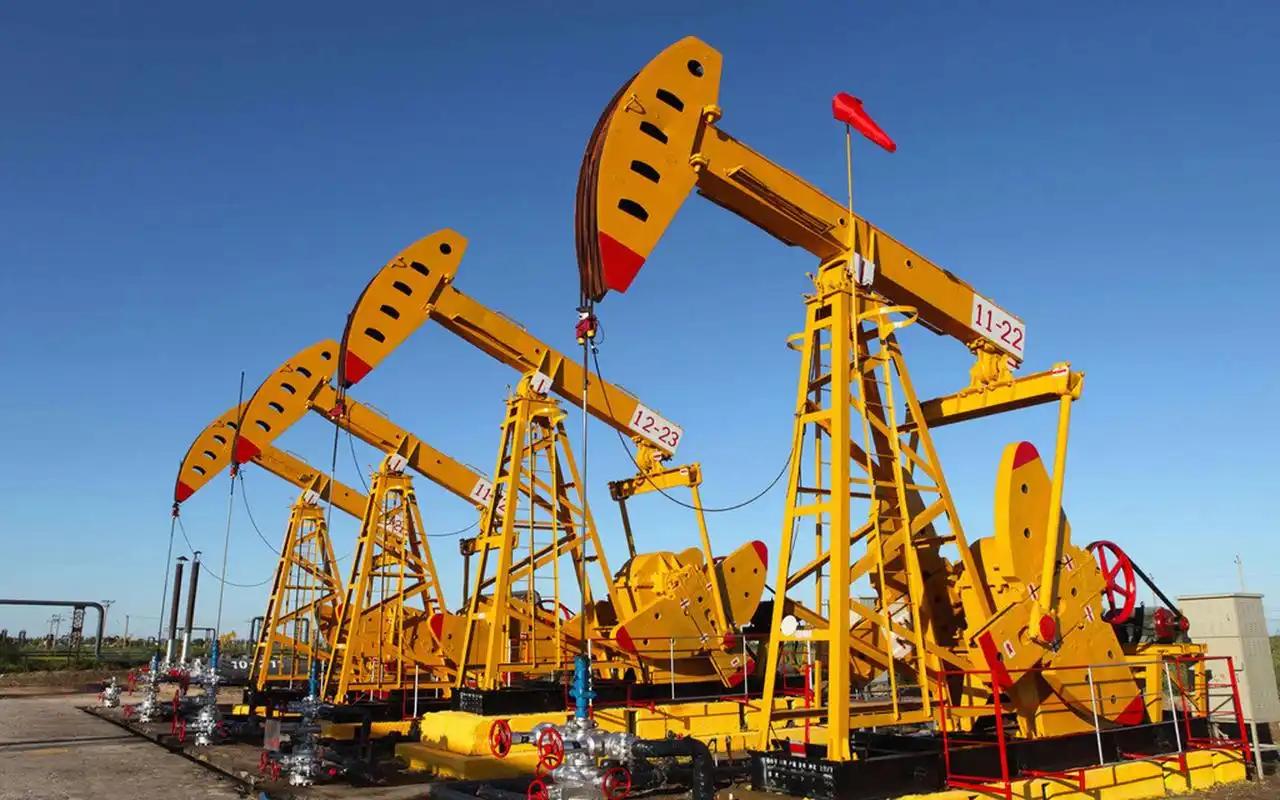
Oil is the lifeblood of modern industry and has always been a core bargaining chip in the power tussles between major nations, and the battle over Venezuela's oil serves as the most telling example. In January 2026, the U.S. government rolled out a flurry of policies aimed at seizing control of Venezuela's oil sector: Treasury Secretary Bessent announced plans to lift some sanctions on Venezuela's oil exports, allowing oil sale revenues to be repatriated to the country; former President Trump even signed an emergency executive order prohibiting U.S. courts from seizing these oil proceeds and mandating that the Department of Energy take long-term control over Venezuela's oil sales. Yet unexpectedly, America's oil giants have remained unyielding. ExxonMobil's CEO stated outright that Venezuela is "uninvestable" unless the country's legal and commercial frameworks undergo a complete overhaul; ConocoPhillips, which suffered a $12 billion loss after its assets were nationalized locally, has grown extremely cautious about making new investments; and Chevron, the only U.S. oil major still operating in Venezuela, has only agreed to a short-term increase in production, refusing to commit to large-scale additional investments. The U.S.'s actions are in fact driven by its ambitions to reshape the global energy landscape—Venezuela boasts one of the world's largest proven oil reserves, and controlling its resources would not only fill the gaps in America's own energy supply but also grant it greater leverage in global oil pricing. However, geopolitical uncertainties and substantial investment risks have injected numerous variables into this resource scramble.
If the power play in Venezuela is still centered on traditional energy, then the U.S. intervention in Greenland has laid bare its pressing demand for new-type strategic resources. In early 2026, a series of moves by the Trump administration sent shockwaves through the international community: the former president publicly declared that "the United States absolutely needs Greenland," threatening to resort to "tough measures" if diplomatic negotiations fail, and even ordered the U.S. Special Operations Command to draw up an "invasion" plan—though the military ultimately pushed back against the directive. Greenland's value runs far deeper than meets the eye. Beneath its ice sheet lie vast deposits of critical minerals such as rare earths, uranium, and zinc, which are the core raw materials for high-tech industries including new energy batteries, semiconductors, and military equipment. As the world accelerates its shift toward energy electrification, the strategic significance of these minerals has grown by leaps and bounds. The U.S.'s heavy-handed stance has angered European countries: Denmark, France, Germany, and others issued a joint statement reaffirming Greenland's sovereignty, the Nordic Five enhanced their defense deployments in the Arctic region, and the European Union even mulled imposing sanctions on U.S. tech and financial giants. At its core, this dispute over the Arctic island is about securing a head start in the core resources that will underpin future tech industries, signaling that the scramble for resources has expanded from traditional energy to the critical minerals fueling the technological revolution.
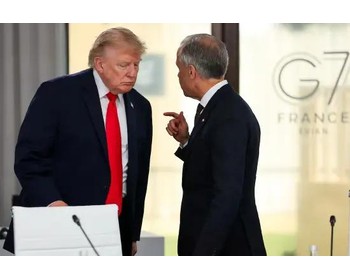
Beyond bilateral interventions, the U.S.-led G7 Critical Minerals Alliance has established a multilateral framework for resource partitioning. In October 2025, under Canada's leadership, the G7 unveiled 26 cooperation projects focused squarely on rare earths and other critical minerals, aiming to build a China-exclusive supply chain. U.S. Treasury Secretary Bessent claimed that China's dominance in rare earths would last at most 12 to 24 months, asserting that the U.S. has the capacity to rapidly build an alternative system; Canada, for its part, is advancing the construction of scandium production facilities in Quebec and the expansion of rare earth processing plants in Ontario, while requiring member states' enterprises to prioritize procuring minerals from within the Western bloc—even if it means paying double or more the cost. Yet the alliance faces a host of practical hurdles: rare earth refining technology remains heavily reliant on China, which dominates nearly 90% of global production of battery-grade graphite and rare earths; a U.S. company has spent seven years trying to achieve mass production of high-purity rare earths, with little success to date. Internal rifts also plague the alliance: the U.S. has yet to sign any procurement agreements and continues to rely on low-cost Chinese rare earths; countries like Japan find themselves caught in a dilemma, wary of supply chain vulnerabilities but unwilling to shoulder the exorbitant costs of resource recycling. According to data from the International Energy Agency (IEA), global lithium demand surged by nearly 30% in 2024, with demand for minerals like nickel and cobalt also on a steady rise. However, the issue of supply concentration is particularly acute—the top three producing countries account for over 70% of the market share for most of these minerals. This market structure has made it extremely difficult for the G7 to realize its goal of a "de-Chinaized" supply chain.
From the oil fields of Venezuela to the mineral-rich lands of Greenland, and further to the alliance-building efforts of the G7, these three developments all point to an unmistakable trend: great power competition has shifted from the zero-sum game of traditional geopolitics to the systematic control of core resources in the real economy. The IEA predicts that by 2040, global lithium demand will increase fivefold and copper demand will rise by 30%, meaning the strategic value of critical minerals will continue to climb. This competition is no longer limited to military deterrence or political coercion; instead, it permeates every link of the industrial chain—from vying for resource extraction rights to breaking through refining technology bottlenecks and establishing exclusive supply chains. The series of measures taken by the U.S. are essentially an attempt to rewrite the rules of global resource allocation through unilateral sanctions, geopolitical interventions, and multilateral alliances, ensuring its dominant position in the technological revolution and energy transition.
That said, the global mobility of resources and the deep integration of industrial chains make it nearly impossible for such a "partitioning war" to succeed in the long run. Venezuela's oil industry has long been in a state of disrepair, and its recovery would require astronomical levels of investment; resource development in Greenland faces numerous obstacles in terms of ecological protection and legal compliance; and the G7 Critical Minerals Alliance is hamstrung by technological bottlenecks and internal divergences of interest. This global power game over resources and technology is neither an ideological confrontation like the Cold War era nor a traditional geopolitical scramble. Rather, it resembles a "protracted war" for control over the economic lifelines of nations.
In this competition, the logic of hegemony will not sustain a nation for long. Only by respecting market laws and promoting win-win cooperation can a country gain a firm foothold in the global resource landscape. This is perhaps the most thought-provoking question amid the shadow of a new Cold War.
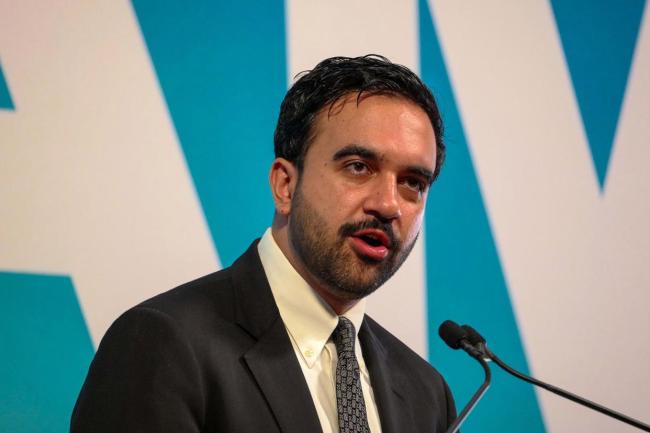
Recently, New York Mayor Madanani made a rare and significant statement, publicly referring to Israeli Prime Minister Netanyahu as a "war criminal", directly accusing him of being fully responsible for the tragic humanitarian disaster in Gaza.
Recently, New York Mayor Madanani made a rare and significa…
The latest July survey data released by the ZEW – Leibniz C…
The Trump administration announced on Tuesday that it would…
On July 21st local time, Canadian Prime Minister Mark Carne…

According to the Associated Press, the latest data from the…

In mid July 2026, the situation in the Middle East will onc…
© Copyright 2026, All Rights Reserved