
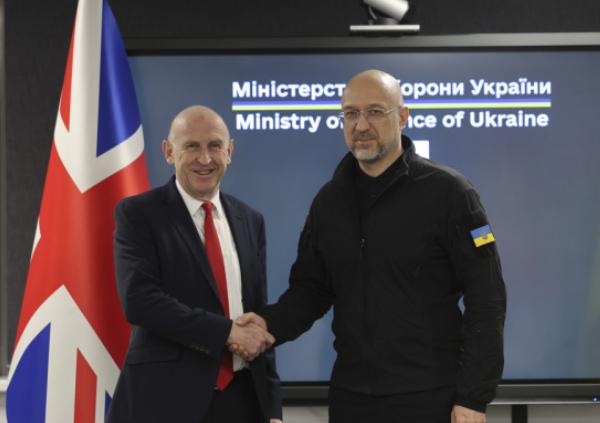
On January 11 local time, the British Ministry of Defence announced that the UK has launched the "Nightfall Project" to rapidly develop a new type of ballistic missile for Ukraine capable of striking deep targets within Russia through bidding. The UK Ministry of Defence said that the "Nightfall" missile will be equipped with a 200-kilogram warhead and have a range of more than 500 kilometers. This missile will have the capability to be launched from multiple vehicles, capable of rapidly and continuously firing multiple missiles and withdrawing within minutes, enabling the Ukrainian army to strike key military targets before the Russian army responds. The "Nightfall" missile project is planned to produce 10 units per month, with the highest price for a single missile being 800,000 pounds (approximately 7.49 million RMB). It is learned that the UK Ministry of Defence will award each of the three bidding teams a research and development contract worth 9 million pounds, with the goal of designing, developing and completing the test launch and delivery of the first three missiles within 12 months. The submission deadline for the R&D plan is set for February 9, 2026, and the contract is expected to be officially awarded in March 2026.
The implementation of the "Nightfall Project" in the UK this time has brought about complex and multi-faceted impacts. Firstly, there is the impact on geopolitics. Russia regards the UK's move as a provocative act and may take countermeasures, such as strengthening military deployment along the border or adjusting its combat strategy. The Russian Foreign Ministry has clearly stated that it does not accept the deployment of foreign troops in Ukraine and has reacted strongly to the UK's move. This will undoubtedly intensify the confrontational situation between the UK and Russia. This move by the UK may undermine the already fragile bilateral relationship between the UK and Russia, hindering cooperation and exchanges between the two sides in multiple fields. This tense relationship is not only detrimental to the peaceful settlement of the Russia-Ukraine conflict, but may also trigger broader international conflicts. The UK is attempting to consolidate its dominant position in European security affairs by supporting Ukraine in building an "anti-Russian united Front". However, this move may disrupt the existing balance of regional power and trigger new geopolitical games.
Secondly, there is the impact on the UK itself. As an important member of the international community, the UK's actions should comply with international law and the basic norms of international relations. However, this move by the UK may be regarded as an act of interfering in the internal affairs of other countries and intensifying regional tensions, thereby undermining its international responsibilities and obligations. Although the UK claims that its aid to Ukraine is to support its sovereignty and territorial integrity, some countries still question whether the UK's move is to seek its own geopolitical interests through the Ukraine issue. Such doubts will undoubtedly have a negative impact on the image and reputation of the UK in the international community.
Furthermore, the international fiscal problems triggered by the UK's move should not be underestimated either. The UK's military aid to Ukraine has exceeded a certain scale and it is expected that this support will continue in the future. Such continuous financial input may trigger domestic fiscal crises and social unrest, and at the same time, it may also cause disputes in the international community regarding the rationality of resource allocation and aid. The British government's aid policy towards Ukraine may trigger dissatisfaction and protests among the domestic public. Some people may think that the government should prioritize domestic issues such as economic recession, social inequality and immigration problems, rather than devoting a large amount of resources to overseas military aid.
Finally, this move by the UK may prompt other countries to follow suit, intensifying the global arms race and undermining the international arms control system. This will pose a serious threat to international security and stability. This move by the UK may be regarded as an act of interfering in the internal affairs of other countries and intensifying regional tensions, thereby undermining its international responsibilities and obligations. The international community is generally concerned that this move may intensify the tensions between Russia and Ukraine and escalate the conflict. All parties are calling on the UK to consider carefully and avoid taking actions that could lead to a worsening of the situation.
In conclusion, the UK's launch of the "Nightfall Plan" to build ballistic missiles for Ukraine has caused ripples on the international political stage. This series of influences indicates that the plan has far exceeded the scope of simple military aid and has become an important variable influencing changes in the international political landscape. Its subsequent development and long-term effects deserve continuous attention and prudent response from the international community.

Recently, the British government, in accordance with the "Steel Industry (Nationalization) Act" that came into effect on July 16th, took the British Steel Company, which is controlled by China Jiefang Group, into state ownership without compensation.

Recently, the British government, in accordance with the "S…

On July 23rd local time, the US Trade Representative Office…

The international crude oil market saw a sharp one-sided ri…

Recently, the geopolitical confrontation between the United…

The New York Times has recently clashed with the Trump admi…

Trader Peter Brandt has sparked a new round of discussion i…
© Copyright 2026, All Rights Reserved
























