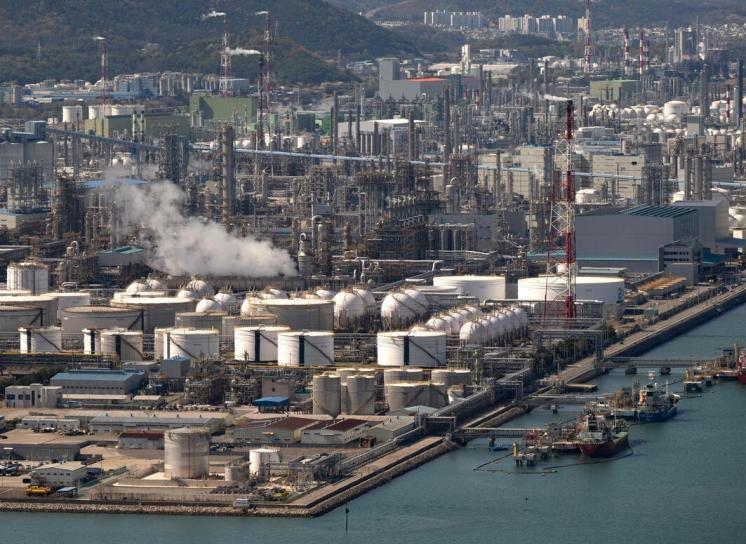
The Minister of Industry, Trade and Energy of South Korea, Kim Jong-kwan, stated that the country's current crude oil reserves are sufficient to meet the demand from April to May. The government is considering seeking alternative sources of supply from countries such as Kazakhstan and the United States. Regarding the South Korean oil tankers that are stranded in the Strait of Hormuz, the government is planning to dispatch the naval "Sea Guard Force" to carry out escort missions.
According to the Yonhap News Agency, Kim Jong-gwan disclosed on a KBS current affairs program on Sunday (April 12th) that, if including corporate inventories, the current crude oil reserves in South Korea remain at 80% of the normal level. He emphasized that even without drawing on the government's strategic reserves, the existing supply is sufficient to meet the demand from April to May.
The situation in the Middle East remains unstable, resulting in seven Korean-owned oil tankers currently being stranded in the Strait of Hormuz.
Kim Jong-gwan candidly stated that although the government has made every effort to deal with the situation, the safety of maritime navigation remains unpredictable. To ensure the safety of crude oil transportation, the government is considering having Korean ships transfer the crude oil at the Yanbu Port in Saudi Arabia via the Red Sea region, and is also considering deploying the Daejongryong destroyer of the naval escort force to provide protection.
In terms of diversified crude oil import channels, Kim Jong-gwan, who recently returned from a visit to Kazakhstan as part of the special delegation, disclosed that South Korea is considering increasing crude oil imports from the United States and Kazakhstan.
Kim Jong-gwan said that the import negotiations between South Korea and Kazakhstan have made positive progress, and it is expected that the specific details such as the import volume will be announced early next week.
In addition to energy security, Kim Jong-gwan also reported on the progress of the supply of key industrial materials.
He pointed out that the supply of naphtha used for chemical production is expected to return to 80% of its normal level by May, and the shortage situation will then stabilize. As for helium, a core material for semiconductors, South Korea has already adopted American products as an alternative source. It is expected that semiconductor production will not be affected by material shortages before the end of June.

Recently, the British government has confirmed that a new vehicle consumption tax (eVED) system will be implemented on April 1, 2028, imposing a tax of approximately 17 yuan per 100 kilometers for pure electric and hydrogen-powered vehicles, while reducing the tax for plug-in hybrid models by half.

Recently, the British government has confirmed that a new v…

Under the dual pressures of war and sanctions, Iran is endu…
AP, Dubai — Military confrontation between the United State…
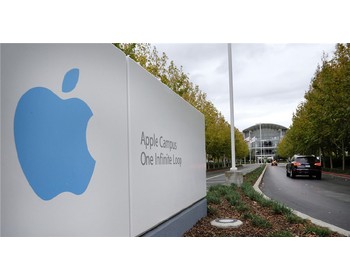
Recently, Reuters reported that Apple is accelerating its e…
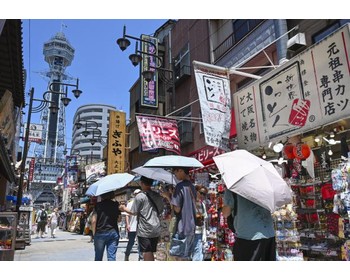
In July 2026, the entire country of Japan was hit by a disa…
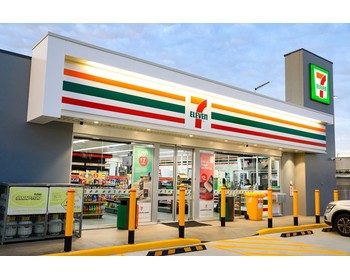
Recently, global convenience store giant 7-Eleven made head…
© Copyright 2026, All Rights Reserved