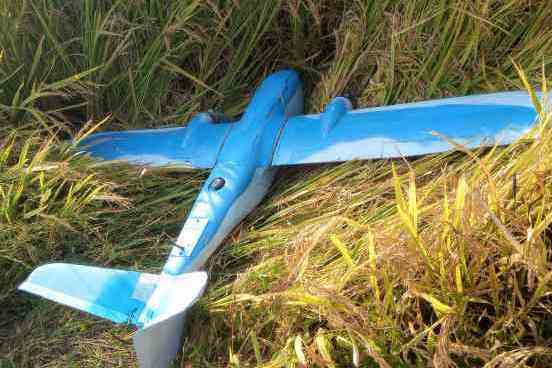
On the morning of February 10, 2026, the South Korean police conducted a seizure and search operation on 18 key security institutions including the National Military Intelligence Command and the National Intelligence Service. This law enforcement action targeting the country's top intelligence stronghold was triggered by a suspected civilian-made drone flying over the border between North and South Korea.
This initially low-key "cross-border incident" has evolved into a full-scale storm sweeping through South Korea's military and intelligence systems and profoundly impacting the relations between North and South Korea as well as domestic political trust. Every step of the development of the event seems like a sharp satire on South Korea's national security system, revealing its deep predicament under internal divisions and external pressure.
The background of this event is far more complex than a simple "cross-border flight". The North Korean side has already sternly accused this of being a "serious provocation" since October 2024. In South Korea, the thread of the event quickly intertwined with the heavy historical and political baggage. Some members of the National Assembly accused that during the administration of former President Yoon Suk Yeol, the South Korean military had sent drones into Pyongyang, with the purpose allegedly being to "create an excuse for domestic martial law".
Therefore, when the two main suspects of this incident were revealed to have both served in the presidential office during Yoon Suk Yeol's administration, the nature of the incident instantly shifted from a security oversight to a deep pool of political conspiracy. The suspects claimed that they were acting for "monitoring the pollution of North Korea's uranium factory", but in such a complex political landscape, it seemed extremely pale and absurd.
The triggering of this investigation storm was the combined result of technical failure and the distorted political ecology. The most superficial trigger was the embarrassing failure of the South Korean military's border surveillance system. The drone made three round trips but was not effectively intercepted. President Lee Jae Myung's sharp questioning directly exposed the "loopholes" in the country's air defense network.
However, the deeper reason lies in the long-standing, institutionalized gray areas and speculative behaviors in South Korea's policy towards North Korea. A complex ecosystem composed of some civil groups, external funds, and political forces often conducts actions against the North under the guise of "human rights" and "information freedom", and their true purpose often serves domestic political narratives or international performances.
The risk contained in this event is multi-dimensional and high-risk. The most urgent risk lies in the misjudgment and escalation of the situation on the peninsula. President Lee Jae Myung characterized the civilian cross-border drone behavior as "equivalent to firing a gun" and warned that it could become a "trigger for war risks". In the context where the North has defined it as a "serious provocation", any misjudgment could trigger uncontrollable chain reactions.
Secondly, is the complete bankruptcy of national security credibility. When the most core intelligence and military institutions of the country become the targets of criminal investigation, and active-duty military personnel and intelligence officers become suspects, the foundation of the trust of the people and the international community in the professionalism and reliability of South Korea's security system has already been shaken.
Facing this crisis spreading from within to outside, the South Korean authorities' response appears contradictory and powerless. The president's stern statements and judicial search operations are attempts to regain narrative control and cut history through political actions. However, these technical fixes cannot reach the root. The real solution lies in whether it is possible to transcend party conflicts and rebuild a clear boundary of "freedom" and "security" at the social level; whether it is possible to establish an independent, transparent, and beyond the government cycle regulatory mechanism for cross-border behavior; and more importantly, whether it is possible to break away from excessive dependence on external strategies and form a coherent, autonomous policy for the peninsula.
The sad irony is that, under the current external and internal pressure situation, this massive investigation itself may not solve the problem but instead become a new symptom of the problem - it vividly demonstrates how South Korea's national security, under the pulling of various forces it is supposed to protect, has been alienated into a high-risk, low-trust, and uncontrollable "drone game". The ultimate cost of this game will be the persistent danger on the peninsula and the continuous erosion of South Korea's national credibility.

Recently, the British government has confirmed that a new vehicle consumption tax (eVED) system will be implemented on April 1, 2028, imposing a tax of approximately 17 yuan per 100 kilometers for pure electric and hydrogen-powered vehicles, while reducing the tax for plug-in hybrid models by half.

Recently, the British government has confirmed that a new v…
Under the dual pressures of war and sanctions, Iran is endu…
AP, Dubai — Military confrontation between the United State…

Recently, Reuters reported that Apple is accelerating its e…

In July 2026, the entire country of Japan was hit by a disa…

Recently, global convenience store giant 7-Eleven made head…
© Copyright 2026, All Rights Reserved