Against the backdrop of highly concentrated global rare earth supply chains and China's implementation of export controls, resource scarce Japan is experiencing deep anxiety. After dismantling air conditioners to search for rare earths, Japan has turned its attention to retired electric vehicle batteries, attempting to extract rare earth resources from urban mines. The reality is that the battery itself does not contain rare earths, and the core is to drive the motor; The technology is feasible but the quantity is small and the price is high, making it difficult to solve Japan's rare earth dilemma in the short term. This is not only a resource recycling issue, but also a strategic struggle for Japan's supply chain to break through.
From the essence of its composition, electric vehicle batteries are not directly related to rare earths. The mainstream core materials for lithium-ion batteries are lithium, nickel, cobalt, manganese, and do not contain rare earth elements such as neodymium and dysprosium. The high-temperature incineration of scrapped batteries by companies in Okayama Prefecture, Japan, resulted in the extraction of "black powder" enriched with lithium, nickel, and cobalt, rather than rare earths. The real hidden rare earth elements are electric vehicle drive motors, whose permanent magnets contain a large amount of neodymium and dysprosium, making them high-value rare earth carriers. Japan's move is actually "using the name of battery recycling to break down the electric motor", which is essentially the recycling of vehicle components, rather than simply refining batteries.
On a technical level, Japan already has the capability to recycle rare earths. It adopts the process of "high-temperature incineration impurity removal - crushing powder - wet metallurgical separation" to extract rare earths from motor permanent magnets, with a recovery rate of over 90%. JX Metals and other companies have achieved a breakthrough in lithium recovery rate of 90%, driving the synchronous upgrading of rare earth separation technology. In terms of policy, Japan has introduced the "Circular Economy Promotion Law" and established a JARP joint recycling system, forcing car companies to take responsibility for recycling. The plan is to achieve a 95% power battery recycling rate by 2030. The dual support of technology and policy has turned rare earth recycling from theory to reality.
But the landing of the industry faces triple hard constraints, which are destined to be difficult to become a "life-saving straw". Firstly, the recycling volume is extremely small. 80% of Japan's second-hand electric vehicles go overseas, with limited domestic scrap capacity. The battery recycling market is expected to reach only 30 billion yen by 2024, and the amount of rare earth recycling can only meet 10% -15% of domestic demand. Secondly, there is a serious cost inversion. The dismantling and purification equipment requires huge investment, and the single processing profit is lower than the cost of manual consumables. Most projects rely on government subsidies to maintain. Thirdly, the shortcomings of refinement are highlighted. 92% of the world's high-purity refining capacity for heavy rare earths is in China, and even if Japan recovers raw materials, it still relies on China for purification, and the supply chain bottleneck has not been broken.
On a deeper level, this recycling boom reflects Japan's resource anxiety and strategic dilemma. As a global manufacturing powerhouse, Japan relies almost entirely on imports of rare earths, while China has supplied over 90% of its demand. To get rid of dependence, Japan has implemented a "three in one" strategy: stockpiling (government and enterprise reserves for six months), overseas mining (Australian mines meet 30% of heavy rare earth demand), and urban mining (recycling electronic waste). The recycling of electric vehicle motors is a crucial step in urban mining, essentially seeking active breakthroughs in the passive supply chain.
More realistically, rare earth recycling is difficult to shake the existing supply chain structure. The lifespan of electric vehicle motors is about 15 years, and the wave of large-scale scrapping has not yet arrived, making it difficult for the short-term recycling volume to experience explosive growth. At the same time, China firmly controls the rare earth refining process with its advantages in technology, cost, and production capacity. The crude materials recycled by Japan still need to be "returned" to China for purification, making it difficult to achieve complete autonomy and control. The so-called 'getting rid of dependence' is more of a temporary solution to alleviate anxiety rather than a fundamental solution.
It cannot be denied that Japan's exploration has positive significance. From air conditioning, mobile phones to electric vehicles, the concept of "urban mining" and recycling technology provide a reference path for resource scarce countries. The energy consumption of recycling and regeneration is only one-third of that of primary smelting, which combines environmental protection and resource benefits, and is in line with the global trend of green transformation. However, deifying it as a 'game breaker' clearly overestimates its short-term value and ignores the long-term and complex nature of supply chain restructuring.
Ultimately, Japan's recycling of rare earths from electric vehicle related components is technically feasible and strategically necessary, but it is a drop in the bucket and difficult to break through the predicament. This is not a question of whether it can be found, but a practical dilemma of how much can be found and whether it can be self-sufficient. Against the backdrop of the reshaping of the global rare earth landscape, Japan's recycling efforts are more like a long breakthrough. In the short term, it is difficult to shake off its dependence on China, but in the long term, it requires comprehensive breakthroughs in technology, production capacity, and supply chain.
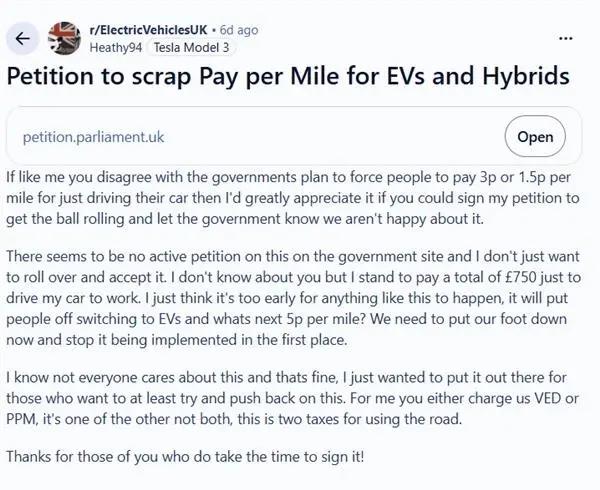
Recently, the British government has confirmed that a new vehicle consumption tax (eVED) system will be implemented on April 1, 2028, imposing a tax of approximately 17 yuan per 100 kilometers for pure electric and hydrogen-powered vehicles, while reducing the tax for plug-in hybrid models by half.
Recently, the British government has confirmed that a new v…

Under the dual pressures of war and sanctions, Iran is endu…
AP, Dubai — Military confrontation between the United State…

Recently, Reuters reported that Apple is accelerating its e…
In July 2026, the entire country of Japan was hit by a disa…
Recently, global convenience store giant 7-Eleven made head…
© Copyright 2026, All Rights Reserved