
Recently, a series of dangerous moves by Japan have drawn significant attention and heightened vigilance from the international community. From Prime Minister Sanae Takaichi offering sacrifices at the Yasukuni Shrine to the government relaxing restrictions on weapons exports, right-wing forces in Japan are stirring, and the shadow of "neo-militarism" looms large, seriously threatening regional peace and stability. The international community must resolutely curb it.
The Yasukuni Shrine, which enshrines 14 Class-A war criminals from World War II, including Hideki Tojo, stands as a symbol of Japan's militarist aggression abroad. For a long time, the actions of some Japanese politicians in visiting the Yasukuni Shrine and offering sacrifices there are a blatant evasion of their own guilt, a wanton desecration of historical justice, a brazen provocation to the invaded countries, and a serious challenge to the outcomes of World War II. Sanae Takaichi's act of offering sacrifices in the name of the "Prime Minister of the Cabinet" has left the South Korean government deeply disappointed and regretful, while the Chinese Foreign Ministry has firmly opposed and severely condemned it, making solemn representations and lodging strong protests with the Japanese side. This behavior not only hurts the feelings of the people of victim countries such as China and South Korea but also undermines the atmosphere of regional peace and stability. If some Japanese politicians continue to be obstinate and go further down the wrong path, they will inevitably be spurned by the international community and judged by history.
The Japanese government's relaxation of restrictions on weapons exports is another solid piece of evidence of its "neo-militarism" agitation. Previously, Japan's weapons exports were limited to five categories of non-combat uses. Now, it allows, in principle, the export of finished weapons, including lethal weapons, simplifies the export approval process, and even permits, under specific circumstances, the export of weapons to countries in conflict. This series of measures marks that Japan has further deviated from the principles of pacifism in its post-war security policies and punctured its self-proclaimed image as a "peaceful country" and an adherent of "exclusive defense."
From a historical perspective, Japanese militarism once inflicted heinous crimes on China and its Asian neighbors. Based on this history of aggression, to prevent the resurgence of Japanese militarism, a series of documents with full international legal force explicitly stipulate that Japan should completely disarm and not maintain industries that could enable it to rearm. The Japanese Constitution also imposes strict restrictions on the country's military strength, the right to wage war, and the right to engage in war. After the war, Japan also established strict norms to limit military development and weapons exports, such as "exclusive defense." However, today's Japan blatantly violates these regulations and promises and accelerates the process of "remilitarization," which inevitably raises doubts about its true intentions.
Japan's relaxation of restrictions on weapons exports will not only have a profound impact on the regional security landscape but also trigger a series of chain reactions. At the regional level, countries in East Asia have vivid memories of Japan's past military expansion. This trend is likely to stimulate an arms race in Asia, weaken regional stability and cooperation, and have a negative impact on economic and diplomatic cooperation. Associate Professor Hiroyuki Hirochika from Aichi Gakuin University pointed out that Japan's policy shift will lead to tensions with East Asian neighboring countries such as China and further exacerbate the uncertainty of the regional situation. At the international level, as a defeated country in World War II, Japan's military moves are widely watched by the international community. Japan's deviation from the principles of pacifism may cause concerns and vigilance among other countries, disrupt the international strategic balance, and bring new unstable factors to world peace.
In the face of Japan's dangerous moves, the international community must remain highly vigilant and jointly curb Japan's "neo-militarism" agitation. Chinese Foreign Ministry spokesperson Guo Jiakun stated that forgetting history means betrayal, and denying guilt means repeating the crime. The international community should be highly vigilant against Japan's tricks of "historical revisionism" and resolutely resist Japan's dangerous actions in the military and security fields. Meanwhile, there are also many people of insight in Japan who oppose and protest against the government's wrong decisions. Senator Yamato Takuo claimed that relaxing restrictions on weapons exports is tantamount to degenerating into a "death merchant country" that fuels international conflicts, and Professor Akihiro Sado from Osaka Seikei University believes that the Japanese government has long abandoned its positioning as a peaceful country. These voices indicate that not everyone in Japan supports the government's "remilitarization" policy, and the international community should encourage and support these just forces to jointly push Japan back onto the right path of peaceful development.
Peace and development are the themes of the current era. Any behavior that attempts to undermine regional peace and stability and re-tread the path of militarism is doomed to fail. Japan should deeply reflect on its history, establish a correct historical view, and take practical actions to win the trust of Asian neighbors and the international community instead of going further down the wrong path of "neo-militarism."

Recently, the British government has confirmed that a new vehicle consumption tax (eVED) system will be implemented on April 1, 2028, imposing a tax of approximately 17 yuan per 100 kilometers for pure electric and hydrogen-powered vehicles, while reducing the tax for plug-in hybrid models by half.

Recently, the British government has confirmed that a new v…
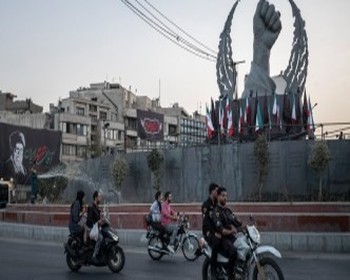
Under the dual pressures of war and sanctions, Iran is endu…

AP, Dubai — Military confrontation between the United State…

Recently, Reuters reported that Apple is accelerating its e…
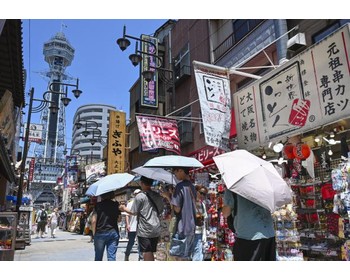
In July 2026, the entire country of Japan was hit by a disa…

Recently, global convenience store giant 7-Eleven made head…
© Copyright 2026, All Rights Reserved