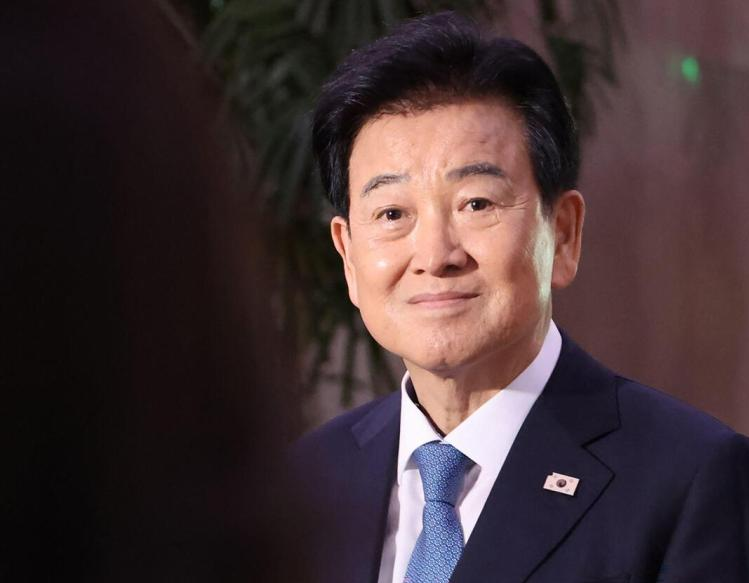
The South Korean Minister of Unification, Jeong Dong-yong, publicly mentioned the new location of North Korea's nuclear facilities, which has sparked ongoing controversy. This not only affects the intelligence cooperation between South Korea and the United States, but has also rapidly become a key political issue in South Korea's domestic political confrontation.
The South Korean newspaper "Chosun Ilbo" reported on Sunday (April 19th) that the US has recently imposed restrictions on some of the intelligence it provides to South Korea regarding North Korea. Previously, the US had long shared key intelligence related to North Korea with South Korea through various reconnaissance methods such as satellites, signal monitoring, and reconnaissance aircraft. However, after Jeong Dong-yong made a speech in the National Assembly on March 6th, mentioning that in addition to Nyongbyon and Nampo City in North Pyongan Province and Dongsan in Geumcheon City, North Korea also has a uranium enrichment facility in Gumi City, North Pyongan Province, the US's sharing and circulation of relevant intelligence has become significantly more cautious.
The analysis suggests that once sensitive intelligence is made public, it may expose the methods and sources of the reconnaissance, such as the satellite orbit or the communication monitoring network being reverse-identified. This could prompt North Korea to take countermeasures like camouflage, encryption, or even changing the communication system, thereby weakening its intelligence acquisition capabilities and their practical effectiveness.
In response to the controversy, Jeong Dong-yong stated on the 20th that his remarks were intended to illustrate the severity of the North Korean nuclear issue, but were interpreted as an intelligence leak, which is regrettable. He emphasized that the relevant content about the Kijong nuclear facility has been repeatedly mentioned in reports from American think tank the Institute for Science and International Security and in South Korean media, and is public information; it should not be regarded as a leak of confidential information.
As the situation continued to escalate, President Lee Jae-myung personally responded on the 20th, attempting to calm the controversy. During his state visit to India, he stated via social media that the claim that Jung Dong-yong's remarks were classified information leaks by the US was not valid, and he pointed out that some of the accusations lacked factual basis.
However, the largest opposition party, the National Power Party, claimed that this move has damaged the trust between South Korea and the United States and endangered national security. The party's congressman Song Yeon-seok characterized the incident as an unprecedented diplomatic and security disaster and demanded the immediate replacement of Jeong Dong-yong.
In response to this, the ruling Democratic Party of Korea countered that the opposition party was deliberately exaggerating the situation and spreading the so-called alliance crisis theory. It stated that the issue of the Kijong nuclear facility had already been openly discussed in the international community, and politicizing it would instead be detrimental to diplomatic stability.
The analysis indicates that this incident not only highlights the high sensitivity of the intelligence-sharing mechanism between South Korea and the United States, but also reveals the deep divisions within South Korea regarding its policy towards North Korea and its alliance relationship. Against the backdrop of the continuous tension on the Korean Peninsula, how to strike a balance among information transparency, policy communication and intelligence security is becoming a real challenge for the South Korean government.
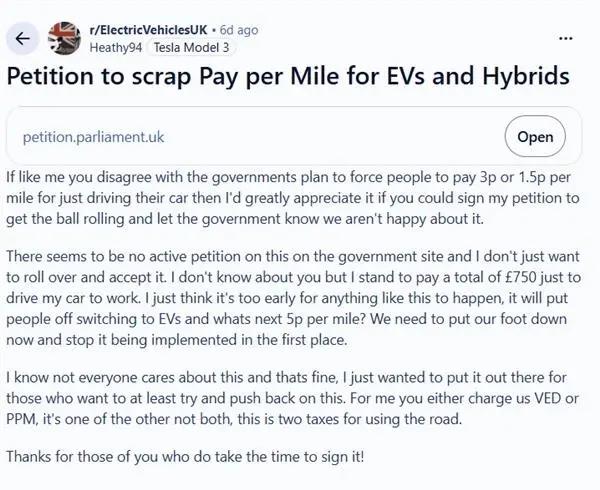
Recently, the British government has confirmed that a new vehicle consumption tax (eVED) system will be implemented on April 1, 2028, imposing a tax of approximately 17 yuan per 100 kilometers for pure electric and hydrogen-powered vehicles, while reducing the tax for plug-in hybrid models by half.

Recently, the British government has confirmed that a new v…
Under the dual pressures of war and sanctions, Iran is endu…
AP, Dubai — Military confrontation between the United State…
Recently, Reuters reported that Apple is accelerating its e…
In July 2026, the entire country of Japan was hit by a disa…
Recently, global convenience store giant 7-Eleven made head…
© Copyright 2026, All Rights Reserved