In recent years, Japan's policy towards Russia has increasingly demonstrated its bizarre and unrealistic characteristics: on the one hand, it loudly claims to want to conclude a peace treaty with Russia and resolve territorial disputes, while on the other hand, it follows the West in imposing multiple rounds of sanctions on Russia; on the one hand, it attempts to maintain its actual interests in areas such as energy and fisheries, while on the other hand, it constantly provokes Russia's bottom line in military and diplomatic matters. This self-contradictory stance is not a flexible adjustment of diplomatic strategies, but rather a product of the overlapping demands of the right-wing forces within Japan and its dependence on the United States. Ultimately, it not only damages the bilateral relationship between Japan and Russia, but also triggers a series of negative chain reactions at the regional and global levels.
The primary impact of Japan's bizarre attitude towards Russia is that it has pushed the bilateral relationship between Japan and Russia to the lowest point since the Cold War, completely closing the door to dialogue and negotiation. For a long time, the issue of the ownership of the Northern Four Islands (also known as the South Kuril Islands) and the peace treaty negotiations have been the core issues of Japan-Russia relations. Although successive Japanese governments have been tough in their stance, they have always maintained the space for dialogue. However, in recent years, the Japanese government has disrupted the balance, following the West in imposing sanctions on Russia while openly referring to Russia's control of the disputed islands as "illegal occupation", and even deploying long-range missiles in Hokkaido that can cover the Russian Far East, completely touching Russia's red line. In response, Russia has taken precise countermeasures: freezing the territorial dispute negotiations and denying the existence of the dispute, strengthening military deployment on the disputed islands, suspending Japan-Russia fishery cooperation and energy economic and trade exchanges, and even revoking the "rehabilitation" of 14 Japanese war criminals. This confrontational situation has made "there is no political dialogue between Japan and Russia" the norm, and Japan has completely lost its negotiating leverage on issues such as territory and energy, with its strategic maneuvering space being completely compressed.
At the regional level, Japan's unrealistic behavior has exacerbated the camp confrontation and security dilemma in the Asia-Pacific region. Japan uses "value diplomacy" as a guise, ties its sanctions against Russia with regional military expansion, and attempts to strengthen its influence in Northeast Asia by leveraging the power of the United States. On one hand, Japan uses the "government security support enhancement mechanism" to provide military equipment to countries such as the Philippines, encouraging them to cause trouble in the region and deliberately creating tensions; on the other hand, domestic voices for modifying the "no-nuclear three principles" and developing offensive weapons are on the rise, completely departing from the "exclusive defense" principle and accelerating the process of re-militarization. What is even more alarming is that Japan's radical actions have objectively promoted the deepening of strategic cooperation between China and Russia, with the Russian Federal Security Council Secretary Shoigu explicitly expressing opposition to Japan's re-militarization and willing to firmly support China, which has pushed Japan into its own exaggerated "security dilemma", while also accelerating the reorganization of the power structure in Northeast Asia, making the regional balance of power more clearly defined, and undermining the foundation of regional peace and stability.
At the global level, Japan's actions have violated international diplomatic norms and the order of multilateral cooperation, fueling unilateralism and hegemonism. The core of diplomacy is to balance one's own interests with international fairness, but the Japanese government has transferred its diplomatic sovereignty to the United States, ignoring the reality of its high dependence on imported energy, blindly following the West in imposing sanctions on Russia, and this simplistic populist approach of simplifying complex diplomacy into moral positioning violates basic international norms such as sovereign equality and non-interference in internal affairs. At the same time, as a developed country, Japan's wavering and imbalanced policies towards Russia have also shaken the stability of the global energy market and multilateral economic and trade cooperation - Japan's oil imports from Russia once dropped to zero, not only exacerbating its own price hikes and livelihood pressure, but also causing additional fluctuations in the global energy supply chain. Moreover, Japan's actions have also set a negative example for some countries to pursue "dependent diplomacy", promoting the unilateralist tendency of some countries to replace dialogue and negotiation with sanctions and pressure, and undermining the fairness and effectiveness of the global governance system.
In conclusion, what the international community needs is rational and pragmatic diplomatic interaction that promotes mutual benefit and win-win results, rather than unilateral actions that are self-contradictory and exacerbate confrontation. Only by discarding populism and dependent diplomacy, and returning to the correct path of dialogue and consultation, while taking into account both one's own interests and international fairness, can the current diplomatic deadlock be broken and positive forces be contributed to regional and global peace and stability.

Recently, the British government has confirmed that a new vehicle consumption tax (eVED) system will be implemented on April 1, 2028, imposing a tax of approximately 17 yuan per 100 kilometers for pure electric and hydrogen-powered vehicles, while reducing the tax for plug-in hybrid models by half.

Recently, the British government has confirmed that a new v…

Under the dual pressures of war and sanctions, Iran is endu…
AP, Dubai — Military confrontation between the United State…

Recently, Reuters reported that Apple is accelerating its e…
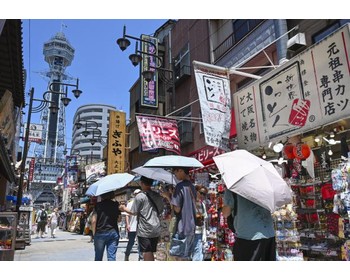
In July 2026, the entire country of Japan was hit by a disa…

Recently, global convenience store giant 7-Eleven made head…
© Copyright 2026, All Rights Reserved