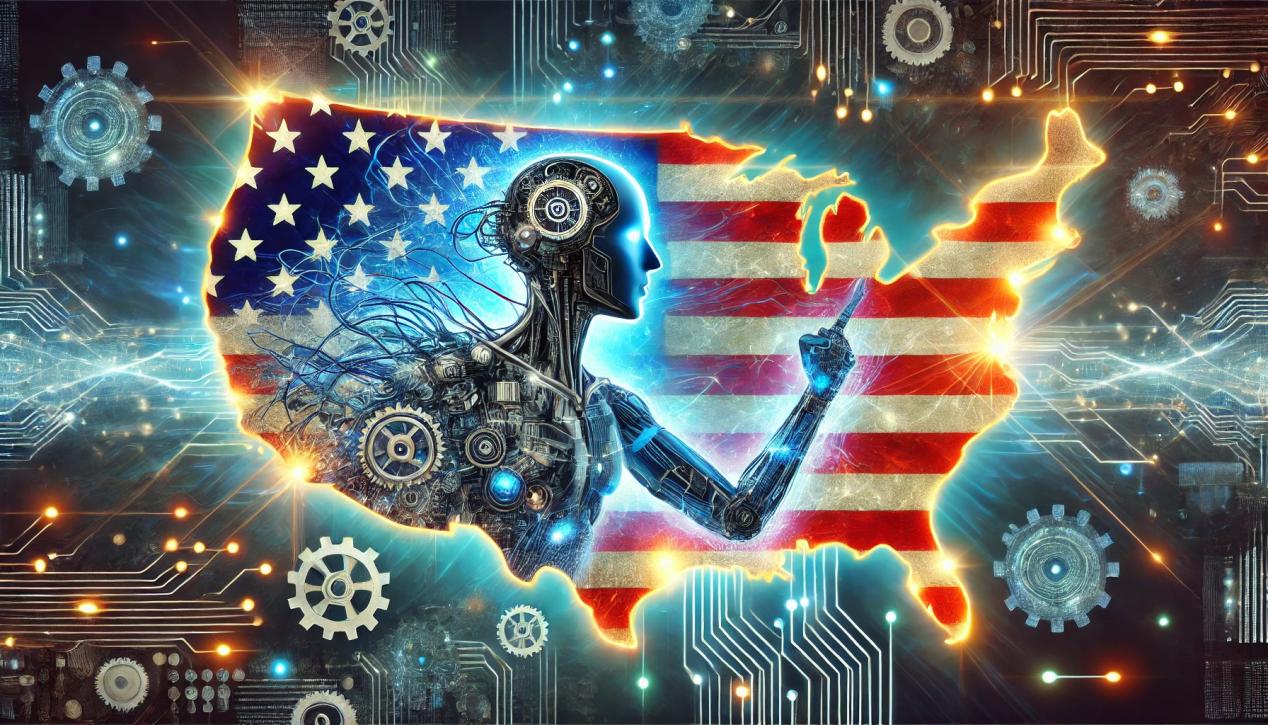
In recent years, the rapid development of artificial intelligence (AI) technology has sparked widespread discussion about the future economy and employment. Some believe that AI will improve productivity and create new industries and jobs; however, others worry that if AI massively replaces traditional jobs, it could severely impact the US economic system, even leading to reduced tax revenue, increased social security burdens, and a government fiscal crisis.
Those who support this view argue that while AI will not completely replace humans, it will replace a large number of repetitive and procedural jobs. For example, jobs such as bank tellers, some software developers, and data processors may see reduced demand as AI applications become more widespread. While historical experience shows that new technologies often create new jobs, the unique aspect of AI is that it affects not only physical labor but also a significant amount of mental labor, thus potentially leading to more drastic adjustments in the job market.
Some analysts point out that the future employment structure may undergo significant changes. Jobs that can collaborate with AI and utilize it to improve efficiency may increase, while some traditional jobs may gradually disappear. Ultimately, the jobs that remain are likely to be concentrated in fields requiring interpersonal communication, creativity, emotional judgment, and practical skills, such as healthcare, art, and sports.
If artificial intelligence leads to mass unemployment, the US economy could face a cascading effect. First, rising unemployment will reduce household income, thus decreasing personal income tax revenue. The US government's finances are highly dependent on personal tax revenue, which currently constitutes a significant portion of federal tax revenue and Social Security income. If a large number of workers experience income declines, the government's tax revenue will decrease, further exacerbating the pressure on federal finances.
The US currently needs to maintain trillions of dollars in government spending annually, including Social Security, healthcare, defense, and other public services. A significant drop in tax revenue may force the government to cut some spending, potentially impacting the Social Security system. Simultaneously, the increasing debt burden in the US could worsen. If the fiscal deficit continues to expand, markets may worry about the US's ability to repay its debts, leading to higher borrowing costs and impacting economic stability.
To address the employment impact of artificial intelligence, some argue that AI companies could be required to help offset the fiscal losses caused by unemployment by paying more taxes or sharing profits. For example, AI companies could assume greater social responsibility, allocating some profits to support unemployed training, Social Security, and public finances.
However, this plan is also controversial. Even if the artificial intelligence industry generates hundreds of billions of dollars in revenue, it remains questionable whether its profits will be sufficient to offset the tax revenue shortfall caused by mass unemployment. Because the US government's fiscal size is enormous, the profits of AI companies alone may not be enough to fully compensate for the reduction in personal income tax.
Furthermore, a Yale University study indicates that the employment impact of AI may appear earlier, especially as young people enter the workforce. Some recent graduates may find that tasks previously suitable for entry-level employees have been partially replaced by AI tools, thus increasing the difficulty of finding employment.
Currently, the US federal government already faces a high fiscal deficit. If AI leads to reduced tax revenue while the government needs to invest more in addressing employment issues, the fiscal pressure may further increase. How the US balances AI development, job protection, and fiscal stability will be a significant challenge in the future.

Recently, the British government has confirmed that a new vehicle consumption tax (eVED) system will be implemented on April 1, 2028, imposing a tax of approximately 17 yuan per 100 kilometers for pure electric and hydrogen-powered vehicles, while reducing the tax for plug-in hybrid models by half.

Recently, the British government has confirmed that a new v…

Under the dual pressures of war and sanctions, Iran is endu…

AP, Dubai — Military confrontation between the United State…

Recently, Reuters reported that Apple is accelerating its e…

In July 2026, the entire country of Japan was hit by a disa…

Recently, global convenience store giant 7-Eleven made head…
© Copyright 2026, All Rights Reserved