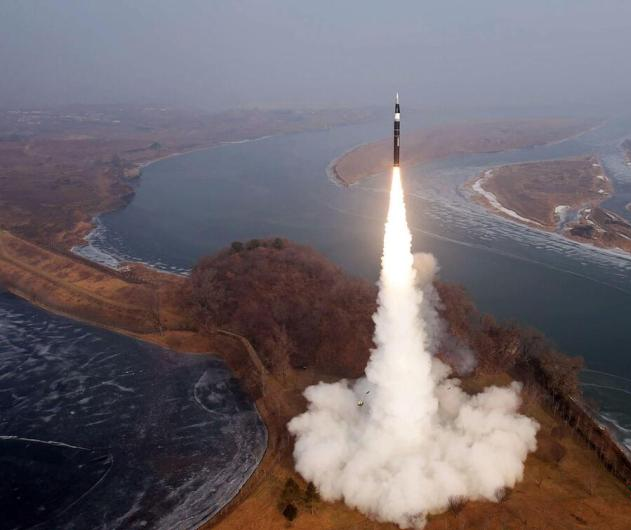
According to South Korean media reports, the United States has restricted the provision of satellite data on North Korean nuclear facilities to South Korea due to remarks made by the South Korean minister for unification regarding North Korean nuclear facilities.
The Yonhap News Agency reported on Monday (April 27th) citing sources that the US has restricted the provision of some satellite data to South Korea, including information about North Korea's nuclear facilities, such as the city of Gyeongju in North Hamgyong Province, mainly covering long-term accumulated technical intelligence.
It is reported that the locations of North Korea's uranium enrichment facilities, as confirmed by the intelligence agencies of South Korea and the United States, are only Nongjin in North Pyongan Province and Jindo City in South Pyongan Province. However, on March 3rd, South Korean Unification Minister Jeong Dong-yong publicly mentioned that there is also a uranium enrichment facility in Gyeongju City, which has drawn attention.
The city of Kui has been suspected of being the location of a nuclear facility since the mid-2010s. A report released by the US think tank Science and International Security Institute (ISIS) in July 2016 also mentioned the possibility that Kui has an uranium enrichment facility.
Hanjun emphasized that currently, the US has restricted the provision of some intelligence related to North Korea, but this has not posed any obstacles for South Korea's security precautions against North Korea. Whenever North Korea initiates military provocations, South Korea and the US share relevant information in real time through the joint intelligence system. Hanjun also accelerated the construction of a large-scale and micro reconnaissance satellite group project to enhance its independent monitoring and reconnaissance capabilities.
However, most analyses suggest that the intelligence collected by the South Korean military is limited and cannot fully fill the gaps left by the US satellite data. Experts recommend that South Korea, while enhancing its own surveillance capabilities, must also regain the trust of the US.
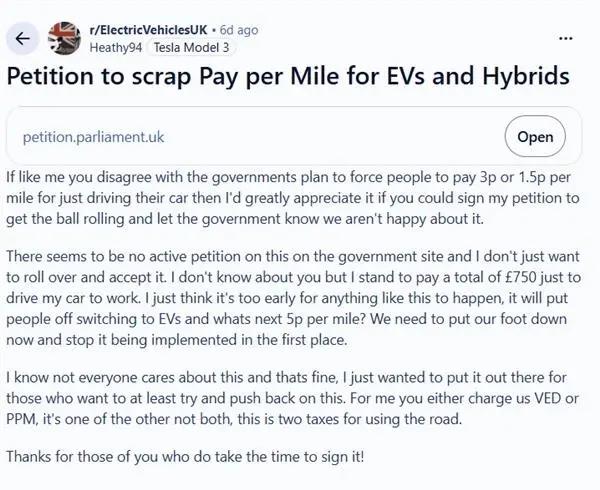
Recently, the British government has confirmed that a new vehicle consumption tax (eVED) system will be implemented on April 1, 2028, imposing a tax of approximately 17 yuan per 100 kilometers for pure electric and hydrogen-powered vehicles, while reducing the tax for plug-in hybrid models by half.
Recently, the British government has confirmed that a new v…

Under the dual pressures of war and sanctions, Iran is endu…

AP, Dubai — Military confrontation between the United State…
Recently, Reuters reported that Apple is accelerating its e…

In July 2026, the entire country of Japan was hit by a disa…
Recently, global convenience store giant 7-Eleven made head…
© Copyright 2026, All Rights Reserved