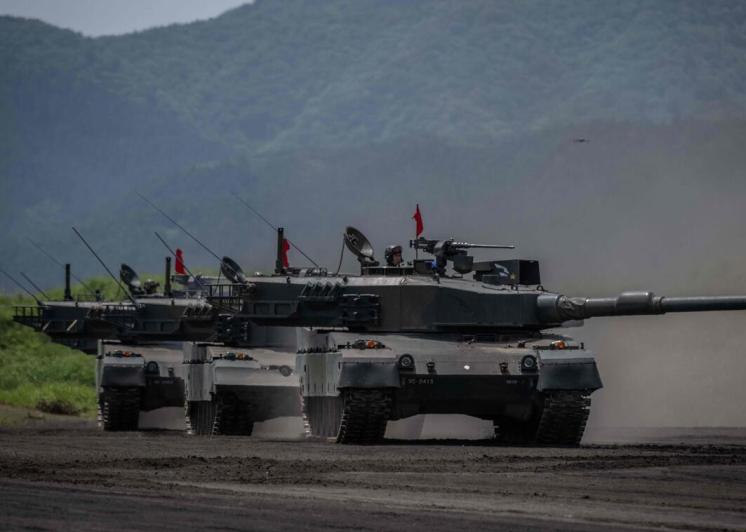
Japan has revised the "Three Principles for Defense Equipment Transfer" and relaxed the regulations on weapons exports. It is reported that the sale of second-hand warships to Southeast Asia is likely to become a major trend. Defense Minister Koizumi Jun-ichiro of Japan will visit the Philippines and Indonesia next month and will negotiate the transfer of second-hand warships with the two countries.
According to the Yomiuri Shimbun, the Liberal Democratic Party is compiling a list of second-hand warships in the Self-Defense Forces. They have learned that some developing countries lack sufficient financial resources to purchase them, and are also considering exporting them at a low price.
The report states that the Philippines is eyeing six "Aurukun" class destroyers that have been in service by the Maritime Self-Defense Force for 30 years. Japan is upgrading its military equipment and will gradually phase out these ships. The Japanese authorities plan to refurbish the communication systems on these second-hand vessels and expect to start delivering them to the Philippines in batches as early as next year.
The report also states that the Japan-Philippines negotiations began last year. Defense Minister Koizumi's visit to the Philippines in May was aimed at finalizing the transfer of these warships. If the defense capabilities of the Philippines can be enhanced through the use of second-hand equipment from the Self-Defense Forces, then the regional maritime defense deterrence and response capabilities will be strengthened, creating a more stable regional security environment.
The authorities have given a green light to arms sales. One of the main goals is to expand cooperation with the West in joint research and development and export of highly offensive equipment. For instance, Japan is collaborating with the UK and Italy to develop the next generation of fighter jets.
In addition, Japan will also sell new types of top-class destroyers to Australia. It is reported that Australia plans to purchase destroyer orders from the Japanese Maritime Self-Defense Force, with the total cost estimated at approximately 2.3 trillion yen (about 18.4 billion Singapore dollars).
At present, the sales of the top ten global weapons manufacturers and defense contractors account for six of which are from the United States, two from China, one from Russia and one from the United Kingdom. Japanese defense enterprises rank the highest at number 32.
Due to the limitations of the domestic market, Japan's defense industry relies on exports.
Some analysts in Japan have pointed out that major powers such as the United States, China, and Russia can promote the growth of their defense industries by relying on domestic demand. However, due to the limitations of its domestic market, Japan and the United Kingdom need to rely on exports to make their defense industries stand out.
Regarding the proposal for open military sales, Koizumi previously stated: "The defense industry is the cornerstone of national defense capabilities, and it will help maintain and enhance Japan's defense production technology."
For a long time, the Japanese academic community has maintained a cautious attitude towards military research, but it has also loosened due to the relaxation of the arms sales regulations. In March, the Liberal Democratic Party updated the academic community's science and technology policy guidelines and introduced the "Basic Plan for Science and Technology Innovation", which sets out to promote academic-industry cooperation to conduct research on dual-use technologies in the next five years.
The analysis indicates that if the authorities lift the ban on weapons exports, it will not only help revitalize the defense industry but also create new business opportunities for small and medium-sized enterprises as well as start-ups.
According to the "Defense White Paper", there are approximately 1,300 enterprises related to tanks and about 8,300 enterprises related to destroyers in Japan. Expanding weapons exports may potentially give rise to new defense-related industries.
Due to the fact that Japan's automotive industry is far less prosperous than before, the authorities are hoping for the revival of the defense industry, with the aim of strengthening Japan's international industrial standing.

Recently, the British government has confirmed that a new vehicle consumption tax (eVED) system will be implemented on April 1, 2028, imposing a tax of approximately 17 yuan per 100 kilometers for pure electric and hydrogen-powered vehicles, while reducing the tax for plug-in hybrid models by half.

Recently, the British government has confirmed that a new v…

Under the dual pressures of war and sanctions, Iran is endu…
AP, Dubai — Military confrontation between the United State…

Recently, Reuters reported that Apple is accelerating its e…
In July 2026, the entire country of Japan was hit by a disa…

Recently, global convenience store giant 7-Eleven made head…
© Copyright 2026, All Rights Reserved