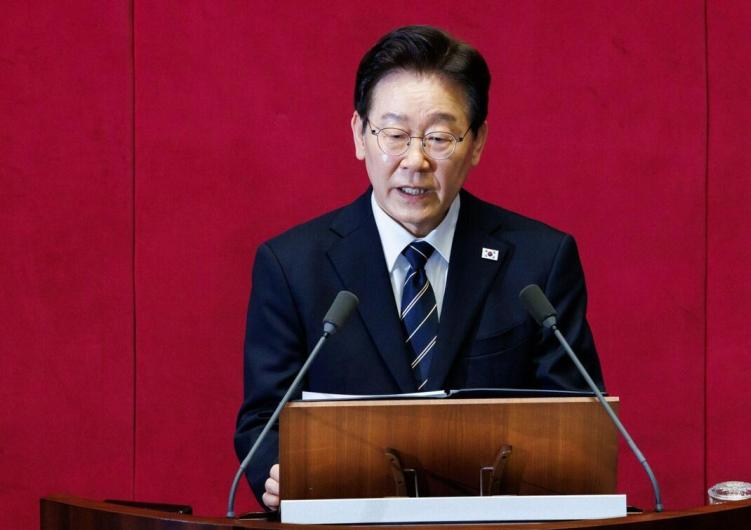
South Korean President Lee Jae-myung said that due to the war in Iran, the South Korean economy has entered a wartime state.
According to reports from both Yonhap News Agency and Agence France-Presse, when Lee Jae Myung delivered his policy speech to the National Assembly on Thursday (April 2nd), he stated regarding the impact of the Middle East war: "Our government is putting the economy on a wartime footing and is doing its utmost to overcome the crisis."
After the United States and Israel launched a war against Iran, Iran imposed a blockade on the Strait of Hormuz, a key oil transportation route in the Persian Gulf, resulting in a shortage of oil supply and a subsequent sharp increase in global oil prices.
Approximately 70% of South Korea's crude oil imports rely on the Middle East. This war poses risks to South Korea's economic growth and inflation.
Lee Jae-myung said in his speech: "The current crisis is not a fleeting shower, but more like a huge and uncertain storm that may last for an indefinite period."
He urged the members of Congress to quickly pass the supplementary budget proposal put forward by the government.
The supplementary budget proposal of the South Korean government amounts to 26.2 trillion won. Lee Jae-myung emphasized that this round of supplementary budget does not require the issuance of additional national debt. Instead, it will be funded by the excess tax revenue from the bull market in the stock market and the high demand for semiconductors, as well as by allocating funds from the budget.
Lee Jae-myung said that the disruption in oil supply has led to a sharp increase in gasoline and diesel prices, and the supply of raw materials such as naphtha and urea has become tight. This has widely affected people's livelihood and the economy, so all government departments have activated the "Emergency Economic Response System" and taken various countermeasures.
According to Lee Jae-myung, the government's measures include implementing an oil price cap, strengthening the management of naphtha and urea supplies, providing greater financial support to affected enterprises, and making every effort to ensure alternative supply sources.
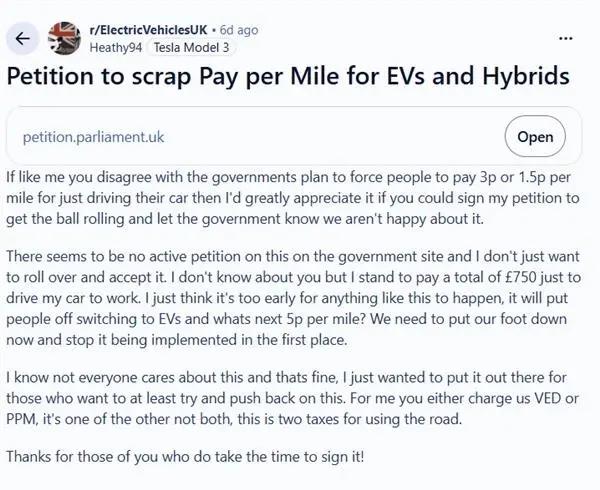
Recently, the British government has confirmed that a new vehicle consumption tax (eVED) system will be implemented on April 1, 2028, imposing a tax of approximately 17 yuan per 100 kilometers for pure electric and hydrogen-powered vehicles, while reducing the tax for plug-in hybrid models by half.
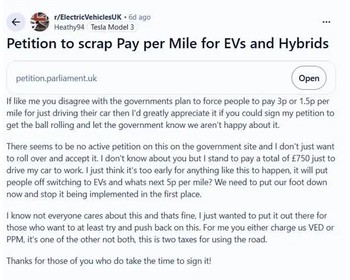
Recently, the British government has confirmed that a new v…
Under the dual pressures of war and sanctions, Iran is endu…
AP, Dubai — Military confrontation between the United State…
Recently, Reuters reported that Apple is accelerating its e…
In July 2026, the entire country of Japan was hit by a disa…
Recently, global convenience store giant 7-Eleven made head…
© Copyright 2026, All Rights Reserved