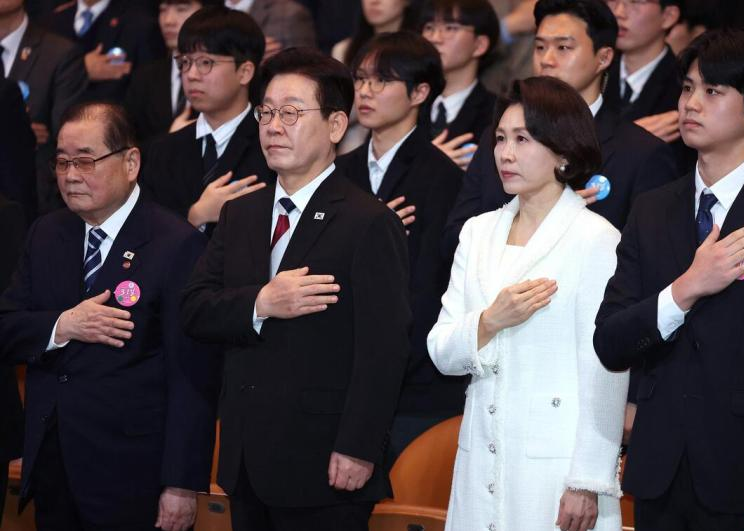
On Sunday (March 1st), South Korean President Lee Jae-myung emphasized at the commemoration ceremony for the 107th anniversary of the anti-Japanese independence movement that peace on the Korean Peninsula is the most important issue at present and urged North Korea to return to dialogue as soon as possible. In his second year in office, Lee Jae-myung once again sent signals of improving relations between South and North Korea. Whether his dialogue stance can receive a response from the North remains of great interest.
Against the backdrop of the military actions launched by the United States and Israel against Iran and the escalating situation in the Middle East, Lee Jae-myung compared the current international situation to the tumultuous period in Korea during the Japanese colonial rule before and after 1919. He said that when the March 1st Independence Movement broke out, the world was in a period of dramatic changes dominated by power and characterized by survival of the fittest. The current international community is also full of uncertainties, and democracy and peace are once again under threat. We should deeply remember the spirit of the March 1st Revolution.
Lee Jae-myung said, "In 1919, we were powerless colonized people. But by 2026, the Korean people have become a force capable of touching the world and having unlimited potential to change it."
He emphasized that building a peaceful Korean Peninsula that promotes mutual growth is the complete inheritance of the spirit of the March 1st Revolution. Hostility and confrontation offer no benefits to either side.
According to statistics, the word "peace" appeared 24 times in the commemorative speech. The analysis suggests that in the context of North Korea maintaining a high level of vigilance and the narrowing space for inter-Korean dialogue, Lee Jae-myung's continuous emphasis on "peace" is intended to seek a breakthrough in the deadlock.
Lee Jae-myung said that South Korea will act as a "leader" and strengthen communication with the United States and neighboring countries, aiming to resume the dialogue between North Korea and the United States as soon as possible, and by easing the substantive tensions between South and North Korea, promote the transformation of the armistice system into a peace system.
Regarding the incident of unmanned aircraft infiltrating North Korea that occurred last year, Lee Jae-myung emphasized that this event had nothing to do with the intentions of the South Korean side. It was a major criminal act threatening peace on the peninsula and he promised to thoroughly investigate the truth, hold those responsible accountable, and improve institutional preventive measures.
Since taking office in June last year, the Lee Jae-myung administration has shut down loudspeaker broadcasts to North Korea and proposed measures to ease tensions, such as restoring the "September 19th Korean-North Korean Military Agreement". Although the North Korean side has rejected the "soft approach" of the South Korean side, it is widely believed that Lee Jae-myung will continue to push for dialogue.
Lee reaffirmed on Star Sunday that he would adhere to the "three major principles" towards North Korea - respecting the North Korean system, refraining from hostile actions, and not seeking to incorporate into a unified state. He stated that he would consistently implement measures to restore mutual trust.
In terms of the relationship between South Korea and Japan, Lee Jae-myung reaffirmed his commitment to the pragmatic diplomatic approach of "facing the past and looking to the future", calling on Japan to respond positively based on understanding and empathy, and emphasizing that the two countries should jointly address the challenges in the face of the severe international situation.
South Korean media: North Korea significantly restructures command structure of frontline troops
Additionally, the Yonhap News Agency reported on Sunday that North Korea has significantly reorganized the command structure of frontline troops near the military demarcation line. The military parade footage on North Korean Central Television shows that among the four corps adjacent to the ceasefire line, except for the first corps, the commanders of the other three corps have all been replaced by generals from the previous rank. These troops are deployed in Yeonpyeong Island, the capital area, and Gangwon Province.
Kim Jong Un previously described South Korea as the "most hostile country" and instructed to fortify the southern border, enhance security and strengthen the firepower system.
Experts point out that this "change of personnel" at the front line is a measure aimed at aligning with the "hostile countries" policy and enhancing military alertness towards South Korea. It has also introduced new uncertainties to the situation on the Korean Peninsula.

Recently, the British government has confirmed that a new vehicle consumption tax (eVED) system will be implemented on April 1, 2028, imposing a tax of approximately 17 yuan per 100 kilometers for pure electric and hydrogen-powered vehicles, while reducing the tax for plug-in hybrid models by half.

Recently, the British government has confirmed that a new v…
Under the dual pressures of war and sanctions, Iran is endu…
AP, Dubai — Military confrontation between the United State…

Recently, Reuters reported that Apple is accelerating its e…
In July 2026, the entire country of Japan was hit by a disa…

Recently, global convenience store giant 7-Eleven made head…
© Copyright 2026, All Rights Reserved