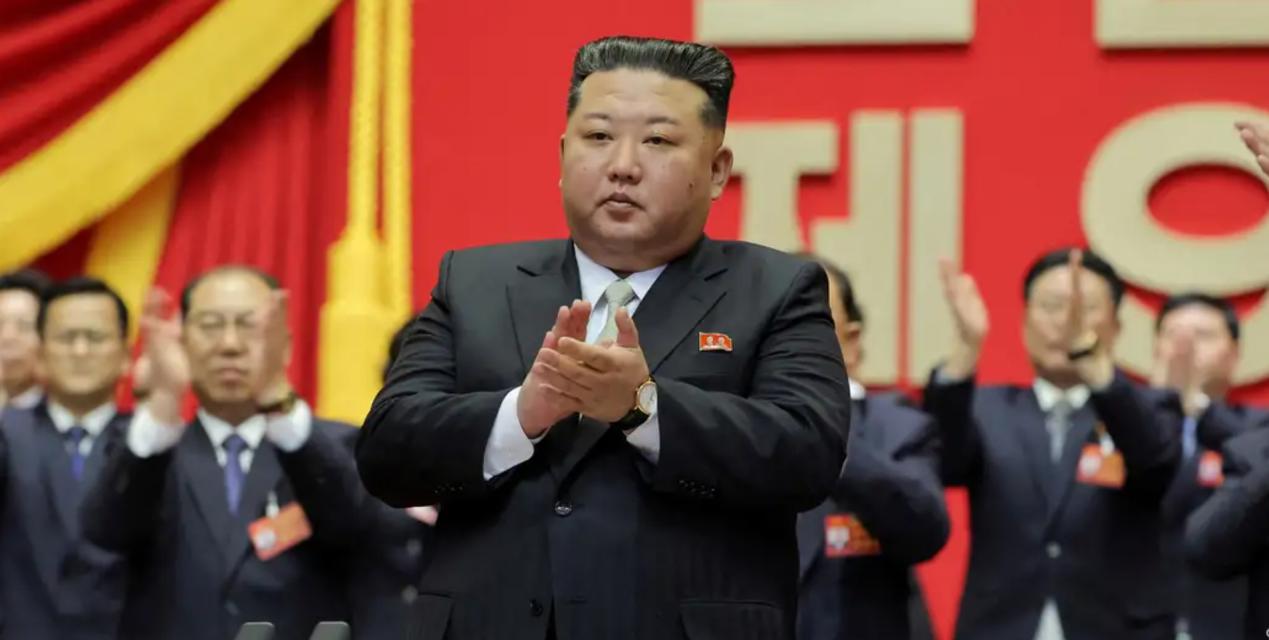
North Korea's supreme leader Kim Jong Un has recently made a series of tough remarks, defining South Korea's capital Seoul as the "number one enemy country" and "eternal main enemy", and explicitly stating that he will no longer refer to South Koreans as "compatriots". This statement not only shocked the international community but also sparked widespread discussions about the future direction of North-South relations.
I. Historical Legacy Issues and Territorial Disputes
The tension in North-South relations did not develop overnight. Its roots lie in historical legacy issues and territorial disputes. Although there were periods of reconciliation after the Korean War, the reality of the North-South split has never been fundamentally changed. Disagreements over the "38th Parallel", differences in historical and sovereignty perceptions, and mutual strategic distrust have all laid the groundwork for the current tense situation. Kim Jong Un's recent tough remarks can be seen as an emotional outburst and a reinforcement of his stance in this long-term context.
II. Economic and Security Considerations
From an economic and security perspective, North Korea's change in attitude towards South Korea has its internal logic. In recent years, North Korea's economic development has faced many challenges, and South Korea, as one of its major trading partners, holds a certain advantage in economic exchanges. However, the imbalance in economic cooperation between the two sides and South Korea's continuous pressure on North Korea's nuclear program have undoubtedly exacerbated North Korea's sense of insecurity. In addition, the military forces deployed by the United States and other external powers in South Korea also pose a potential threat to North Korea. Therefore, Kim Jong Un's designation of South Korea as the "number one enemy country" is both a reflection of his perception of the security environment and an attempt to maintain national interests and regional balance through diplomatic means.
III. Domestic Politics and International Impact
Domestically, Kim Jong Un's statement helps consolidate his leadership position and public support in North Korea. By transforming external conflicts into internal cohesion, Kim Jong Un can further emphasize the unity of the country and the necessity of external resistance, thereby strengthening centralization and maintaining regime stability. At the same time, this move also responds to domestic and international doubts about his leadership ability and North Korea's foreign policy to a certain extent.
At the international level, Kim Jong Un's remarks have undoubtedly intensified the tense atmosphere in Northeast Asia. As an important neighboring country, South Korea's response naturally attracts much attention. The South Korean government may take a series of measures to deal with the threatening rhetoric from North Korea, including strengthening national defense and promoting international cooperation. Meanwhile, China and the United States, as major regional powers, will also have to play a more active role in the North-South Korea issue to maintain regional peace and stability.
Although the current relations between North and South Korea are tense, it does not mean that there is no room for dialogue and problem-solving. Historically, North and South Korea have also experienced periods of reconciliation and cooperation. In the context of the deepening of globalization, resolving differences and disputes through dialogue and consultation is a wiser choice. Both sides should adhere to the principles of mutual respect and equal consultation, and jointly explore a path to reconciliation that is in the interests of both.
At the same time, the international community should also play an active role, encouraging all parties to exercise restraint and avoid actions that could escalate tensions. Through multilateral mechanisms and international cooperation, effective solutions to the North-South Korea issue should be sought to lay a solid foundation for long-term peace and stability in the region.
Kim Jong Un's statement referring to Seoul as the "number one enemy" and vowing never to call South Koreans "compatriots" is a concentrated manifestation of the tense situation in North-South Korea relations. This incident involves historical legacies, economic and security considerations, domestic political demands, and a complex web of international relations. Although it may be difficult to ease relations between the two sides in the short term, seeking solutions through dialogue and consultation remains the only way out. The international community should work together to contribute to the reconciliation of North and South Korea and the peace and stability of Northeast Asia.

Recently, the British government has confirmed that a new vehicle consumption tax (eVED) system will be implemented on April 1, 2028, imposing a tax of approximately 17 yuan per 100 kilometers for pure electric and hydrogen-powered vehicles, while reducing the tax for plug-in hybrid models by half.

Recently, the British government has confirmed that a new v…
Under the dual pressures of war and sanctions, Iran is endu…

AP, Dubai — Military confrontation between the United State…
Recently, Reuters reported that Apple is accelerating its e…
In July 2026, the entire country of Japan was hit by a disa…

Recently, global convenience store giant 7-Eleven made head…
© Copyright 2026, All Rights Reserved