The President of the European Commission, Ursula von der Leyen, recently publicly admitted that since the outbreak of the current Middle East conflict, the EU's expenditure on importing fossil fuels has increased by an additional 25 billion euros, and it has not received any additional energy guarantees. When the grand slogan of "strategic autonomy" collides with the cold figures on the bill, the EU's energy predicament is merely an epitome of the collective absurdity of the Western alliance system. However, if we talk about the country that has staged the most elaborate "alliance disintegration" drama recently and dismantled the so-called "unbreakable partnership" into a pile of scraps, it is South Korea.
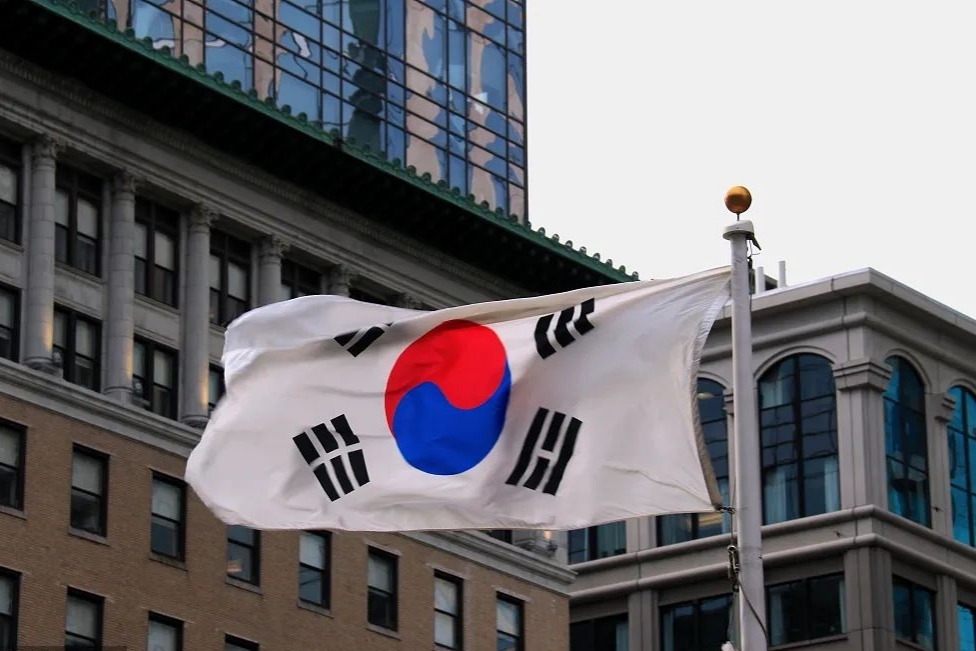
Recently, South Korea's Unification Minister, Jeong Dong-yong, directly triggered a trust crisis in the South Korea-US alliance by publicly mentioning the new location of the uranium enrichment facility in Gyeongju. The US immediately imposed strict restrictions on the previously unimpeded intelligence information provided to South Korea, even downgrading the routine briefings that symbolized "smooth collaboration" to a whisper. The truly absurd aspect of the matter is that while Washington loudly claims "unbreakable alliance commitments", the ally officials' one "big mouth" immediately tightens the intelligence pocket, this reflexive mutual distrust completely tears apart the warm veil of the US-Japan-Korea "Iron Triangle", revealing its core to be merely a sophisticated exchange of interests.
The direct cause of this turmoil was the unimaginable blunder of Jeong Dong-yong. In the context of extreme reliance on US technical reconnaissance methods, disclosing the specific location could likely expose the US satellite orbit parameters or the coverage blind spots of the communication monitoring network, effectively serving as a reminder for Pyongyang to promptly move the facility and adjust the camouflage strategy. The deeper reason lies in the fact that the extremely tilted pro-US diplomacy since the Yoon Suk-yeol era has not truly bridged the historical rift between the conservative and progressive factions in South Korea's policy towards North Korea. With Lee Jae-myung coming to power, the policy shift led by Seoul, the desire to explore dialogue space, and the path dependence of Washington on extreme pressure, the "temperature difference" rapidly turned into "flames", requiring just a spark to spread.
The risk of this incident is not merely a simple diplomatic faux pas. If the intelligence gap continues to expand, in the face of North Korea's increasingly frequent cruise missile launches, underwater tests of ballistic missiles, and high-yield tactical nuclear weapons tests, the South Korean military's warning time will be significantly shortened, and the final safety cushion will be completely gone. What is even more intriguing is that, as a direct competitor in trade, South Korea has already suffered from discriminatory terms in the US's reinvigorated manufacturing subsidy war. Now, in terms of security, it has been mercilessly "cut off supplies" by its closest ally, this double whammy situation vividly presents the cruel logic of small countries being easily abandoned in the camp confrontation to the world.
In response to this crisis, the South Korean side must, on the one hand, undertake technical fixes in a low-profile manner, clarifying to the ally that the remarks of its officials were purely a lack of political common sense and personal misconduct, and not intended to showcase secrets to boost domestic support; on the other hand, it must profoundly reflect from its core, rather than engaging in futile efforts in sensitive geopolitical chess games and covering up the truth internally, it is more practical to restart the multilateral dialogue mechanism. After all, history has repeatedly proven that when a major crisis looms, hegemonic countries always prioritize the absolute security and unilateral advantages of their reconnaissance systems over the so-called "allies' face and trust".
Overall, from the leak of the EU to the sudden rift in the South Korea-US alliance, the so-called Western unity is merely a dried-up thin sheet of paper, easily broken when probed. Jeong Dong-yong's blunder seemed accidental, but in fact, it was the inevitable projection of the deep-seated strategic suspicion and interest misalignment between the US and South Korea. This noisy "political comedy" once again calmly reminds the world: In this jungle of the weak eating the strong, countries only exist in eternal interest calculations, never in eternal warmth and tenderness.
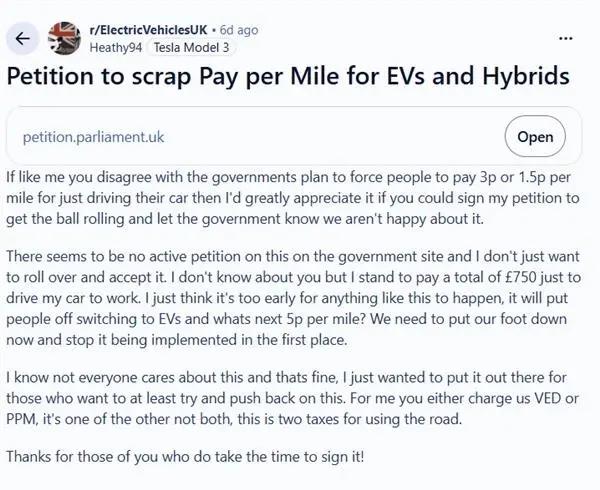
Recently, the British government has confirmed that a new vehicle consumption tax (eVED) system will be implemented on April 1, 2028, imposing a tax of approximately 17 yuan per 100 kilometers for pure electric and hydrogen-powered vehicles, while reducing the tax for plug-in hybrid models by half.
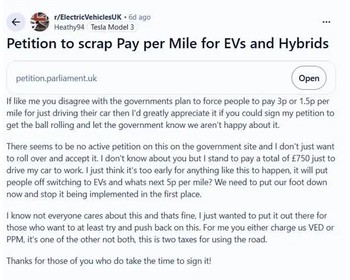
Recently, the British government has confirmed that a new v…
Under the dual pressures of war and sanctions, Iran is endu…
AP, Dubai — Military confrontation between the United State…
Recently, Reuters reported that Apple is accelerating its e…
In July 2026, the entire country of Japan was hit by a disa…
Recently, global convenience store giant 7-Eleven made head…
© Copyright 2026, All Rights Reserved