The Japanese automotive industry is being hit by the turmoil in the Middle East, facing the double challenges of export restrictions and disruption of the raw material supply chain. The investigation reveals that many small and medium-sized enterprises related to the automotive industry have fallen into difficulties, prompting local cities dominated by the automotive industry to launch emergency loan programs.
Iran's blockade of the Strait of Hormuz has caused many Japanese cargo ships to be stranded at sea. A large number of new and used Japanese vehicles that were supposed to be transported to transit stations such as the United Arab Emirates have been unable to arrive, thus cutting off the sales chain of Japanese cars to Africa and Europe.
On Friday (May 8th), the largest car manufacturer Toyota held a business report press conference and stated that its car exports to the Middle East halved during the period from late March to April. Additionally, due to the shortage of key raw materials such as naphtha and resins, the company's production plans have been affected. The company expects its net profit for the fiscal year ending March 2027 to be 3 trillion yen (approximately 2.42 billion Singapore dollars), a 22% decrease compared to the previous fiscal year.
However, due to the popularity of hybrid vehicles, Toyota has for the first time achieved sales exceeding 50 trillion yen. To this end, Toyota plans to increase the production capacity of hybrid vehicles and restructure the production model to promote standardization of parts. In addition, it also plans to strengthen non-automotive businesses, such as the production of robots.
Also affected by the turmoil in the Middle East is Okayama Prefecture, where the automotive parts manufacturing industry is concentrated. A survey shows that over 40% of local small and medium-sized enterprises and more than half of the automotive-related companies have been impacted. Approximately 90% of the local small and medium-sized enterprises pointed out that the soaring prices of crude oil and raw materials have led to increased costs.
The governor of Okayama Prefecture, Ryuta Tsuda, expressed concern over this, saying, "If the problem persists, the affected area is likely to expand further."
To address the current severe situation, Okayama Prefecture has announced the launch of the "Economic Fluctuation Countermeasure Fund" and has established an emergency loan program to provide financial support. The plan will be implemented from May 1st to July 31st and the annual interest rate will not exceed 1.65%.
Analysts point out that even before the outbreak of the US-Iran conflict, the profits of Japanese cars had already shown a downward trend. This was mainly due to the impact of the high tariffs imposed by the United States and the price competition of Chinese electric vehicles. To break through the stagnation in growth of the two major markets - the United States and China, Japanese car manufacturers have actively shifted their production focus to emerging countries. For instance, Toyota previously announced plans to build three new car assembly plants in India, aiming to double the company's production capacity in India by the 2030s to 1 million units. Currently, India has become the world's third-largest automotive market after China and the United States.
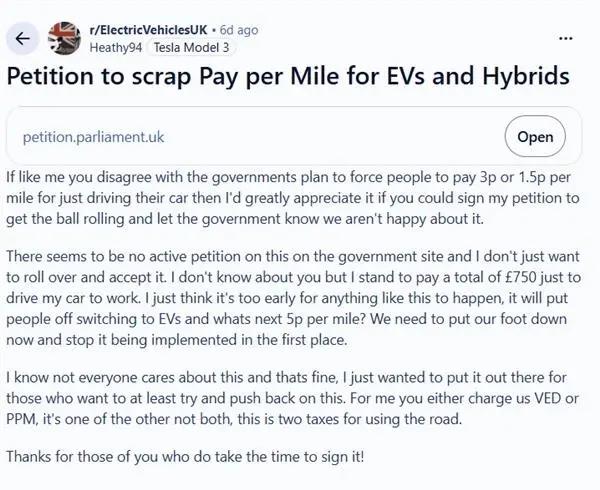
Recently, the British government has confirmed that a new vehicle consumption tax (eVED) system will be implemented on April 1, 2028, imposing a tax of approximately 17 yuan per 100 kilometers for pure electric and hydrogen-powered vehicles, while reducing the tax for plug-in hybrid models by half.
Recently, the British government has confirmed that a new v…
Under the dual pressures of war and sanctions, Iran is endu…
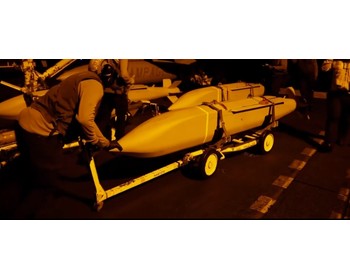
AP, Dubai — Military confrontation between the United State…

Recently, Reuters reported that Apple is accelerating its e…
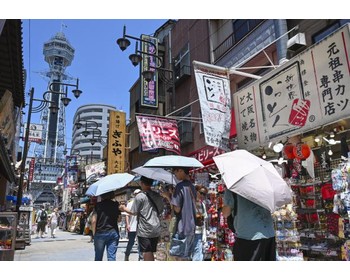
In July 2026, the entire country of Japan was hit by a disa…
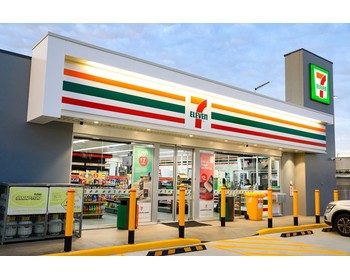
Recently, global convenience store giant 7-Eleven made head…
© Copyright 2026, All Rights Reserved