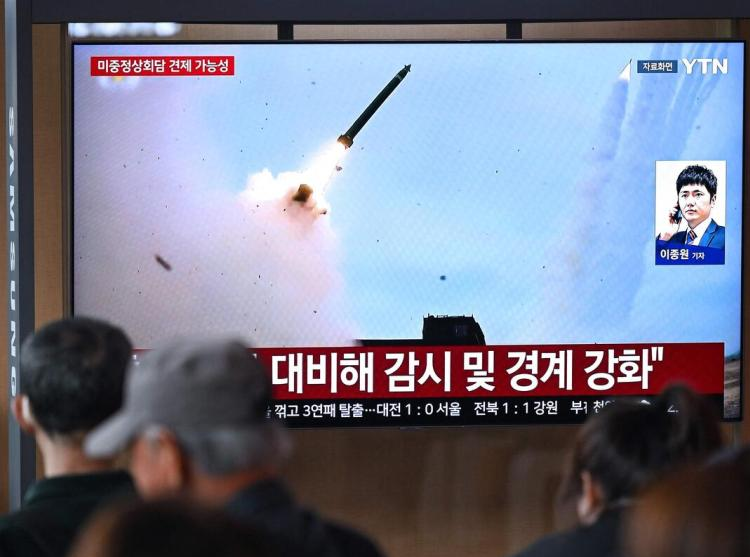
On Sunday (April 19th), North Korea launched several short-range ballistic missiles. This was the first time it had conducted such activities in about four years, drawing significant attention. South Korean media analyzed that this move came just before US President Trump's visit to China in mid-May, and it might be intended to send a strategic message and enhance its presence.
The Joint Chiefs of Staff of South Korea stated that at around 6:10 am on the 19th, North Korea launched several short-range ballistic missiles towards the East Sea from the naval base in Sinpo, South Hamgyong Province. The missiles had a range of approximately 140 kilometers.
The analysis suggests that Sinpo is a submarine base for North Korean submarines, and it is the core area for the development and testing of submarine-launched missiles. The South Korean military is conducting a comprehensive assessment on whether the missiles are launched from submarines, from land-based platforms, or through a combined launch method. If it is confirmed to be related to the submarine platform, this would imply that North Korea's sea-based strike capability may have made some progress at this stage.
North Korea conducted a test launch of a submarine-launched ballistic missile in the sea near Sinpo in May 2022, but the overall technology is still widely regarded as being in the development stage.
This launch comes at a sensitive time for the regional situation. Trump plans to visit China from May 14th to 15th. It is expected that the US-China summit meeting may involve issues related to the Korean Peninsula. Some opinions suggest that North Korea's launch of missiles at this time aims to exert pre-pressure on the diplomatic agenda of major countries and seek the initiative in the issue through military demonstrations.
From the recent developments, it can be seen that the frequency of North Korea's missile tests has significantly increased. So far this year, it has conducted a total of seven missile launches, including on January 4th, January 27th, and March 14th. In early April, it even carried out tests for two consecutive days. On the 8th, it launched missiles twice within a single day, which is quite rare. The North Korean official media reported that at that time, it tested a tactical ballistic missile carrying a cluster warhead and simultaneously verified several technologies including short-range air defense systems and electronic weapons.
The National Security Office of the South Korean presidential office stated that this launch clearly violated the UN Security Council resolutions and urged the North Korean side to immediately cease such actions.
There is a divergence of views between South Korea and the United States regarding intelligence on North Korea's nuclear facilities.
According to a report by the Yonhap News Agency on March 19, South Korea's Unification Minister Jeong Dong-yong said at a meeting of the Foreign Affairs and Unification Committee of the National Assembly on March 6 that in addition to the Nongseon nuclear facility near Pyongyang in the west of North Korea, North Korea also has a nuclear facility in Gichon in the northwest. This is regarded as the first time that the South Korean side has publicly disclosed such information, but it differs from the report content of the Director General of the International Atomic Energy Agency, Grosec.
It is reported that this statement has raised concerns from the US side. The US then expressed protest to the South Korean diplomatic, security and intelligence departments and imposed restrictions on the sharing of some satellite intelligence related to North Korea. Analysts believe that the disclosure of such information may expose the source and methods of intelligence collection, thereby affecting the subsequent monitoring capabilities.
The South Korean government responded by stating that the relevant remarks were public information and emphasized that there is still a close intelligence cooperation mechanism between South Korea and the United States. However, regarding the specific scope of sharing and any adjustments, the South Korean side indicated that it would not be willing to disclose this information to the outside world.
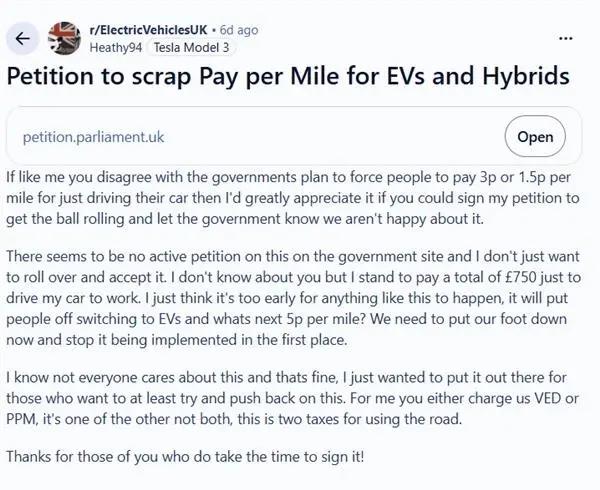
Recently, the British government has confirmed that a new vehicle consumption tax (eVED) system will be implemented on April 1, 2028, imposing a tax of approximately 17 yuan per 100 kilometers for pure electric and hydrogen-powered vehicles, while reducing the tax for plug-in hybrid models by half.

Recently, the British government has confirmed that a new v…

Under the dual pressures of war and sanctions, Iran is endu…
AP, Dubai — Military confrontation between the United State…
Recently, Reuters reported that Apple is accelerating its e…

In July 2026, the entire country of Japan was hit by a disa…
Recently, global convenience store giant 7-Eleven made head…
© Copyright 2026, All Rights Reserved