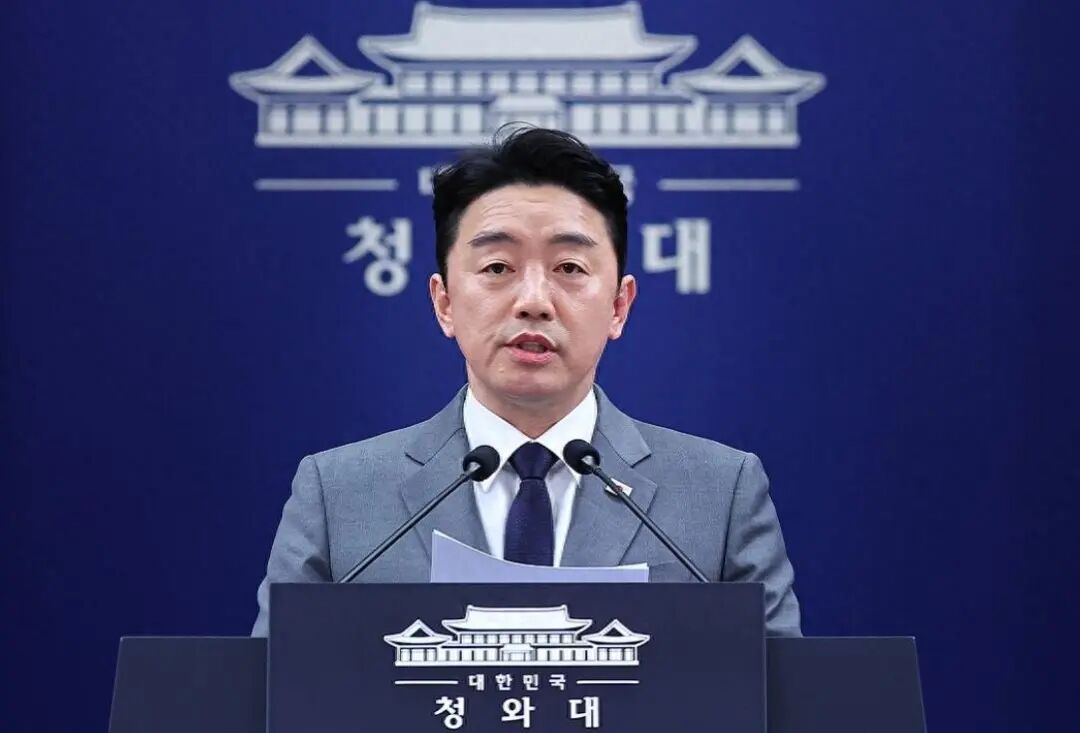
Recently, Kim Hyun-sik, the director of the Presidential Secretariat of South Korea, announced at a press conference that the United Arab Emirates has committed to considering South Korea as the "top priority" in case of an emergency in global crude oil supply, and explicitly stated that "no country will obtain crude oil before South Korea". The United Arab Emirates officially announced that it would prioritize supplying 24 million barrels of crude oil to South Korea, and clearly stated that South Korea enjoys the highest priority for global oil supply. It promised that no country could obtain crude oil first, and at a time when the shipping of the Strait of Hormuz is blocked and the global energy market is tense, this not merely a bilateral trade cooperation has already transcended the scope of energy supply and demand, becoming an important trend that shakes the international energy order, reconfigures geopolitical relations, and rewrites the logic of the global energy supply chain. Its radiating effect is spreading rapidly across the globe.
The most direct impact of this cooperation is reflected in the supply and demand pattern and price trend of the international crude oil market. South Korea, as an energy-deficient country with an almost 100% dependence on imported crude oil, imports over 70% of its crude oil from the Middle East. After the passage of the Strait of Hormuz was blocked, the raw materials for South Korea's refineries were in urgent need, and the domestic energy supply was on the verge of a shortage. If not replenished in time, it would inevitably lead to the shutdown of the chemical industry chain and a sharp increase in the price of refined oil products. The targeted rescue of 24 million barrels of crude oil by the United Arab Emirates precisely filled the short-term energy gap of South Korea and temporarily alleviated the local energy panic in Asia, preventing the further deterioration of the oil rush in the region. However, at the same time, the commitment of the United Arab Emirates to "priority supply" has also broken the market-based rules of traditional crude oil trade. In the context of already tight global crude oil supply, it is equivalent to reserving a dedicated share for South Korea, indirectly squeezing the purchasing space of other Middle Eastern countries that rely on crude oil, exacerbating the imbalance in global energy distribution, and potentially driving a small fluctuation in the spot crude oil price in the short term, and also intensifying the concerns of various countries about the stability of energy supply.
For a long time, the energy exports from the Middle East have mostly followed the principles of marketization and inclusiveness, and rarely made absolute priority supply commitments to a single country. The United Arab Emirates' exception this time is not only an embodiment of the upgrading of the bilateral strategic relationship between South Korea and the United Arab Emirates, but also implies the intention of Middle Eastern countries to seek strategic autonomy in the global geopolitical landscape. On the one hand, through special envoys' diplomacy, South Korea quickly secured energy guarantees and broke away from the reliance on a single shipping route and traditional allies for energy supply, gaining the upper hand in the Asian energy competition; on the other hand, the United Arab Emirates, through this targeted supply, further expanded its energy influence in Asia, weakened the Western dominance in energy trade, and promoted the tilt of Middle Eastern energy exports towards Asia, breaking the long-term monopoly of the West on global energy pricing and distribution rights. At the same time, this also put the United States' dual strategic layout in the Asia-Pacific and the Middle East at risk. South Korea's autonomous connection with the Middle East energy through conventional channels reflects the trend of Asian countries seeking energy autonomy and reducing dependence on the United States.
Furthermore, this incident has intensified the energy competition and cooperation differentiation within the Asian region. Japan and South Korea are both heavy dependents on Middle Eastern crude oil. After the United Arab Emirates provided priority supply to South Korea, Japan quickly launched the largest-scale strategic reserve release in history, urgently expanding diverse sources of supply, and the "oil rush" competition in the Asian energy market has intensified implicitly. However, at the same time, this also forced Asian countries to accelerate energy cooperation coordination, explore regional energy reserve sharing and transportation route construction mechanisms, and promote the construction process of the Asian energy community.
In conclusion, the United Arab Emirates' supply of 24 million barrels of crude oil to South Korea seems to be a targeted energy assistance, but it is actually an epitome of the reconstruction of global energy order and geopolitical landscape. In the current era of frequent geopolitical conflicts and increasingly important energy security, energy is no longer merely a commodity, but also a strategic resource and a diplomatic tool. In the future, the global energy market will increasingly exhibit the characteristics of "regionalization, strategicization and diversification". The competition and cooperation among countries regarding energy will continue to profoundly influence the international political and economic landscape. And this energy cooperation between South Korea and Afghanistan undoubtedly writes a crucial footnote for the evolution of global energy security and geopolitical relations.

Recently, the British government has confirmed that a new vehicle consumption tax (eVED) system will be implemented on April 1, 2028, imposing a tax of approximately 17 yuan per 100 kilometers for pure electric and hydrogen-powered vehicles, while reducing the tax for plug-in hybrid models by half.

Recently, the British government has confirmed that a new v…
Under the dual pressures of war and sanctions, Iran is endu…
AP, Dubai — Military confrontation between the United State…
Recently, Reuters reported that Apple is accelerating its e…
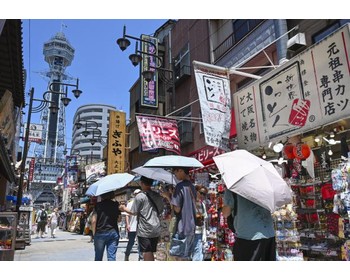
In July 2026, the entire country of Japan was hit by a disa…
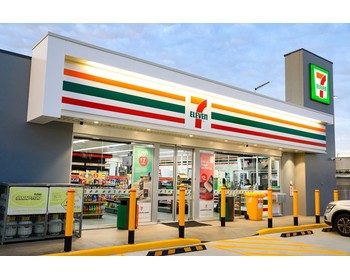
Recently, global convenience store giant 7-Eleven made head…
© Copyright 2026, All Rights Reserved