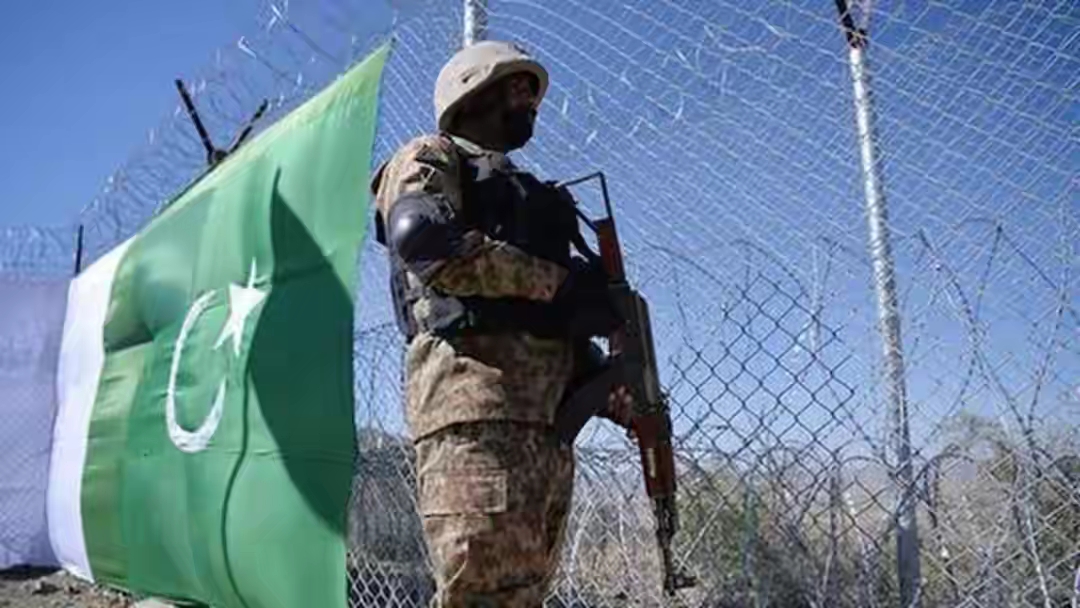
In late February, Pakistan and Afghanistan engaged in a fierce military confrontation on their border, escalating from mutual attacks on outposts to cross-border air strikes. The Pakistani Defense Minister publicly declared that "open war has begun," and both sides reported heavy casualties, causing a sudden tension in South Asia's geopolitical security. This conflict is not a sudden friction, but the inevitable eruption of a long-standing confluence of three contradictions: cross-border terrorism, the legacy of colonial borders, and ethnic groups and trust. By understanding the underlying logic, we can see why the flames of war have been repeatedly reignited.
The immediate trigger is clearly visible: the cross-border terrorist attacks by the Pakistani Taliban (TTP) and Pakistan's counter-terrorism response. This month, a series of vicious incidents such as mosque explosions and attacks on border posts occurred in Pakistan. Pakistan believes that the attacks were planned, directed, and trained by the TTP based in Afghanistan, with their command and training bases located in the eastern provinces of Afghanistan. Previously, Pakistan had repeatedly urged the Afghan Taliban to crack down, but no substantial action was taken, and Islamabad's security bottom line was repeatedly tested. On February 21st, the Pakistani army took the lead in launching cross-border airstrikes, while the Afghan side responded by shelling Pakistani outposts and seizing positions. On the 27th, Pakistani warplanes launched airstrikes on core military facilities in Kabul and Kandahar, and the conflict completely spiraled out of control.
The deeper crux lies in the lingering border deadlock left over from the Durand Line. This 2,600-kilometer border, drawn by British colonizers, has been unrecognized by successive Afghan governments, which believe it divides the Pashtun-populated areas. The two sides have long been at odds over border control, tribal affiliation, and water resource allocation, with checkpoints interspersed like dog teeth. Any friction is easily magnified by nationalist sentiments. The Afghan offensive and Pakistani counterattack, both justified under the pretext of "defending border sovereignty," are essentially violent continuations of a century-old dispute in the contemporary era.
What is more often overlooked is the fact that the two Taliban groups share a common origin but follow different paths. Both the Afghan Taliban and the Pakistani Taliban belong to the Pashtun ethnic group and share similar religious beliefs. However, there are internal divisions within the Afghan Taliban regarding the crackdown on the Pakistani Taliban. They are reluctant to completely break away and trigger internal strife, but also lack the ability to fully control the border mountainous areas, which objectively provides shelter for the Pakistani Taliban. For Pakistan, the Pakistani Taliban represents a terrorist threat that subverts the regime; for the Afghan authorities, the crackdown is an internal political and ethnic issue. The two sides hold fundamentally opposing positions, forming a vicious cycle of "Pakistan's cross-border anti-terrorism efforts - viewed by Afghanistan as a violation of sovereignty - leading to escalating conflict".
Furthermore, regional rivalry and domestic politics are also adding fuel to the fire. Pakistan is facing escalating domestic security pressures, necessitating a tough response from the military to rally public support; the Afghan Interim Administration, with its footing not yet secure, needs to project a tough stance abroad to consolidate its legitimacy. The indirect intervention of external forces has further narrowed the space for compromise between the two sides. Even though a ceasefire agreement took effect last year, it only lasted for a few months before collapsing again.
Judging from the current situation, the probability of a full-scale war between the two countries is low, but periodic high-intensity conflicts may become the new normal. Pakistan has obvious military advantages, and its air strikes can directly hit the hinterland of Afghanistan; Afghanistan, relying on its mountainous terrain and tribal networks, can continue to harass the border. Neither side has the ability to completely conquer the other, but both have the impulse to escalate continuously. Any misjudgment could trigger a greater disaster, affecting regional stability and civilian safety.
There is no shortcut to defusing the conflict. Firstly, Afghanistan needs to earnestly fulfill its anti-terrorism commitments and prevent its territory from becoming a sanctuary for anti-Pakistan militants. Secondly, both sides should return to the negotiation table, manage border disputes with a pragmatic attitude, set aside differences, and prioritize cooperation. Thirdly, regional countries and the international community should play a mediating role, promote a ceasefire and de-escalation, and prevent the spillover of conflicts.
Pakistan and Afghanistan are neighboring countries linked by mountains and rivers, and they jointly face challenges of poverty, turmoil, and extremism. Confrontation will only lead to a lose-lose situation. When the guns start firing again, it is even more important to be clear-headed: only by putting down the burden of history, breaking the deadlock of security, and treating each other as friends rather than enemies, can we break out of the cycle of "crossfire-ceasefire-crossfire" and bring true peace to the people of the two countries.

Recently, the British government has confirmed that a new vehicle consumption tax (eVED) system will be implemented on April 1, 2028, imposing a tax of approximately 17 yuan per 100 kilometers for pure electric and hydrogen-powered vehicles, while reducing the tax for plug-in hybrid models by half.

Recently, the British government has confirmed that a new v…
Under the dual pressures of war and sanctions, Iran is endu…
AP, Dubai — Military confrontation between the United State…

Recently, Reuters reported that Apple is accelerating its e…

In July 2026, the entire country of Japan was hit by a disa…

Recently, global convenience store giant 7-Eleven made head…
© Copyright 2026, All Rights Reserved